
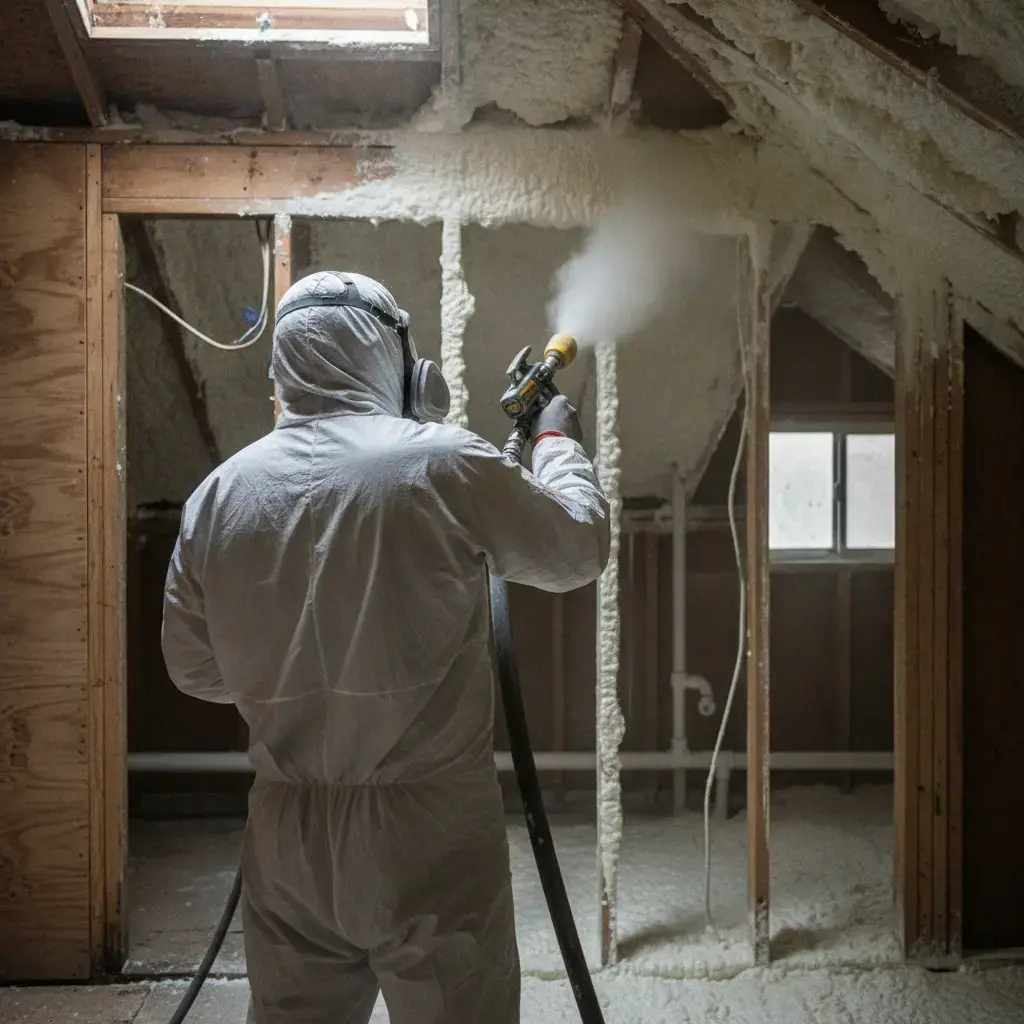
Spray Foam Attic Insulation in Norwalk, CA
Energy-Saving Spray Foam Attic Insulation for Norwalk, CA Homes — Licensed & Insured
Need spray foam attic insulation in Norwalk, CA? Bright Sky installs R-38+ foam for Norwalk homes. Free estimates. Call (562) 573-5138 today.
Spray foam attic insulation is one of the most effective thermal and air-sealing solutions available for Southern California homeowners. Unlike traditional batt or blown-in materials, spray foam expands on contact to fill every gap, crack, and void in your attic structure — creating a continuous thermal envelope that dramatically reduces energy loss.
In Norwalk, CA, where summer temperatures regularly push past 95°F and homes built during the post-war housing boom of the 1950s and 1960s were never designed with modern energy efficiency in mind, proper attic insulation is not a luxury — it is a necessity. The combination of aging home stock, intense seasonal heat, and variable utility costs makes spray foam a smart long-term investment for Norwalk residents.
Read moreShow less
At Bright Sky Attic Insulation, our team brings hands-on regional expertise to every project we take on in Norwalk and the surrounding communities. Whether you are upgrading an older ranch-style home or insulating a newer property, we deliver professional results backed by precise installation techniques. Call us today at (562) 573-5138 to schedule your free attic assessment.

Understanding Spray Foam Attic Insulation
Spray foam insulation is a two-component chemical system — typically polyol resin and isocyanate — that reacts upon mixing to expand and harden into a rigid or semi-rigid foam. When applied to attic surfaces, it adheres to rafters, joists, sheathing, and ceiling planes, sealing air leaks at the same time it provides thermal resistance.
There are two primary types used in residential attic applications:
- Open-Cell Spray Foam: A softer, more flexible foam that expands significantly and is excellent for sound dampening and interior applications. It has an R-value of approximately R-3.5 to R-3.8 per inch.
- Closed-Cell Spray Foam: A dense, rigid foam with a much higher R-value of approximately R-6 to R-7 per inch. It also acts as a vapor barrier, making it ideal for climates and structures where moisture management is a concern.
Read moreShow less
Historically, Southern California homes relied primarily on fiberglass batt insulation, which became a building standard in the mid-20th century as Norwalk and neighboring cities like Downey, Bellflower, and Lakewood experienced explosive residential growth following World War II. These materials were sufficient by the standards of their time, but they degrade, compress, and lose effectiveness over decades. Many homes built between 1950 and 1975 in Norwalk still have their original insulation — now 50 to 70 years old — which may have deteriorated to a fraction of its original R-value.
Spray foam technology became commercially viable for residential use in the 1980s and has evolved significantly since then. Today, it is recognized by the California Energy Commission as a high-performance insulation option and is compliant with Title 24, California’s building energy efficiency standards.
In Norwalk, the prevalence of single-family detached homes, many with unconditioned attic spaces, makes spray foam particularly well-suited to the local housing stock. Vaulted ceilings, flat-roof additions, and garage conversions — all common in Norwalk’s residential neighborhoods — also benefit from spray foam’s ability to conform to irregular surfaces and complex geometries that other insulation types struggle to address effectively.
For homeowners exploring all attic insulation options, learn more about our full attic insulation services.
Why Spray Foam Attic Insulation Is Needed in Norwalk, CA
Norwalk is situated in the southeastern portion of Los Angeles County, within the San Gabriel Valley’s coastal-influenced inland corridor. The city experiences a semi-arid Mediterranean climate, but its inland position — approximately 12 to 15 miles from the Pacific Ocean — means it receives far less marine cooling benefit than coastal cities like Long Beach or San Pedro. During peak summer months, particularly July and August, Norwalk routinely records high temperatures between 92°F and 98°F, with heat events occasionally spiking above 105°F.
The heat event of September 2022 was a stark reminder of Norwalk’s vulnerability. Los Angeles County recorded its highest-ever September temperature readings during that event, with some inland communities hitting 113°F. Norwalk saw temperatures above 107°F for multiple consecutive days. Homes without adequate attic insulation became nearly unbearable, with attic space temperatures estimated at 140°F to 160°F — turning the space directly above living areas into a radiant heat source that overwhelmed air conditioning systems.
Read moreShow less
Norwalk’s housing stock compounds this challenge. The majority of the city’s residential properties were constructed between 1945 and 1975 in neighborhoods like:
- East Norwalk — Dense with post-war tract homes, many featuring low-slope rooflines and minimal original insulation depth, often measured at just 2 to 3 inches of degraded fiberglass.
- West Norwalk — A mix of mid-century ranchers and 1970s-era builds. Homes here frequently show signs of air infiltration at attic bypass points such as recessed lighting fixtures, top plates, and plumbing chases.
- South Norwalk — Closer to the Norwalk-Santa Fe Springs industrial border, where air quality considerations and slightly higher ground-level particulate counts make a well-sealed attic envelope even more valuable for indoor air quality.
Soil conditions in Norwalk also play a role. The city sits on alluvial soils deposited by the San Gabriel River system, which are expansive in nature. Seasonal soil movement — particularly during wet winters following dry summers — can create minor structural shifts in older homes, widening gaps at top plates and around roof penetrations. These gaps become air infiltration pathways that compromise even newer insulation if the envelope is not properly sealed.
Southern California Edison, which serves Norwalk residents, reports that heating and cooling account for approximately 40 to 50 percent of a typical residential energy bill. With tiered electricity rates that can exceed $0.40 per kWh during peak summer periods under SCE’s Time-of-Use pricing plans, an uninsulated or under-insulated attic translates directly into hundreds of dollars of unnecessary expense each year.
Additionally, California’s Title 24 energy code — which governs building envelope performance — has become increasingly stringent with each update. The 2022 Title 24 update requires attic insulation to meet minimum R-38 values in Climate Zone 10, which covers Norwalk. Many existing homes fall well short of this standard. Upgrading to spray foam not only meets but often exceeds this requirement, protecting your home’s resale value and compliance standing.
If moisture or pests have also affected your existing insulation, our insulation removal service can safely prepare your attic before new spray foam is applied.
Free, no-obligation estimates
Talk to Bright Sky Attic Insulation
Tell us what you need and we’ll take it from there.
Signs You Need Spray Foam Attic Insulation in Norwalk
Energy and Comfort Indicators
- Monthly Southern California Edison bills that are noticeably higher than neighbors in comparable homes
- Upstairs rooms or rooms directly below the attic that remain 5°F to 10°F warmer than the rest of the house during summer
- An air conditioning system that runs almost continuously during July and August without adequately cooling the home
- Drafts near ceiling light fixtures, attic access hatches, or interior walls during windy conditions
Physical and Structural Warning Signs
- Visible gaps or daylight seen from inside the attic around top plates, vents, or roof penetrations
- Existing insulation that appears compressed, discolored, or has fallen away from joists
- Insulation depth measuring less than 10 inches when checked with a ruler — indicating an R-value well below Norwalk’s required R-38
- Evidence of rodent or pest activity in attic insulation, including droppings, tunnels, or nesting material
Moisture and Air Quality Concerns
- Musty odors entering living spaces from above, particularly after rain
- Water stains on ceilings that suggest condensation forming within an inadequately sealed attic
- Increased dust levels in the home, which can indicate unconditioned attic air infiltrating through ceiling gaps
If you recognize two or more of these signs, it is time to schedule a professional attic inspection. Call Bright Sky Attic Insulation at (562) 573-5138 for a thorough evaluation.
Our process
Our Spray Foam Attic Insulation Process in Norwalk
We follow a structured, proven process for every spray foam attic insulation project we complete in Norwalk and the surrounding communities. Here is what you can expect:
- 01
Free Attic Inspection and Assessment (1–2 Hours)
Our technician performs a thorough visual and thermal inspection of your attic, documenting existing insulation type and depth, air leakage points, ventilation status, and any moisture or pest damage. We use this data to build a project-specific plan tailored
- 02
Old Insulation Removal (If Required) (Half Day to Full Day)
If your existing insulation is contaminated, severely degraded, or harboring pests, we remove it using commercial-grade vacuuming equipment. All debris is bagged, sealed, and disposed of in compliance with Los Angeles County waste regulations. This step is esp
- 03
Air Sealing and Preparation (1–3 Hours)
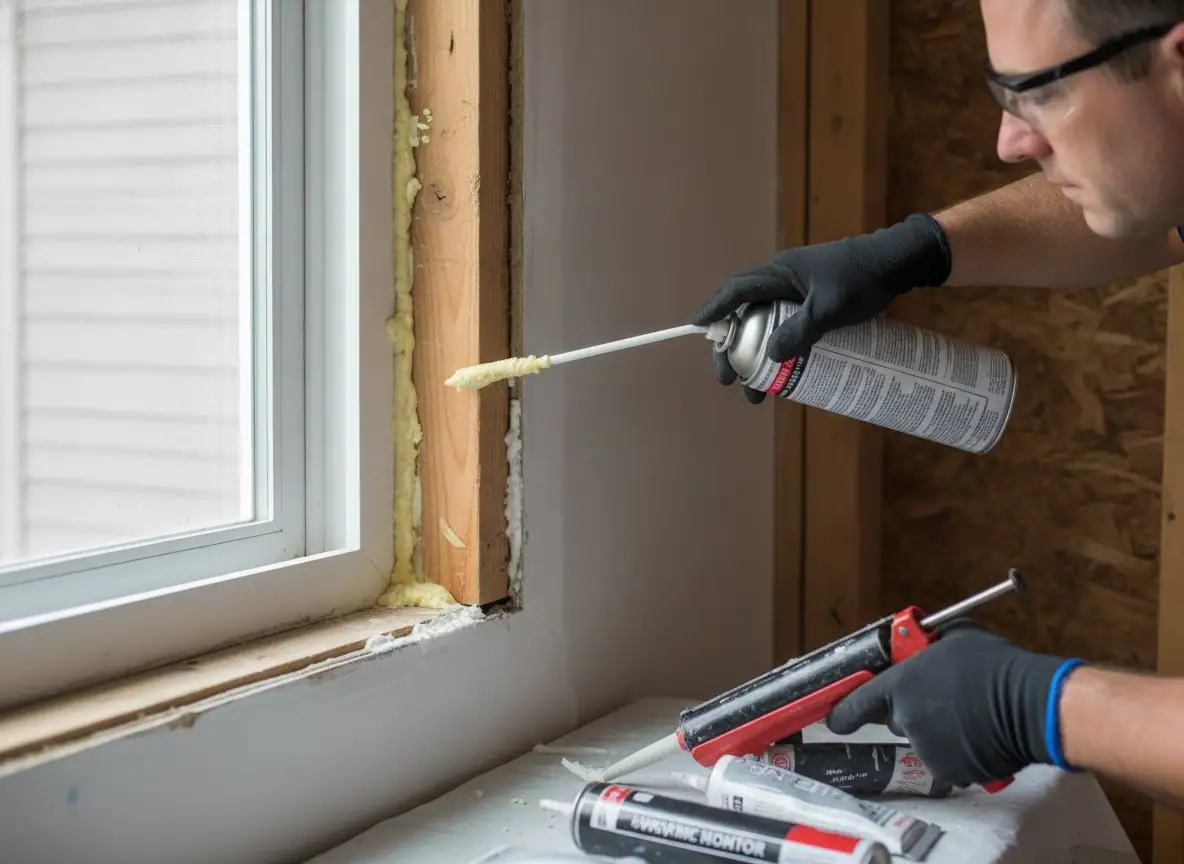
Before any foam is applied, we seal major bypass points — recessed light cans, top plates at interior walls, plumbing and electrical penetrations, and attic hatch frames — using caulk and foam backer materials. This pre-sealing step ensures the spray foam achi
- 04
Surface and Safety Preparation (30–60 Minutes)
Ventilation ducts, electrical junction boxes, and any surfaces not intended for foam application are masked and protected. Our crew dons full personal protective equipment, including respirators and protective suits, required by California OSHA standards for s
- 05
Spray Foam Application (2–6 Hours Depending on Scope)
Our certified applicators apply spray foam at the correct thickness to achieve the target R-value — typically R-38 or greater per Norwalk’s Title 24 Climate Zone 10 requirements. We use closed-cell or open-cell product depending on the application zone, moistu
- 06
Cure Time and Inspection (2–24 Hours)
Spray foam requires a curing period before the attic space can be safely re-entered. We conduct a final walk-through to confirm uniform coverage, correct thickness, and complete air sealing.
- 07
Post-Installation Review and Documentation
We provide the homeowner with a written summary of installed R-values, product data sheets, and any relevant documentation for permit or utility rebate applications through Southern California Edison’s energy efficiency program.
Spray Foam Methods and Approaches We Use
Closed-Cell Spray Foam (ccSPF)
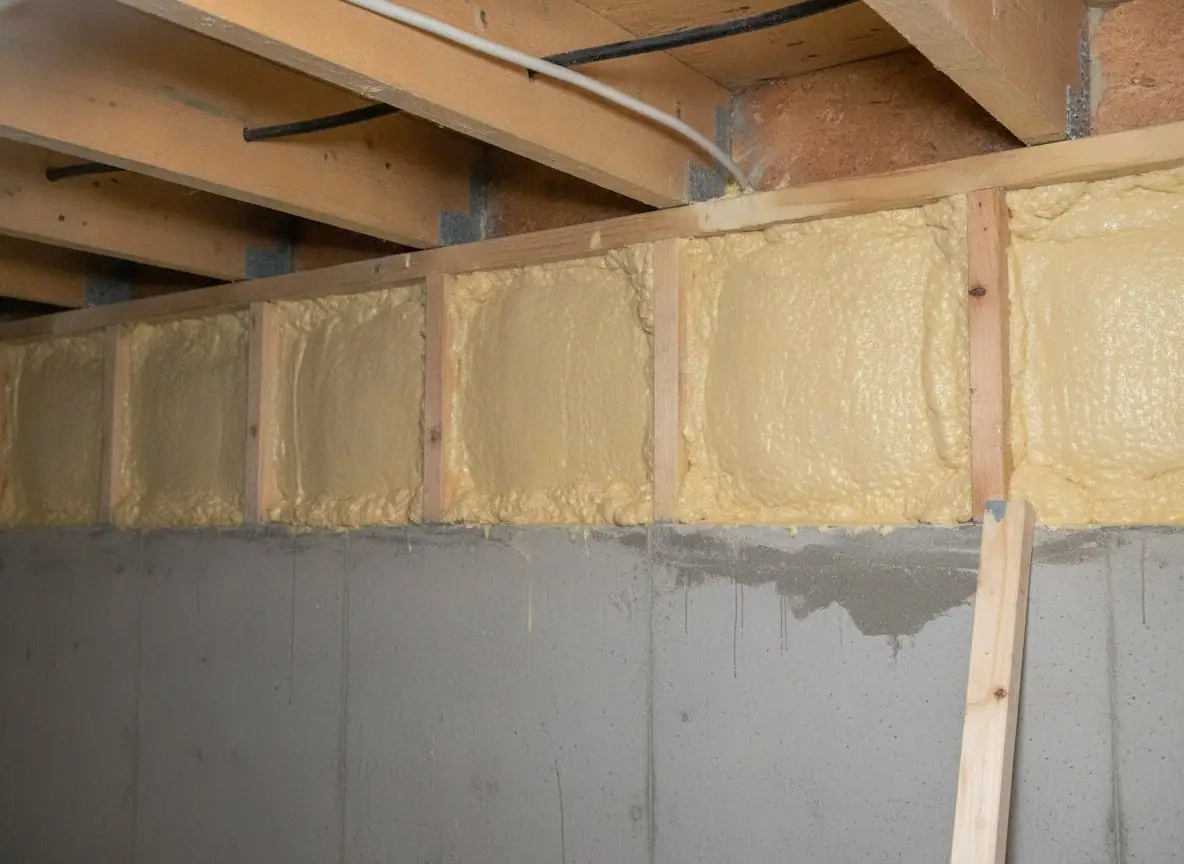
Closed-cell spray foam is our most specified product for Norwalk attic applications, particularly in homes where moisture exposure is a risk. At R-6 to R-7 per inch, it achieves Title 24 compliance at thicknesses of approximately 5 to 6 inches. It also adds meaningful structural rigidity to roof sheathing — a benefit for older Norwalk homes where the original lumber may have weakened. Ideal for: low-slope roofs, unvented attic assemblies, garage ceilings, and homes near the Norwalk-South Whittier corridor where ground moisture levels are higher.
Open-Cell Spray Foam (ocSPF)
Open-cell foam expands more aggressively and is a cost-effective solution for vented attic floor applications. At R-3.5 to R-3.8 per inch, a depth of approximately 10 to 11 inches achieves R-38. It is also excellent for sound attenuation — a notable benefit in Norwalk neighborhoods near the 5 Freeway or 91 Freeway corridors, where traffic noise is a daily reality. Ideal for: attic floor applications over conditioned living spaces, interior wall cavities, and budget-conscious projects.
Flash-and-Batt Hybrid Method
This approach combines a thin layer (1 to 2 inches) of closed-cell spray foam applied at the roof deck with traditional batt insulation installed below. The foam layer provides the critical air and vapor barrier function while the batt layer adds bulk R-value at a lower cost per R-unit. Ideal for: Norwalk ranch homes with standard rafter cavities where a full closed-cell fill would exceed budget without proportional performance benefit.
Attic Floor Spray Foam Encapsulation
For vented attics where the attic floor (ceiling of living space) is the primary thermal boundary, spray foam applied directly to the floor joists creates a seamless, gap-free layer. This method pairs well with our blow-in insulation service for a cost-optimized performance solution.
Spray Foam Attic Insulation Cost in Norwalk, CA
Understanding the cost of spray foam attic insulation helps Norwalk homeowners make informed decisions and plan their budgets appropriately. Pricing varies based on several key factors specific to our service area.
Typical Price Ranges
- Open-Cell Spray Foam: $1.00 to $1.50 per board foot installed. For a typical Norwalk home with 1,000 square feet of attic space insulated to R-38 depth, expect a total project cost of approximately $1,800 to $3,200.
- Closed-Cell Spray Foam: $1.75 to $3.00 per board foot installed. The same 1,000-square-foot attic insulated to R-38 with closed-cell foam typically runs $3,500 to $6,500 depending on thickness and access conditions.
- Flash-and-Batt Hybrid: Mid-range pricing, typically $2,200 to $4,500 for a comparable attic footprint.
Read moreShow less
Factors That Affect Your Norwalk Project Cost
- Attic Access and Configuration: Many Norwalk post-war homes have low-clearance attics with limited access points, which increases labor time and affects pricing.
- Existing Insulation Removal: If old, contaminated, or pest-damaged insulation must be removed first, add $500 to $1,500 depending on volume and condition.
- Roof Slope and Structure: Complex rooflines common in 1960s and 1970s Norwalk ranch additions can increase material usage and application time.
- Utility Rebates: Southern California Edison offers energy efficiency rebates for qualifying insulation upgrades. We help homeowners identify applicable incentives that can reduce net project cost by $200 to $600.
For a precise quote tailored to your specific home and attic conditions, contact Bright Sky Attic Insulation at (562) 573-5138. We provide transparent, itemized estimates at no charge.
You can also explore our full range of solutions at insulation installation services.
Neighborhoods in and Around Norwalk We Serve
East Norwalk
East Norwalk’s dense residential grid was largely developed between 1948 and 1962. Homes here are predominantly 3-bedroom, 1-bath ranch-style structures with original wood-frame attics. Many still contain their original 2-inch fiberglass batt insulation. Spray foam retrofits are common in this area due to the high rate of energy loss in these aging envelopes.
West Norwalk
West Norwalk includes a broader mix of home vintages, with some properties dating to the early 1970s featuring early attempts at insulation that have since compressed and lost effectiveness. Homes closer to the 605 Freeway on-ramps benefit particularly from open-cell foam’s noise-dampening properties.
South Norwalk
South Norwalk borders Santa Fe Springs and has a notable proportion of properties with garage conversion additions and flat-roof extensions — both of which present unique insulation challenges that spray foam addresses more effectively than any other product type.
Surrounding Service Areas
We also serve homeowners throughout Downey, Bellflower, Cerritos, Artesia, La Mirada, Lakewood, Paramount, Pico Rivera, Montebello, Whittier, South Whittier, East Whittier, West Whittier-Los Nietos, Santa Fe Springs, Commerce, Buena Park, and La Habra. Find out more at our full service area page.
Attic Insulation Maintenance Tips for Norwalk Homeowners
Spray foam is a long-lasting material, but your overall attic system benefits from periodic attention. Here are practical maintenance tips specific to Norwalk’s climate and housing conditions:
- Inspect your attic annually: Schedule a visual check every fall, before the rainy season begins — typically November through January in the Norwalk area. Look for gaps, settling, or signs of moisture.
- Check attic ventilation after Santa Ana wind events: Norwalk experiences strong Santa Ana wind conditions, typically October through March. These events can dislodge vent covers and introduce debris that blocks soffit or ridge ventilation.
- Monitor for pest activity: Roof rats and squirrels are active in Los Angeles County year-round. Check for new entry points at roofline intersections and around HVAC penetrations, as pest intrusion can compromise foam integrity over time.
- Keep attic access hatches properly sealed: Inspect the attic hatch gasket and insulation cover annually to ensure it maintains a tight seal.
- Verify HVAC duct connections: Leaky ducts running through the attic are a major energy loss source. Confirm duct joints remain sealed and insulated, especially after summer’s thermal expansion cycles.
- Avoid attic storage that compresses insulation: If open-cell foam is installed on the attic floor, avoid storing heavy items that could compress or displace the material.
- Check after significant rainfall: Following Norwalk’s occasional heavy rain events, verify there are no new roof leaks reaching the insulation layer, as moisture can compromise foam performance over time.
Why Choose Bright Sky Attic Insulation in Norwalk, CA
Norwalk homeowners have a number of insulation contractors to choose from, but Bright Sky Attic Insulation brings a level of local knowledge and technical focus that distinguishes our service:
Deep Familiarity with Norwalk’s Housing Stock:
Deep Familiarity with Norwalk’s Housing Stock:We understand the specific construction characteristics of post-war Norwalk homes — low attic clearances, platform-frame construction, early electrical and plumbing configurations — and we adapt our techniques accordingly.
Title 24 Compliance Expertise:
Title 24 Compliance Expertise:Every project we complete is designed to meet or exceed California’s current energy code requirements for Climate Zone 10, protecting your investment and ensuring permit compliance where applicable.
Local Climate-Informed Product Selection:
Local Climate-Informed Product Selection:We do not use a one-size-fits-all approach. We match spray foam type and thickness to your specific attic configuration, roof design, and Norwalk’s seasonal climate demands.
Comprehensive Service Range:
Comprehensive Service Range:Beyond spray foam, we offer crawl space encapsulation, crawl space insulation, insulation replacement, and blow-in services — all under one roof, so you never need to coordinate multiple contractors.
Transparent Pricing and Free Assessments:
Transparent Pricing and Free Assessments:We provide detailed, written estimates with no hidden fees, and we walk every homeowner through their options before any work begins.
FAQ
Frequently Asked Questions About Spray Foam Attic Insulation in Norwalk, CA
How much does spray foam attic insulation cost in Norwalk, CA?
In Norwalk, open-cell spray foam typically costs $1.00 to $1.50 per board foot installed, while closed-cell foam ranges from $1.75 to $3.00 per board foot. For a 1,000-square-foot attic, total project costs generally range from $1,800 to $6,500 depending on foam type, attic conditions, and whether insulation removal is required. Southern California Edison rebates may reduce your out-of-pocket cost by $200 to $600.
How long does the installation take for a typical Norwalk home?
Most spray foam attic insulation projects in Norwalk are completed in one day. Smaller attics — common in the 900 to 1,200-square-foot homes of East Norwalk — may be finished in half a day. Larger homes or projects requiring insulation removal first may span two days. We provide a timeline estimate specific to your project during the free assessment.
Is spray foam insulation safe for my family after installation?
Yes. Once properly cured — typically within 24 hours — spray foam is inert and safe. During application, the attic must be unoccupied and ventilated. We follow all California OSHA safety protocols and ensure the space is fully cured and inspected before it is re-entered. We always inform homeowners of the appropriate re-occupancy window before beginning work.
Does Norwalk require a permit for attic insulation?
In most cases, adding insulation to an existing attic in Norwalk does not require a building permit under Los Angeles County code. However, if the scope of work involves structural modifications, HVAC changes, or new construction, permit requirements may apply. We advise homeowners on permit requirements during our initial assessment and can assist with documentation if needed.
What R-value do I need for my Norwalk attic?
Norwalk falls within California’s Climate Zone 10. The 2022 Title 24 energy code requires a minimum of R-38 for attic insulation in this zone. Most spray foam applications we complete in Norwalk are designed to meet or exceed this threshold. Homes built before 1990 often have existing insulation at R-11 or less, representing a significant performance gap.
Can spray foam be installed over existing insulation in my Norwalk attic?
In some cases, yes — spray foam can be applied over existing materials if the underlying insulation is clean, dry, structurally sound, and properly positioned. However, in many Norwalk homes with 40 to 70-year-old insulation, removal is recommended before application to ensure full adhesion and eliminate any contamination risks. Our technician will evaluate your specific attic during the free inspection.
How does spray foam help with Norwalk’s heat events?
During extreme heat events like the September 2022 event — when Norwalk saw temperatures above 107°F for multiple consecutive days — attic temperatures can reach 140°F to 160°F without proper insulation. Spray foam’s air-sealing properties reduce the transfer of that radiant heat into living areas by up to 50 percent, significantly reducing the load on your air conditioning system and improving indoor comfort during dangerous heat conditions.
Do you serve cities near Norwalk?
Yes. In addition to Norwalk, Bright Sky Attic Insulation serves Downey, Bellflower, Cerritos, Artesia, La Mirada, Lakewood, Paramount, Pico Rivera, Montebello, Whittier, South Whittier, East Whittier, West Whittier-Los Nietos, Santa Fe Springs, Commerce, Buena Park, and La Habra. Visit our service areas page for details.
Get Your Free Spray Foam Attic Insulation Estimate in Norwalk, CA
If your Norwalk home is uncomfortable during summer heat events, your energy bills keep climbing, or you know your attic insulation is decades old and underperforming, now is the time to act. Bright Sky Attic Insulation provides professional spray foam attic insulation service tailored to Norwalk’s specific climate, housing stock, and energy code requirements.
Our team offers free, no-pressure attic assessments with transparent written estimates. We serve all Norwalk neighborhoods — East Norwalk, West Norwalk, South Norwalk, and beyond — as well as surrounding communities throughout the greater southeast Los Angeles County area.
Call us today at (562) 573-5138 to schedule your assessment and take the first step toward a more comfortable, energy-efficient home.
You can also explore our full range of services including spray foam insulation, crawl space encapsulation, and insulation removal to find the complete solution for your home.
Get in touch
Find insulation help near you
Request a free estimate online or give us a call — our team will follow up quickly.
- Call us(562) 573-5138
- Visit14020 Pioneer Blvd K, Norwalk, CA 90650
- HoursMon-Sun 07:00-19:00