Blown-In Attic Insulation in Norwalk, CA
Energy-Saving Blown-In Attic Insulation for Norwalk, CA Homes — Licensed & Insured
Get expert blown-in attic insulation in Norwalk, CA. Bright Sky serves all Norwalk neighborhoods. Free estimates. Call (562) 573-5138 today.
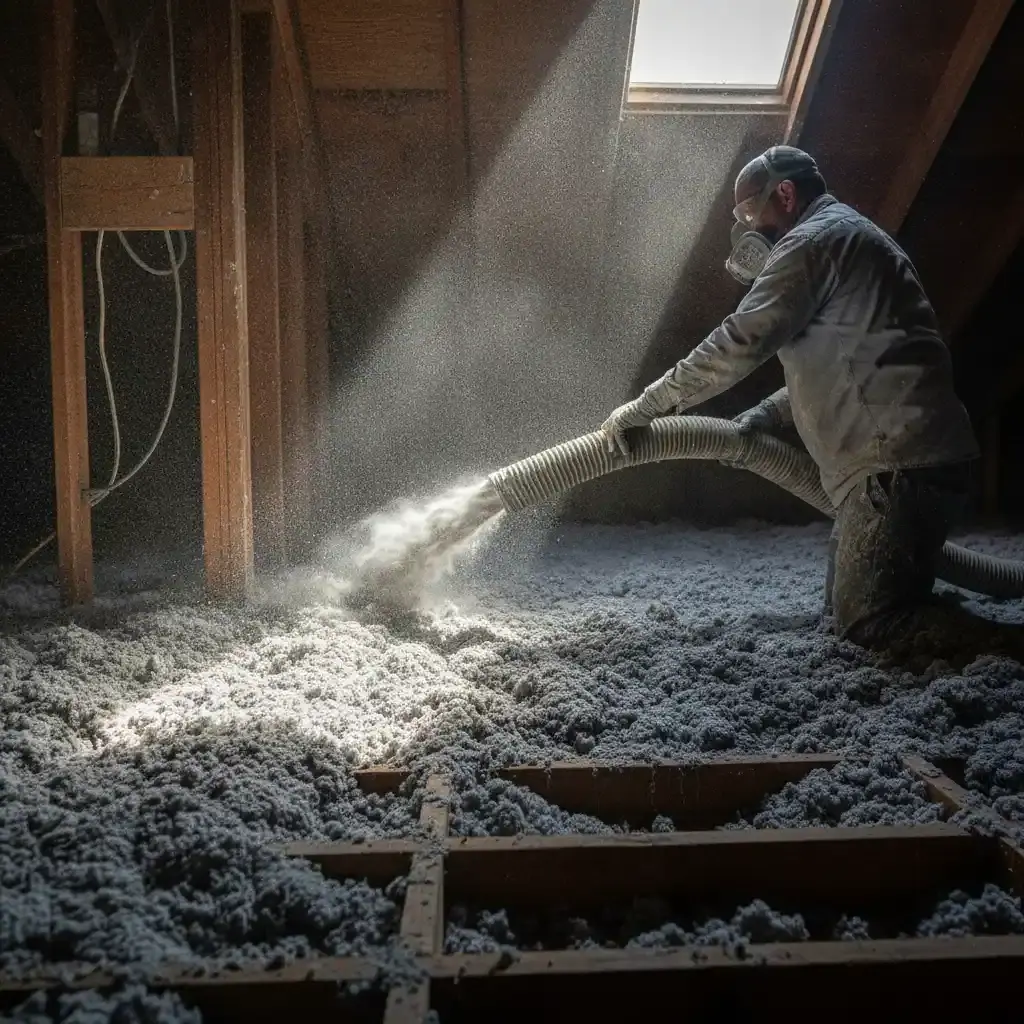
Blown-in attic insulation is a modern insulation method that uses specialized equipment to distribute loose-fill material — typically fiberglass or cellulose — evenly throughout your attic space, filling gaps, voids, and hard-to-reach corners that traditional batt insulation simply cannot address. For homeowners in Norwalk, CA, this method is particularly well-suited given the region’s aging housing stock, warm Mediterranean climate, and the unique thermal demands placed on attics during Southern California’s prolonged summer heat.
At Bright Sky Attic Insulation, our team brings focused expertise in blown-in attic insulation services across the greater Norwalk area and surrounding Southeast Los Angeles communities. We understand the specific construction styles found throughout Norwalk’s neighborhoods — from the post-war tract homes near Firestone Boulevard to the mid-century ranchers clustered around Pioneer Boulevard — and we tailor every installation to match the structural realities and energy challenges of your specific home. Call us today at (562) 573-5138 to schedule your free assessment.
Understanding Blown-In Attic Insulation
Blown-in attic insulation — also commonly referred to as loose-fill insulation — has been a trusted energy-efficiency solution for American homes since the mid-twentieth century, growing significantly in adoption after the 1973 oil embargo spurred widespread interest in residential energy conservation. The method involves feeding insulation material into a large blowing machine, which then forces the material through a flexible hose directly into the attic cavity. The result is a seamless, even blanket of insulation that conforms to joists, rafters, pipes, and other structural elements without leaving thermal bridges or air gaps.
Two primary materials dominate the blown-in insulation market: cellulose and fiberglass. Cellulose, made from approximately 85% recycled newspaper and treated with borate fire retardants, offers strong thermal performance and excellent sound dampening — qualities that matter in a densely populated urban corridor like Norwalk, where neighboring homes are often just feet apart. Fiberglass loose-fill, composed of spun glass fibers, resists moisture absorption and maintains its R-value over time even in attics that experience temperature swings exceeding 50°F between winter nights and summer afternoons.
Read moreShow less
In Norwalk specifically, the prevalence of single-story and split-level homes built between 1945 and 1975 means that many attic spaces are shallow, irregularly framed, and sometimes complicated by older knob-and-tube or early aluminum wiring — all conditions that make blown-in insulation the preferred choice over rigid batts. The California Energy Commission has progressively tightened Title 24 energy standards, and blown-in installation is one of the most effective ways for Norwalk homeowners to meet or exceed the current R-38 minimum requirement for attics in Climate Zone 9, which covers the greater Norwalk region.
Beyond thermal performance, blown-in insulation provides an air-sealing effect when installed at the correct depth, reducing infiltration of outdoor air and particulate matter — an important consideration in an area where the South Coast Air Quality Management District (SCAQMD) regularly monitors elevated particulate levels along the I-5 and I-605 corridors that border Norwalk.
Why Blown-In Attic Insulation Is Needed in Norwalk, CA
Extreme Seasonal Heat in Climate Zone 9
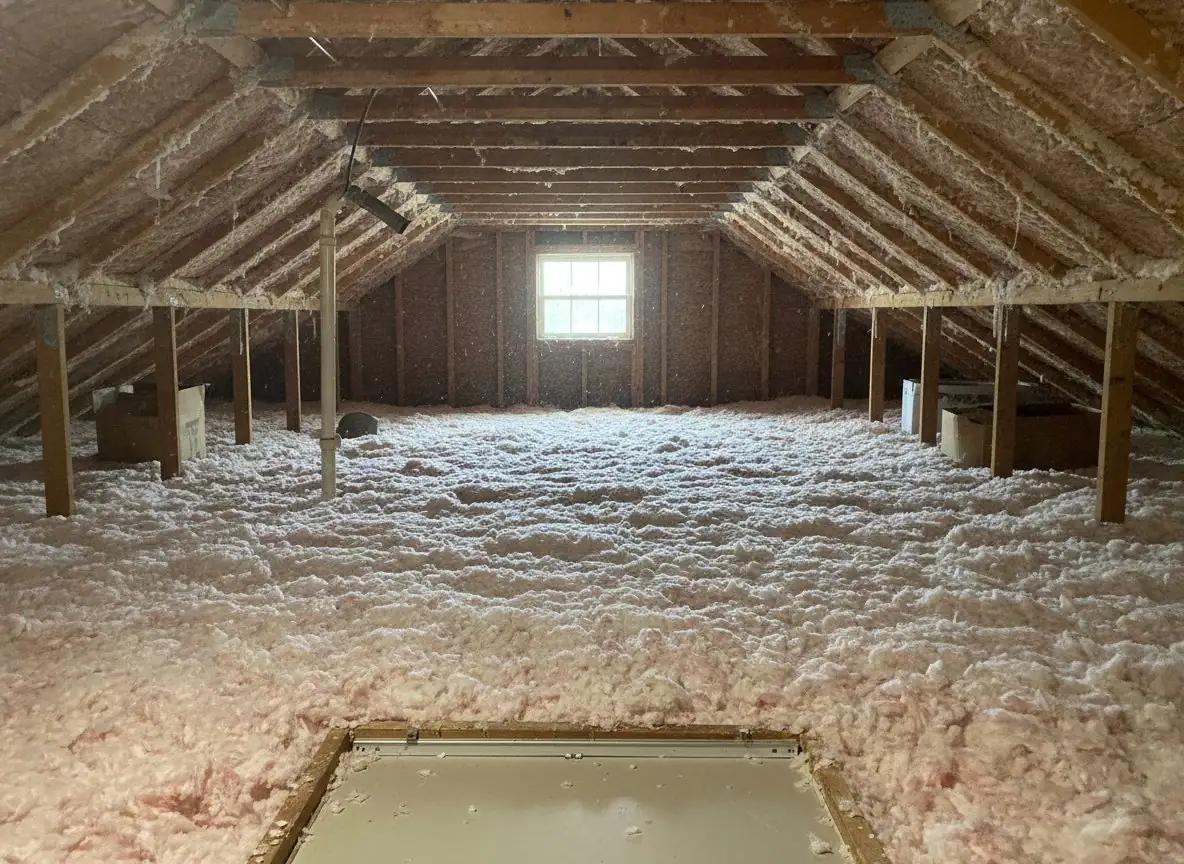
Norwalk falls within California’s Title 24 Climate Zone 9, a designation that accounts for the area’s pronounced summer heat load. During the heat events that regularly strike the region — including the record-breaking September 2022 heat wave, when temperatures in nearby Downey and South Whittier climbed above 108°F — attic temperatures in uninsulated or under-insulated homes can reach 150°F to 160°F. At those temperatures, radiant heat penetrates into living spaces rapidly, forcing air conditioning systems to work continuously. Proper blown-in insulation at the Title 24-required R-38 depth — approximately 10 to 12 inches of fiberglass or 10 inches of cellulose — reduces attic-to-living-space heat transfer by up to 40%, directly cutting cooling costs during these dangerous peak periods.
Aging Housing Stock and Settlement
A large percentage of Norwalk’s residential neighborhoods — including the established communities along Studebaker Road, the older blocks near Norwalk Boulevard, and the post-war tracts surrounding Excelsior Drive — were constructed between 1948 and 1965. Insulation installed in that era typically consisted of 2 to 3 inches of fiberglass batt, delivering an R-value of only R-8 to R-11. Even homes where insulation was added during the energy-conscious 1970s frequently have settled, compressed, or moisture-damaged material that now performs at well below its original rated value. Blown-in insulation is ideal for topping up these older installations without requiring full removal of existing material in many cases.
I-5 and I-605 Freeway Proximity and Urban Heat Island Effect
Norwalk is bisected by the I-5 (Santa Ana Freeway) and bordered to the east by the I-605 (San Gabriel River Freeway). The extensive asphalt and concrete infrastructure associated with these corridors contributes to a measurable urban heat island effect, raising ambient temperatures in adjacent neighborhoods by 3°F to 5°F compared to less-developed areas. Neighborhoods directly east of the I-5, including the blocks around Clarkdale Avenue and Horst Avenue, experience elevated baseline temperatures that place additional stress on under-insulated homes throughout the summer months.
Seismic Activity and Structural Shifting
Norwalk sits within proximity of the Whittier Fault, segments of which run through the broader Southeast Los Angeles region. The 1987 Whittier Narrows Earthquake (magnitude 5.9) caused widespread structural shifting across communities including Norwalk, and smaller seismic events continue periodically. This shifting can open gaps between attic framing members and dislodge or compress older insulation, creating thermal bypasses. Blown-in insulation re-establishes complete coverage even after structural movement occurs, making it a resilient choice for seismically active areas.
Santa Ana Wind Events and Air Infiltration
Norwalk experiences notable Santa Ana wind events each fall and winter, with sustained winds sometimes exceeding 40 mph. These pressure-driven wind events force unconditioned outdoor air through gaps in the building envelope, dramatically increasing the load on heating and cooling systems. A properly installed blown-in insulation layer, combined with air sealing at penetrations, significantly reduces this infiltration effect in Norwalk homes.
Free, no-obligation estimates
Talk to Bright Sky Attic Insulation
Tell us what you need and we’ll take it from there.
Signs You Need Blown-In Attic Insulation in Norwalk
Energy and Comfort Warning Signs
- Monthly Southern California Edison bills significantly higher than neighbors in comparable homes, particularly during June through September cooling season
- Rooms on the top floor or directly below the attic remaining 5°F or more warmer than the rest of the house during afternoon hours
- Air conditioning system running continuously without maintaining the thermostat setpoint during Norwalk’s summer heat events
- Noticeable drafts near ceiling fixtures, recessed lights, or attic access hatches during Santa Ana wind events
Physical and Visual Warning Signs
- Existing insulation in the attic visibly compressed, discolored, or below the top of the floor joists (indicating R-value loss)
- Evidence of pest activity — including rodent droppings or nesting material — within the insulation layer, which compromises thermal performance
- Water stains on insulation or attic decking following winter rain events, signaling moisture infiltration that degrades insulation effectiveness
- Visible daylight through attic eave vents or around pipe penetrations, indicating unsealed air bypasses
Urgency Indicators
- Home was built before 1980 and has never had insulation professionally assessed or upgraded
- Recent roof repair or replacement work that may have disturbed existing insulation
- Visible mold growth in the attic, which requires immediate remediation before insulation is installed
Blown-In Insulation Methods and Approaches
Dry Blown-In Fiberglass
Dry fiberglass loose-fill is the most commonly used material in Norwalk installations due to its resistance to moisture and its light weight — important in attics with older framing that may not support heavy loads. Fiberglass achieves approximately R-2.2 per inch, requiring roughly 17 inches to hit R-38. It is ideal for Norwalk homes near the I-605 corridor where occasional moisture from coastal air intrusion is a consideration.
Cellulose Blown-In Insulation
Cellulose provides a higher R-value per inch (approximately R-3.2 to R-3.8) and offers superior air-sealing characteristics compared to fiberglass. It is our recommended option for Norwalk homes along Pioneer Boulevard and Firestone Boulevard that are exposed to elevated noise from commercial traffic, as cellulose provides meaningful sound attenuation in addition to thermal performance. Cellulose requires borate fire retardant treatment and must be installed dry to prevent clumping.
Dense-Pack Blown-In for Enclosed Cavities
For attic knee walls, sloped ceiling cavities, or enclosed rafter bays — features found in some of Norwalk’s split-level homes — we use dense-pack installation, where material is packed at higher density (3.5 to 4 lbs per cubic foot) to resist settling and air movement within the cavity.
Top-Up Over Existing Insulation
Many Norwalk homes have functional but under-depth existing insulation. Where existing material is undamaged, dry, and pest-free, we can blow new material directly on top, reducing project cost and installation time while achieving target R-values. This approach is common in homes built during the 1970s energy retrofit era.
Blown-In Attic Insulation Cost in Norwalk, CA
Understanding the cost of blown-in attic insulation in Norwalk helps homeowners plan effectively and evaluate the return on investment from energy savings.
Typical Price Ranges
- Basic top-up installation (existing insulation in good condition): $800 – $1,400 for a typical Norwalk single-story home with 1,000–1,500 sq ft of attic space
- Full blown-in installation (new or replacement): $1,500 – $2,800 for a 1,000–1,500 sq ft attic, including air sealing
- Larger homes (1,500–2,500 sq ft attic): $2,500 – $4,500 depending on material choice and access difficulty
- Per square foot average: $1.20 – $2.50 per square foot installed, varying by material and depth
Factors Affecting Norwalk Installation Costs
- Attic access: Many Norwalk post-war homes have narrow 22-inch hatch openings that require additional setup time
- Existing insulation removal: If existing material is contaminated by pests or moisture (common in older Norwalk homes), removal adds $500–$1,500 to project cost — see our insulation removal services for details
- Air sealing scope: Homes near freeways with significant penetration gaps require more extensive air sealing labor
- Material choice: Cellulose typically runs 5–10% less than fiberglass per square foot in the current Los Angeles-area materials market
Read moreShow less
Available Incentives
Southern California Edison and SoCalGas offer rebate programs for qualifying insulation upgrades. Norwalk homeowners may also qualify for federal Inflation Reduction Act tax credits of up to 30% of installed cost (capped at $1,200 per year) for energy-efficient home improvements including insulation. Our team can provide documentation to support your rebate applications.
Neighborhoods We Serve in Norwalk and Surrounding Areas
Norwalk’s Pioneer Boulevard Corridor
Homes along and adjacent to Pioneer Boulevard represent some of Norwalk’s densest residential construction from the 1950s and 1960s. Single-story stucco homes in this area frequently have original 2-inch fiberglass batts still in place — delivering a mere R-7 — and benefit enormously from blown-in top-up installations.
Studebaker Road and East Norwalk Neighborhoods
The residential blocks east of Studebaker Road toward the Cerritos border include a mix of 1960s ranch homes and 1970s-era tract developments. These homes often have slightly better baseline insulation from 1970s retrofits but still fall short of current Title 24 minimums, making them prime candidates for efficiency upgrades.
Nearby Downey and Bellflower
We frequently serve homeowners in adjacent Downey and Bellflower, where similar mid-century housing stock presents the same insulation challenges as Norwalk. Explore our blown-in insulation services in Downey and blown-in insulation in Bellflower for localized information.
Cerritos and Artesia
The newer planned communities of Cerritos contain 1970s–1980s homes that are better insulated at baseline but often need R-value upgrades to meet current standards. Cerritos blown-in insulation services are available through our team.
Attic Insulation Maintenance Tips for Norwalk Homeowners
- Annual visual inspection: Check insulation depth and condition each fall before the Santa Ana wind season begins — winds can pressurize the attic and shift loose-fill material near eave areas
- Inspect after roof work: Any roofing contractor accessing your attic can disturb insulation; verify coverage after repairs
- Monitor attic ventilation: Norwalk’s summer heat requires adequate ridge and soffit ventilation — blocked vents cause heat and moisture buildup that degrades insulation; clear debris from soffit vents each spring
- Check for pest evidence: Roof rats are active in Southeast Los Angeles neighborhoods including Norwalk; inspect for entry points and droppings annually, as rodent activity damages insulation and can introduce contamination
- Address roof leaks immediately: Even minor winter rain infiltration can wet blown-in insulation and cause clumping or mold — repair roof leaks before they reach the attic floor
- Seal new penetrations: Any new electrical, plumbing, or HVAC work that penetrates the attic floor should be foam-sealed promptly to maintain air barrier integrity
- Consider re-inspection every 10–15 years: Blown-in insulation can settle 10–20% over time; periodic professional assessment ensures you maintain target R-values
Why Choose Bright Sky Attic Insulation in Norwalk
Bright Sky Attic Insulation is a locally focused insulation contractor serving Norwalk and the broader Southeast Los Angeles region, including communities from Pico Rivera and Montebello in the north to Cerritos and Artesia in the south. Our technicians are thoroughly familiar with the specific construction characteristics of Norwalk’s housing inventory — the shallow attic pitches common in post-war ranchers, the narrow hatch openings in 1960s tract homes, and the pest and moisture challenges that face properties near the San Gabriel River bottom.
We stay current with California Title 24 energy code requirements for Climate Zone 9 and can provide documentation to support Southern California Edison rebate applications. Every project includes a thorough pre-installation assessment, mandatory air sealing before material is blown in, and post-installation depth verification — steps that many lower-cost competitors skip.
Read moreShow less
Our service area covers all of Norwalk’s neighborhoods as well as Pico Rivera, Bellflower, Artesia, Cerritos, Commerce, Downey, La Mirada, Lakewood, Montebello, Paramount, Santa Fe Springs, Whittier, Buena Park, and La Habra. Explore our full range of insulation services or call us directly at (562) 573-5138.
FAQ
Frequently Asked Questions About Blown-In Attic Insulation in Norwalk, CA
How much does blown-in attic insulation cost in Norwalk, CA?
Most Norwalk homeowners pay between $1,500 and $2,800 for a complete blown-in attic insulation installation in a single-story home with 1,000 to 1,500 square feet of attic space. Costs vary based on current insulation condition, attic access difficulty, material choice (fiberglass vs. cellulose), and the scope of air sealing required. Homes near the I-5 or I-605 corridors often require more extensive air sealing due to pressure differentials from freeway traffic, which can add $150–$400 to total project cost.
How long does blown-in attic insulation installation take in a typical Norwalk home?
For most single-story Norwalk homes, the complete process — including assessment, air sealing, and insulation installation — takes between four and eight hours in a single day. Larger homes or those requiring significant air sealing or existing insulation removal may require a second day. We schedule installations to minimize disruption and typically do not require homeowners to vacate during the process.
What R-value do I need for my Norwalk attic?
California’s Title 24 energy code places Norwalk in Climate Zone 9, which requires a minimum of R-38 in attic assemblies for existing homes undergoing alterations, and R-49 for new construction. Many Norwalk homes built before 1980 have existing R-values of R-11 or less due to insulation age and settling. We recommend at minimum achieving R-38, and upgrading to R-49 for maximum energy savings given Norwalk’s hot summer climate.
Can blown-in insulation be installed over my existing attic insulation?
In many cases, yes. If existing insulation in your Norwalk attic is dry, undamaged, and free of pest contamination, blown-in material can be added directly on top, reducing project cost and time. However, if existing insulation shows water damage, mold, or rodent activity — conditions we frequently encounter in older Norwalk homes — removal is necessary before new material is installed. Our assessment will determine the appropriate approach for your specific situation. See our insulation removal page for more details.
Is blown-in insulation a good fit for the older homes in Norwalk’s historic neighborhoods?
Blown-in insulation is actually the best choice for Norwalk’s older housing stock. Homes built in the 1950s and 1960s along Pioneer Boulevard, Studebaker Road, and Norwalk Boulevard typically have irregular framing, odd-shaped attic sections, and numerous penetrations that batt insulation cannot fully address. Blown-in material fills every contour of these irregular spaces, providing more complete coverage than any batt-style product could achieve.
Are there rebates available for attic insulation upgrades in Norwalk?
Yes. Norwalk is served by Southern California Edison, which offers Energy Upgrade California rebates for qualifying insulation improvements. Additionally, the federal Inflation Reduction Act (IRA) provides a tax credit of 30% of project cost, up to $1,200 annually, for insulation improvements that meet energy code standards. We provide all required documentation — including R-value certifications and installation records — to support your rebate and tax credit applications.
How do I know if my Norwalk home qualifies for blown-in insulation near the freeway corridors?
All homes qualify for blown-in insulation regardless of freeway proximity. However, homes within a few blocks of the I-5 or I-605 corridors in Norwalk often have additional air quality benefits from improved air sealing performed as part of the insulation project, as these homes are more exposed to particulate matter. We specifically check for and seal air bypass points in freeway-adjacent homes as part of our standard Norwalk installation protocol.
What other insulation services does Bright Sky Attic Insulation offer in Norwalk?
In addition to blown-in attic insulation, we provide spray foam insulation, crawl space insulation, crawl space encapsulation, insulation removal, and complete insulation replacement services throughout Norwalk and the surrounding Southeast Los Angeles area.
Get Your Free Blown-In Attic Insulation Estimate in Norwalk Today
If your Norwalk home is uncomfortable in summer, showing high energy bills on your Southern California Edison statements, or was built before 1980 without a professional insulation upgrade, now is the time to act. Bright Sky Attic Insulation provides free, no-obligation attic assessments for Norwalk homeowners and can typically schedule installations within days of your initial call.
Our team understands Norwalk’s climate, its housing stock, and the specific Title 24 requirements that apply to your neighborhood. We handle air sealing, material selection, installation, and all documentation needed for utility rebates — all in one visit.
Call Bright Sky Attic Insulation now at (562) 573-5138 to schedule your free Norwalk attic insulation assessment. You can also reach us through our contact page to request a written estimate. Serving all of Norwalk, Downey, Bellflower, Cerritos, and the greater Southeast Los Angeles area.
Get in touch
Find insulation help near you
Request a free estimate online or give us a call — our team will follow up quickly.
- Call us(562) 573-5138
- Visit14020 Pioneer Blvd K, Norwalk, CA 90650
- HoursMon-Sun 07:00-19:00