
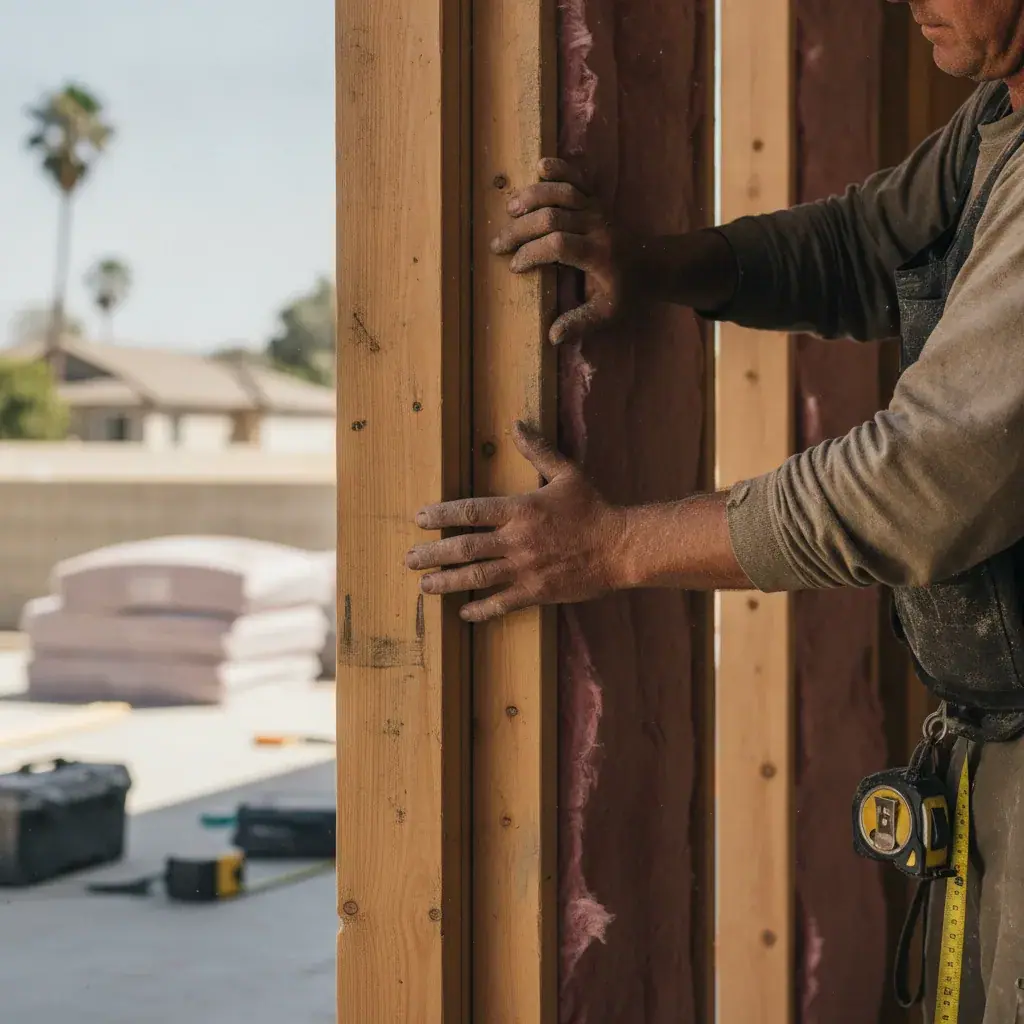
Wall Insulation in Norwalk, CA
Energy-Saving Wall Insulation for Norwalk, CA Homes — Licensed & Insured
Need wall insulation in Norwalk, CA? Bright Sky Attic Insulation offers expert retrofit & new install services. Free estimates. Call (562) 573-5138 today.
Wall insulation is the process of installing thermal and acoustic barrier materials inside the walls of a home or commercial building to regulate indoor temperatures, reduce energy consumption, and improve overall comfort. In Norwalk, CA — a dense, inland community in the southeastern San Gabriel Valley corridor — wall insulation plays a critical role in combating the area’s intense summer heat, which regularly pushes temperatures above 95°F, as well as cool, damp winters influenced by marine air moving inland from the Pacific.
At Bright Sky Attic Insulation, we specialize in professional wall insulation solutions tailored to the specific housing stock, climate conditions, and energy demands of Norwalk and the surrounding Southeast Los Angeles County region. Whether you own a post-war ranch home in the Maretana neighborhood or a mid-century apartment complex near the Norwalk Transit Center, our team delivers expert insulation installation with the precision and local knowledge your property deserves. Call us today at (562) 573-5138 to schedule a free assessment.
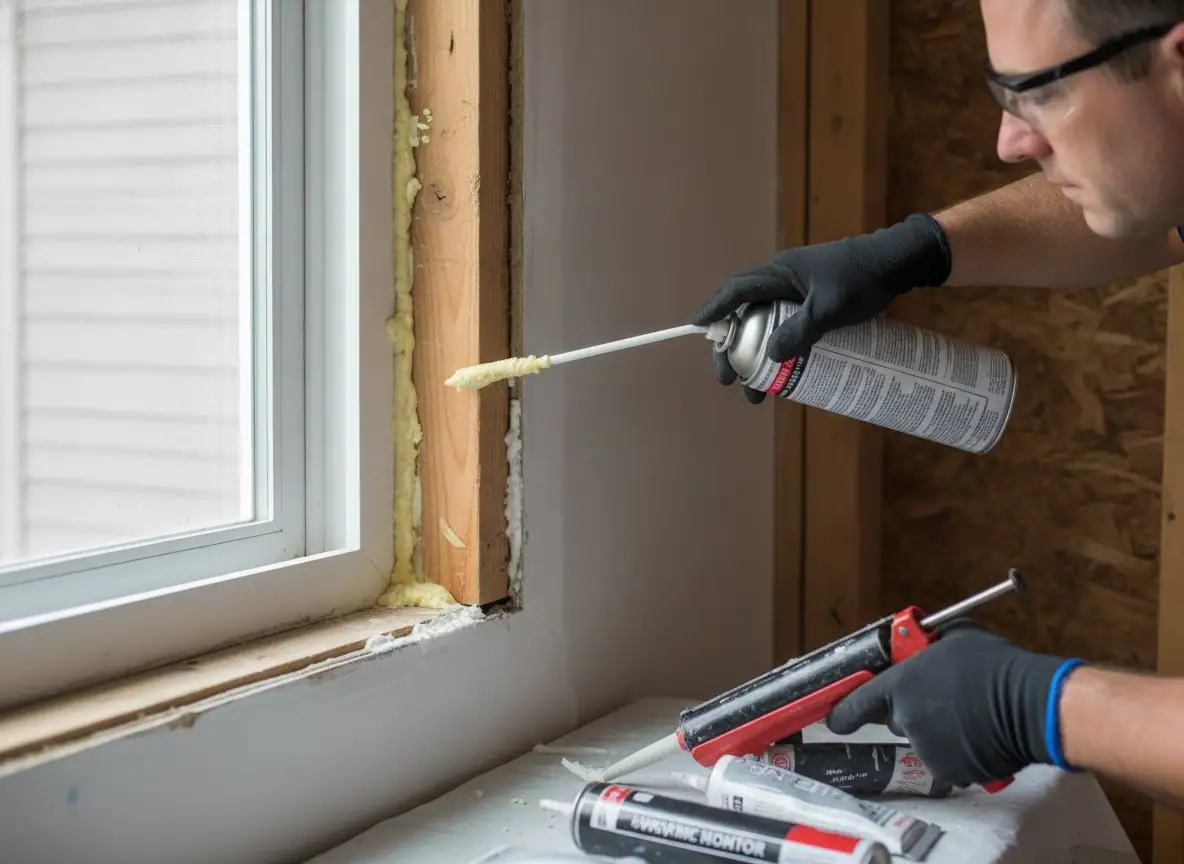
Understanding Wall Insulation
Wall insulation refers to the installation of insulating materials — such as fiberglass batts, mineral wool, blown-in cellulose, or spray foam — within the cavities of a building’s walls. These materials slow the transfer of heat through the wall assembly, keeping conditioned air inside the home and preventing outdoor temperatures from penetrating the living space. The effectiveness of insulation is measured by its R-value, which quantifies thermal resistance. Higher R-values mean better insulation performance.
Historically, insulation standards in California have evolved dramatically. Homes built in Norwalk during the post-World War II housing boom of the late 1940s and 1950s — when the city saw rapid residential development to house returning veterans and growing aerospace industry workers — were typically constructed with little to no wall insulation. These structures relied on thick plaster walls and natural ventilation, strategies that proved inadequate as Southern California summers intensified and utility costs climbed.
Read moreShow less
California’s Title 24 Building Energy Efficiency Standards, first adopted in 1978 and updated regularly through the most recent 2022 cycle, now require wall assemblies to meet minimum R-values of R-13 to R-21 for new construction, depending on climate zone. Norwalk falls within Climate Zone 10 under California’s Title 24 classification — a designation that accounts for the area’s hot, dry summers and mild, occasionally cool winters.
Wall insulation is relevant across all building types found in Norwalk, including single-family homes, duplexes, apartment complexes, and light commercial structures. The city’s housing stock spans multiple eras, from pre-1950s wood-frame construction to 1970s stucco tract homes to newer mixed-use developments near the Norwalk/Santa Fe Springs Metro Green Line Station. Each building era presents unique insulation challenges and opportunities, requiring a knowledgeable contractor familiar with local construction practices.
Beyond thermal performance, wall insulation also provides acoustic dampening — an important benefit in Norwalk’s denser residential corridors near the I-5 (Santa Ana Freeway) and the 605 (San Gabriel River Freeway), where traffic noise can penetrate uninsulated walls and diminish indoor comfort.
Why Wall Insulation Is Needed in Norwalk, CA
Intense Inland Heat Without Coastal Moderation
While cities like Long Beach and Lakewood benefit from consistent sea breezes and marine layer cooling, Norwalk sits far enough inland — approximately 17 miles from the Pacific Ocean — that it regularly absorbs the full force of Southern California heat events. During the extreme heat wave of September 2022, which shattered records across Southern California, Norwalk recorded temperatures exceeding 104°F. Without adequate wall insulation, homes in neighborhoods like Maretana, Studebaker, and the residential blocks west of the Norwalk Civic Center absorbed and retained this heat, forcing HVAC systems to work at maximum capacity for days at a stretch and driving electricity bills to painful highs during the very period when SCE’s time-of-use rates peak.
Aging Housing Stock with Minimal Insulation
A significant portion of Norwalk’s single-family homes were constructed between 1945 and 1970 — a period when wall cavity insulation was rarely installed in Southern California residential construction. In these homes, 2×4 stud-framed walls with plaster or early drywall finishes contain nothing but air in the 3.5-inch cavities between studs. An empty 2×4 wall cavity provides an effective R-value of approximately R-1 to R-2, compared to the R-13 minimum required today. This translates directly to higher monthly utility bills, uneven room temperatures, and HVAC systems cycling constantly to maintain comfort.
Soil and Ground Conditions Affecting Moisture
Norwalk sits atop the Montebello Hills alluvial fan and portions of the Los Cerritos wetland system. The clay-heavy soils common in the southern portions of the city — particularly in neighborhoods near the Coyote Creek flood control channel — retain moisture and can contribute to elevated humidity levels in homes without proper wall and crawl space insulation. When warm, moist air contacts cool, uninsulated wall cavities during the transitional months of October and March, condensation can form inside walls, promoting mold growth and wood rot that degrades structural integrity over time.
Traffic Corridor Noise Pollution
Homes within a quarter-mile of the I-5 and 605 interchange — one of the busiest freeway junctions in Los Angeles County — experience sustained exterior noise levels of 65 to 75 decibels throughout the day and into the night. Uninsulated or under-insulated walls do little to buffer this noise. Dense-pack cellulose and mineral wool wall insulation materials can reduce sound transmission by 30 to 40%, meaningfully improving indoor living quality for thousands of Norwalk residents near these corridors.
Rising Energy Costs and SCE Rate Increases
Southern California Edison has implemented multiple rate increases since 2020, with residential electricity rates in Norwalk now ranging from $0.30 to $0.55 per kilowatt-hour depending on time of use. Homes with inadequate wall insulation can waste 20 to 30% of their heating and cooling energy through wall heat transfer alone. Properly insulating walls to current Title 24 standards delivers measurable and lasting reductions in monthly energy expenditures.
Free, no-obligation estimates
Talk to Bright Sky Attic Insulation
Tell us what you need and we’ll take it from there.
Signs You Need Wall Insulation in Norwalk
Temperature and Comfort Issues
- Rooms feel noticeably hotter than the thermostat setting during Norwalk summers, particularly south- and west-facing rooms
- Walls feel warm to the touch after afternoon sun exposure
- Uneven temperatures between rooms on the same floor
- HVAC system runs continuously without achieving the set temperature
Energy and Utility Warning Signs
- Monthly SCE bills significantly higher than neighbors with comparable square footage
- Dramatic spikes in electricity usage during June through September heat season
- HVAC equipment requiring frequent repair due to overwork
Structural and Moisture Indicators
- Visible moisture streaks, staining, or peeling paint on interior wall surfaces
- Musty odors in rooms, particularly in older Norwalk homes with plaster walls
- Drafts felt along exterior walls even when windows and doors are closed
Age and History Indicators
- Home built before 1978 with no documented insulation upgrades
- Original plaster walls intact from construction — a near-certain sign of empty wall cavities
- Recent purchase of a mid-century Norwalk property without a completed insulation inspection
Urgency Note: If your home shows moisture indicators alongside temperature irregularities, contact us immediately at (562) 573-5138. Combined symptoms may indicate active moisture intrusion that worsens rapidly in wall cavities.
Our process
Our Wall Insulation Process in Norwalk, CA
Bright Sky Attic Insulation follows a structured, transparent process for every wall insulation project in Norwalk. Here is what you can expect from start to finish:
- 01
Free On-Site Assessment (1–2 Hours)
Our technician visits your Norwalk property to conduct a comprehensive evaluation of your existing wall assembly, construction era, exterior cladding type (stucco, wood siding, or composite), and current insulation status. We use thermal imaging cameras to ide
- 02
Insulation Strategy and Material Selection (Same Day)
Based on the assessment findings and your home’s specific wall cavity dimensions, we recommend the most appropriate insulation method. For Norwalk’s Climate Zone 10, we target a minimum of R-13 for 2×4 walls and R-20 for 2×6 walls, per current Title 24 guidanc
- 03
Permitting and Preparation (2–5 Business Days)
We coordinate with the City of Norwalk Building and Safety Division for any required permits. While many retrofit insulation projects qualify for exemption, we ensure full compliance before work begins. We protect your flooring, furniture, and interior finishe
- 04
Insulation Installation (1–3 Days Depending on Square Footage)
For existing homes, we typically use injection foam or dense-pack blown-in insulation through small drilled access holes in the exterior or interior — a minimally invasive technique that fills the entire wall cavity without opening drywall. For renovation or n
- 05
Access Point Patching and Finish Restoration (Half to Full Day)
All drill holes and access points are patched with color-matched materials. Exterior stucco repairs — common in Norwalk’s aging stucco-clad homes — are blended to match existing texture.
- 06
Post-Installation Thermal Verification
We conduct a final thermal imaging scan to confirm complete cavity fill and uniform insulation coverage. Any gaps are addressed before we leave the job site.
- 07
Documentation and Clean-Up
We provide a full written report of work completed, materials installed, R-values achieved, and before-and-after thermal images — documentation useful for utility rebate applications through SCE’s Energy Savings Assistance Program and real estate disclosures.
Wall Insulation Methods We Use in Norwalk
Injection Foam Insulation
Injection foam is the preferred method for retrofitting existing Norwalk homes without opening interior walls. A low-pressure foam is injected through small holes drilled in the exterior cladding or interior drywall, expanding to fill the entire stud cavity. It achieves R-values of approximately R-4.6 per inch and provides excellent air sealing — critical in Norwalk’s windy Santa Ana conditions each autumn. Best suited for stucco-clad homes and wood siding structures throughout Norwalk’s established residential neighborhoods.
Dense-Pack Blown-In Cellulose
Dense-pack cellulose insulation is blown at high density (3.5 lbs per cubic foot) into existing wall cavities through small access holes. It achieves R-13 in a standard 2×4 cavity and provides excellent sound dampening — ideal for homes near the I-5 and 605 corridors. Cellulose also contains natural fire retardants and resists moisture absorption, which is beneficial in Norwalk’s occasionally humid winter months.
Spray Foam Insulation
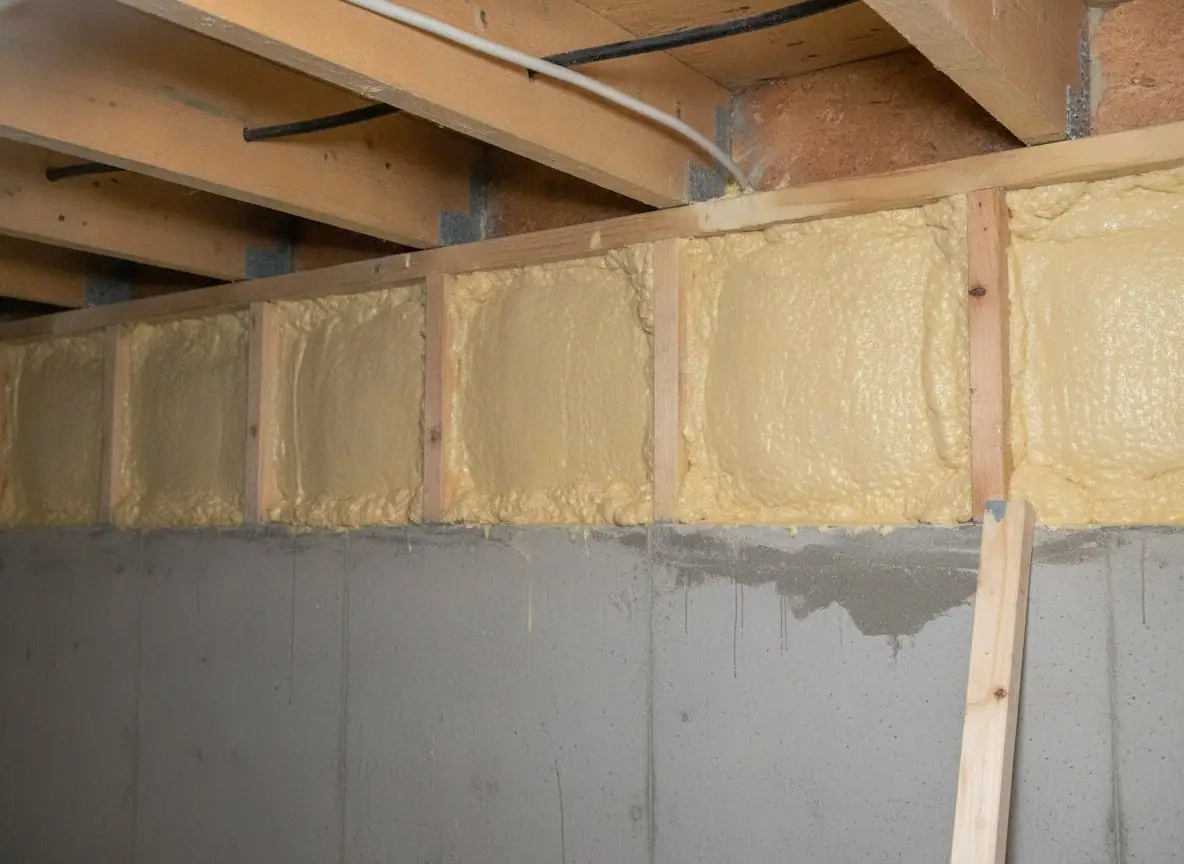
Open-cell and closed-cell spray foam insulation are used in open-wall scenarios during renovation or new construction. Closed-cell spray foam provides R-6.5 per inch and doubles as a vapor barrier — an advantage for Norwalk properties with moisture concerns. Learn more about our spray foam insulation services.
Fiberglass Batt Insulation
Standard fiberglass batts are used in open-wall applications, achieving R-13 in 2×4 cavities and R-19 to R-21 in 2×6 cavities. This is a cost-effective solution for new construction and full gut-renovation projects throughout Norwalk’s evolving residential landscape.
Mineral Wool (Rockwool) Batts
Mineral wool offers superior fire resistance ratings and acoustic performance compared to fiberglass. It is particularly recommended for multi-unit residential buildings and homes adjacent to high-traffic corridors in Norwalk where noise transmission is a primary concern.
Wall Insulation Cost in Norwalk, CA
Understanding the cost of wall insulation in Norwalk helps homeowners budget appropriately and compare quotes accurately. Pricing depends on the method, home size, existing conditions, and accessibility.
Typical Price Ranges
- Injection Foam (Retrofit): $1.50 – $3.50 per square foot of wall area. A typical 1,500 sq ft Norwalk ranch home averages $1,800 – $4,200 for full exterior wall treatment.
- Dense-Pack Blown-In Cellulose (Retrofit): $1.00 – $2.50 per square foot. Full home treatment typically ranges $1,200 – $3,500.
- Spray Foam (Open Wall): $2.00 – $5.00 per square foot depending on open-cell vs. closed-cell formulation.
- Fiberglass Batt (Open Wall): $0.50 – $1.50 per square foot — the most economical option for open-wall renovation projects.
Read moreShow less
Factors That Affect Cost in Norwalk
- Home age and construction type: Pre-1960 plaster-wall homes in Norwalk’s older neighborhoods require extra care during drilling and patching.
- Exterior cladding: Stucco patching adds cost compared to wood or vinyl siding homes.
- Accessibility: Two-story walls and cathedral ceilings require additional equipment and labor.
- Existing insulation removal: If deteriorated insulation or pest-contaminated material is present, insulation removal adds $0.50 – $1.50 per sq ft to the project cost.
Available Incentives
Southern California Edison’s Energy Savings Assistance Program and the California Energy Commission’s TECH Clean California initiative offer rebates for qualifying Norwalk homeowners upgrading to energy-efficient insulation. We assist clients in identifying and applying for applicable rebates. Call (562) 573-5138 for a detailed cost estimate specific to your Norwalk property.
Norwalk Neighborhoods We Serve
Maretana District
The Maretana neighborhood, centered along Maretana Drive and adjacent residential streets south of the 91 Freeway, features dense concentrations of 1950s and 1960s ranch-style homes on slab foundations. These properties commonly have uninsulated 2×4 exterior walls with original plaster interiors. Retrofit injection foam or dense-pack cellulose is the standard recommendation here.
Studebaker Road Corridor
The residential streets flanking Studebaker Road in eastern Norwalk contain a mix of 1960s tract homes and 1970s construction that may have minimal fiberglass batts — often compressed, settled, or moisture-damaged after decades of use. Insulation removal and replacement is frequently recommended before new installation in this area.
South Norwalk (Near Coyote Creek)
Homes in southern Norwalk near the Coyote Creek flood control channel sit on clay-heavy soils with higher moisture potential. We recommend closed-cell spray foam components or injection foam with vapor-barrier properties for walls in this zone, supplemented by crawl space insulation for comprehensive moisture management.
Norwalk Town Square Area
The neighborhood surrounding the Norwalk Town Square shopping corridor includes higher-density residential buildings from the 1980s and 1990s. These structures often have fiberglass batts installed but benefit from top-off treatments and air sealing to address settling and shrinkage over 30-plus years of use.
Wall Insulation Maintenance Tips for Norwalk Homeowners
- Annual visual inspection: Each fall before Norwalk’s rainy season (typically November through March), inspect interior walls for moisture staining, bubbling paint, or soft drywall — early indicators of wall cavity moisture infiltration.
- Check exterior cladding integrity: Stucco cracks and wood siding gaps allow water and pests to enter wall cavities. Seal exterior cracks promptly, particularly after seismic activity, which is common in the greater Los Angeles region.
- Monitor for pest activity: Rodents nesting in wall cavities compress and contaminate insulation materials. Signs include scratching sounds and visible entry points at the roofline or foundation.
- Maintain proper attic ventilation: Inadequate attic airflow creates heat buildup that forces additional work onto wall insulation systems. Pair wall insulation with attic insulation maintenance for best results.
- Control interior humidity: Run exhaust fans during cooking and bathing to minimize moisture-laden air contacting exterior walls in Norwalk’s cooler months.
- Schedule a professional re-inspection every 10 years: Blown-in insulation materials can settle 10 to 15% over time, reducing effective R-values. A decade-interval inspection confirms ongoing performance.
- Address HVAC duct leaks promptly: Leaking ducts within wall cavities can introduce moisture and degrade surrounding insulation materials rapidly.
Why Choose Bright Sky Attic Insulation for Wall Insulation in Norwalk?
Bright Sky Attic Insulation is a locally focused insulation contractor with deep expertise in the specific housing conditions, climate demands, and construction characteristics of Norwalk and Southeast Los Angeles County. We are not a national franchise dispatching out-of-area crews — we are a local team that understands the difference between a Maretana ranch home and a South Norwalk stucco duplex and knows how each demands a tailored approach.
Our technicians are trained in all major insulation methods, including injection foam, dense-pack blown-in, spray foam, and batt installation. We carry full liability insurance and operate in compliance with California contractor regulations.
We serve Norwalk and the surrounding communities of Downey, Pico Rivera, Bellflower, Cerritos, La Mirada, Lakewood, Paramount, Santa Fe Springs, Montebello, Whittier, Buena Park, La Habra, Commerce, Artesia, East Whittier, South Whittier, West Whittier-Los Nietos, and Buena Park with the same level of local knowledge and workmanship.
Our process is transparent, our estimates are detailed, and we stand behind our work. Call (562) 573-5138 to speak with a Norwalk wall insulation expert today.
FAQ
Frequently Asked Questions: Wall Insulation in Norwalk, CA
How much does wall insulation cost in Norwalk, CA?
Wall insulation costs in Norwalk range from approximately $1,200 to $4,500 for a typical single-family home depending on the method used and the total wall area. Retrofit injection foam for a standard 1,400–1,600 sq ft Norwalk ranch home typically runs $1,800 to $3,800. We provide free, detailed written estimates with no obligation.
Do I need to open my walls to add insulation to an existing Norwalk home?
In most cases, no. For existing homes with closed walls — which describes the majority of Norwalk’s residential housing stock — we use injection foam or dense-pack blown-in cellulose installed through small drilled holes in the exterior or interior. These holes are patched and finished after installation, leaving walls intact with minimal disruption.
How long does a wall insulation project take in Norwalk?
Most single-family residential wall insulation projects in Norwalk are completed in one to three days. Larger homes, multi-story properties, or projects requiring extensive stucco repair may take up to five days. We provide a timeline estimate before work begins.
Is wall insulation worth it for an older Norwalk home built in the 1950s or 1960s?
Absolutely. Homes from Norwalk’s post-war construction era have essentially zero wall insulation, which means HVAC systems are working significantly harder than necessary. Most Norwalk homeowners recoup wall insulation costs through reduced energy bills within four to eight years, with comfort improvements felt immediately.
Does Norwalk require a building permit for wall insulation?
Many retrofit wall insulation projects qualify for permit exemption under the City of Norwalk Building and Safety Division’s guidelines. However, this depends on the scope of work, structural alterations, and cladding repairs involved. We evaluate permit requirements during the assessment phase and handle all permitting coordination on your behalf.
What R-value should my Norwalk home’s walls have?
Norwalk falls within California’s Title 24 Climate Zone 10. Current standards require a minimum of R-13 for 2×4 exterior walls and R-20 for 2×6 walls in new construction. For existing homes, we target these same benchmarks during retrofit projects. In some cases where cavity depth allows, we can exceed these minimums with higher-density materials for enhanced performance.
Can wall insulation help reduce noise from the freeway near my Norwalk home?
Yes. Dense-pack cellulose and mineral wool insulation materials significantly reduce sound transmission through exterior walls. For homes within a half-mile of the I-5 and 605 interchange or along major arterials like Firestone Boulevard or Imperial Highway, acoustic-focused insulation can reduce interior noise levels by 5 to 10 decibels — a noticeable and meaningful improvement in daily comfort.
Do you offer other insulation services in Norwalk beyond wall insulation?
Yes. Bright Sky Attic Insulation provides a full range of insulation services in Norwalk, including attic insulation, blow-in insulation, spray foam insulation, crawl space encapsulation, crawl space insulation, insulation removal, and insulation replacement. We can bundle services for comprehensive home energy efficiency upgrades.
Get a Free Wall Insulation Estimate in Norwalk, CA
Don’t let another scorching Norwalk summer or climbing SCE bill remind you that your walls aren’t doing their job. Bright Sky Attic Insulation is ready to assess your home, recommend the right solution, and complete the work with minimal disruption to your daily life.
Whether you’re in Maretana, Studebaker, South Norwalk, or anywhere across the city, our local team brings the expertise and equipment to get the job done right the first time.
Call us today at (562) 573-5138 to schedule your free on-site wall insulation assessment. You can also reach our team online through our contact page. We serve Norwalk and all surrounding Southeast Los Angeles County communities, including Downey, Cerritos, Lakewood, Bellflower, La Mirada, Pico Rivera, and Whittier.
Comfortable walls. Lower bills. Call Bright Sky Attic Insulation — Norwalk’s local insulation experts.
Get in touch
Find insulation help near you
Request a free estimate online or give us a call — our team will follow up quickly.
- Call us(562) 573-5138
- Visit14020 Pioneer Blvd K, Norwalk, CA 90650
- HoursMon-Sun 07:00-19:00