Insulation Materials & Types in Norwalk, CA
Energy-Saving Insulation Materials & Types in Norwalk for Norwalk, CA Homes — Licensed & Insured
Compare insulation materials for Norwalk, CA homes. Learn R-values, costs, pros & cons of spray foam, blown-in, batts & more. Free assessment: 562-573-5138.
Choosing the right insulation material for your Norwalk home is one of the most impactful decisions you can make for long-term comfort and energy efficiency. Norwalk sits in California’s Climate Zone 8, where summers regularly push attic temperatures above 140°F, and the proximity to the Los Angeles Basin means mild but occasionally humid coastal air drifts inland. Unlike colder climates, Norwalk homes face a unique combination of intense solar heat gain, moderate winter cool-down, and year-round air quality concerns — all of which influence which insulation material performs best.
R-value measures an insulation material’s resistance to heat flow. The higher the R-value, the better the material insulates. For Norwalk attics, the U.S. Department of Energy recommends a minimum of R-38, though R-49 to R-60 delivers the greatest return on investment given local cooling costs.
Read moreShow less
This guide breaks down every major insulation material available to Norwalk homeowners — covering R-values, pros and cons, ideal applications, and approximate installed costs — so you can make a confident, informed decision before any work begins.
Understanding Insulation Types for Norwalk Homes
Norwalk homeowners have access to six primary insulation material categories, each suited to different areas of the home, budgets, and performance goals. The right choice depends on several local factors that are easy to overlook when comparing materials in the abstract.
First, consider Norwalk’s housing stock. A large share of homes in the city were built between the 1950s and 1980s, featuring wood-frame construction with narrow wall cavities and older attic configurations that may have little to no existing insulation — or degraded fiberglass batts that have lost their effectiveness over decades. Newer construction follows California’s Title 24 energy code, which sets strict minimum R-value requirements for all conditioned spaces.
Read moreShow less
Second, California Climate Zone 8 favors materials that resist radiant heat effectively, resist moisture without promoting mold growth, and maintain performance during extreme temperature swings. Norwalk’s modest wildfire risk zone also makes fire-resistance ratings worth considering.
Finally, application area matters enormously. Attics, exterior walls, interior walls, crawl spaces, and garage ceilings each have different installation constraints that make certain materials more practical than others. The sections below walk through each material type with these local realities in mind.
How Norwalk’s Climate Affects Your Insulation Material Choice
Norwalk experiences a semi-arid Mediterranean climate with long, hot summers and mild winters. Attic temperatures regularly exceed 140°F from June through September, which means heat gain through the roof deck is the dominant comfort and energy problem for most households. In this context, air sealing combined with high R-value insulation delivers the greatest reduction in cooling costs — which is why spray foam or a combination of air sealing plus blown-in cellulose or fiberglass consistently outperforms batts installed without proper sealing.
Humidity in Norwalk is moderate but coastal air from the Pacific can push relative humidity higher during marine layer events in late spring and early summer. Moisture-resistant materials like closed-cell spray foam, mineral wool, and rigid foam board are safer choices in areas prone to condensation — particularly crawl spaces and exterior walls facing west or southwest.
Read moreShow less
For existing homes built before 1980, the priority is typically the attic floor — blown-in insulation to R-49 or R-60 offers the fastest payback period. For new construction or major renovation projects, closed-cell spray foam or continuous rigid foam board on exterior walls can help meet or exceed California Title 24 requirements.
Homeowners in areas with any local wildfire risk should weigh mineral wool or treated cellulose for its fire-resistance properties. Whenever budget allows, combining an air barrier material (spray foam at penetrations) with a bulk insulation layer (blown-in) provides the best of both worlds for Norwalk’s demanding summer climate.
Free, no-obligation estimates
Talk to Bright Sky Attic Insulation
Tell us what you need and we’ll take it from there.
Insulation Materials Available in Norwalk, CA
Spray Foam Insulation
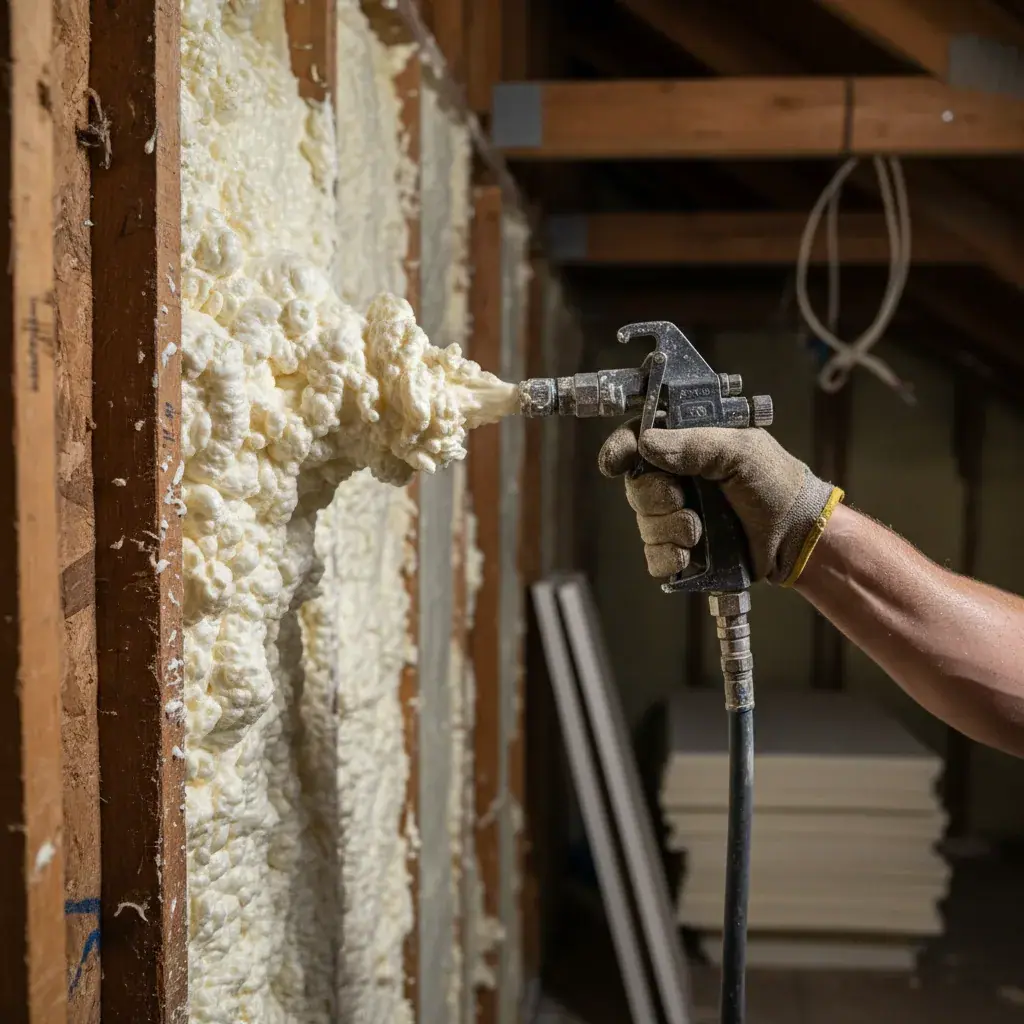
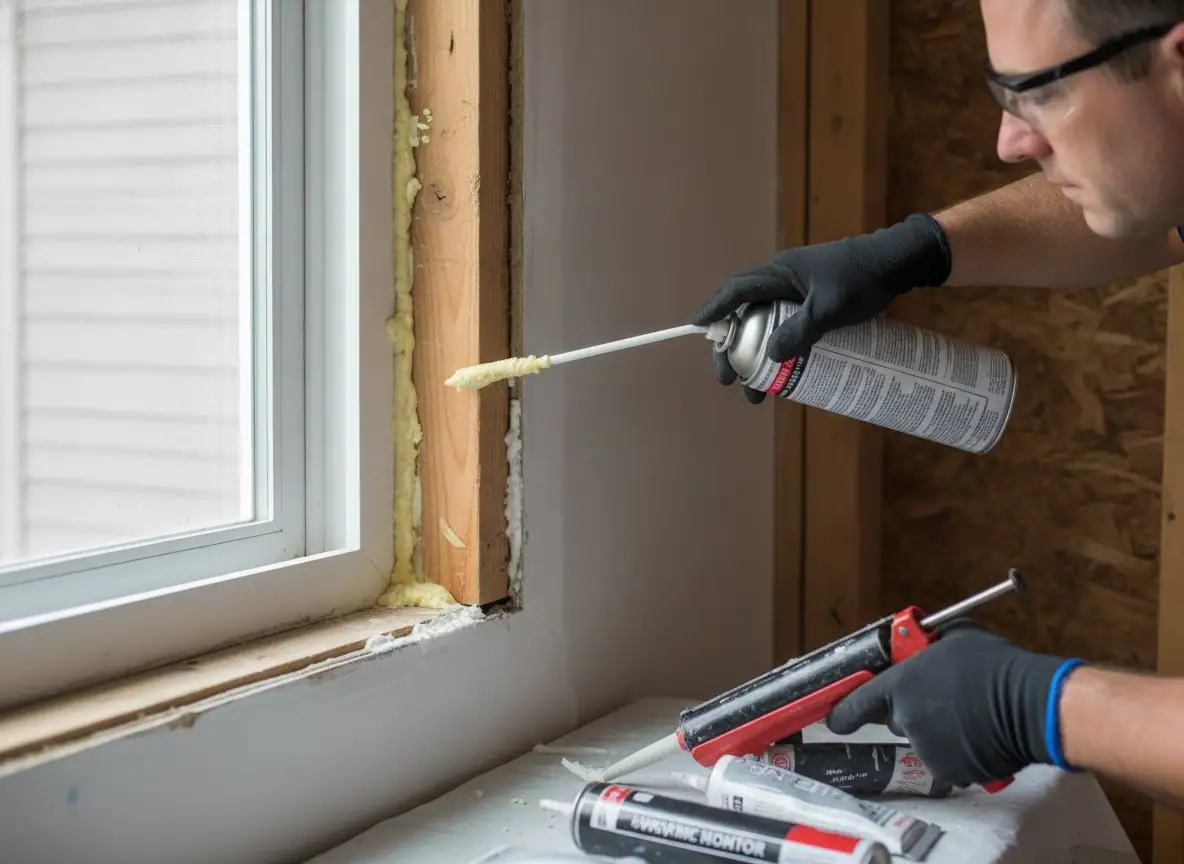
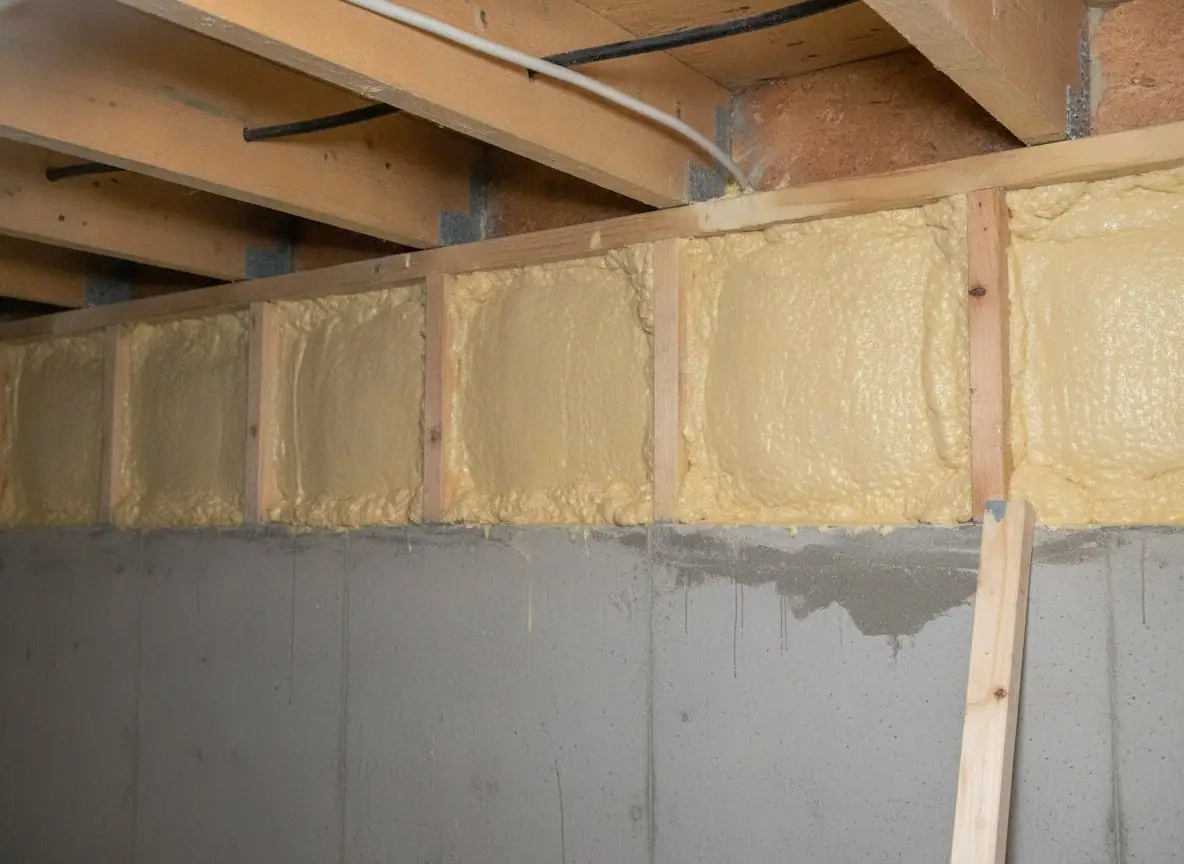
Spray polyurethane foam (SPF) comes in two forms: open-cell (R-3.5 to R-3.7 per inch) and closed-cell (R-6 to R-7 per inch). Closed-cell spray foam also acts as a vapor and air barrier, making it particularly effective in Norwalk’s attics where hot outdoor air infiltration drives up cooling costs. Open-cell foam is lighter and more affordable, ideal for interior wall cavities. Pros include superior air sealing, longevity exceeding 80 years, and high R-value per inch. Cons are the higher upfront cost and the need for professional installation. Best used in attic rooflines, rim joists, and hard-to-reach cavities. Approximate installed cost: open-cell $1.00–$2.00/sq ft; closed-cell $2.50–$4.50/sq ft.
Learn moreBlown-In (Loose-Fill) Insulation
Blown-in insulation — available in fiberglass or cellulose — is one of the most popular attic insulation choices for Norwalk’s existing homes. It conforms to irregular attic spaces, covers joists and framing evenly, and can be layered to achieve R-38 to R-60 without major structural changes. Fiberglass loose-fill offers R-2.2 to R-2.7 per inch; cellulose reaches R-3.2 to R-3.8 per inch. Pros include fast installation, good coverage, and cost-effectiveness. Cons: it can settle over time and requires proper air sealing beneath it for best results. Ideal for open attic floors and hard-to-access spaces. Approximate installed cost: $1.00–$2.00/sq ft.
Fiberglass Batt Insulation
Fiberglass batts are the most widely recognized insulation product, pre-cut to fit standard wall stud and joist spacing. R-values range from R-11 (3.5-inch batt) to R-38 (10-inch batt). For Norwalk homes, batts work well in new construction walls and accessible attic bays. Pros include low material cost, widespread availability, and DIY-friendliness for accessible spaces. Cons include gaps around wiring and framing that reduce effective R-value, and performance degradation if batts are compressed or exposed to moisture. Fire-resistance ratings are moderate. Approximate installed cost: $0.50–$1.50/sq ft depending on thickness.
Mineral Wool / Rockwool Insulation
Mineral wool, often sold under the brand name Rockwool, is manufactured from volcanic rock and recycled slag. It provides R-3.0 to R-3.3 per inch and offers exceptional fire resistance — it can withstand temperatures above 1,400°F — making it a smart choice for Norwalk homeowners concerned about fire safety. It is also naturally moisture-resistant and does not support mold growth, which matters given coastal humidity. Pros: superior soundproofing, fire resistance, and moisture management. Cons: heavier and slightly more expensive than fiberglass. Best applications include exterior walls, garage separation walls, and attic knee walls. Approximate installed cost: $1.40–$2.50/sq ft.
Cellulose Insulation
Cellulose is made from 80–85% recycled paper products and treated with fire-retardant borate compounds. It achieves R-3.2 to R-3.8 per inch and is one of the most environmentally sustainable insulation options available. For Norwalk attics, blown-in cellulose performs excellently because its density limits air circulation within the material, reducing convective heat transfer during hot summers. Pros: excellent air sealing capacity, eco-friendly, competitive cost. Cons: it can absorb moisture if improperly installed and may settle 15–20% over time. Best used in open attic floors and dense-packed wall cavities. Approximate installed cost: $0.90–$1.80/sq ft.
Foam Board (Rigid) Insulation
Rigid foam boards — including EPS (expanded polystyrene), XPS (extruded polystyrene), and polyisocyanurate — deliver high R-values in thin profiles. R-values range from R-3.8 per inch (EPS) to R-6.5 per inch (polyiso). In Norwalk, rigid foam board is commonly used on exterior walls during re-siding projects, on attic hatch covers, and in crawl space walls. Polyiso performs exceptionally in hot climates due to its high R-value and reflective facings. Pros: high R-value per inch, moisture resistance, and versatility. Cons: higher cost and must be covered with a thermal barrier (drywall) for fire code compliance. Approximate installed cost: $1.50–$4.00/sq ft.
Why Norwalk Homeowners Trust Bright Sky Attic Insulation for Insulation
At Bright Sky Attic Insulation, we bring deep expertise and local knowledge to every project in Norwalk and the surrounding communities. Here is why homeowners continue to choose us:
Expertise Across All Insulation Types:
Expertise Across All Insulation Types:Our trained technicians are proficient with spray foam, blown-in, batts, mineral wool, cellulose, and rigid foam board — we recommend the right material for your specific home and goals, not the easiest one to install.
Licensed and Insured:
Licensed and Insured:We carry full California contractor licensing and comprehensive liability insurance, protecting your home and your investment throughout every project.
Manufacturer-Certified Installation:
Manufacturer-Certified Installation:Our team holds certifications from leading insulation manufacturers, ensuring materials are installed to specification and perform as rated.
Free Insulation Assessment:
Free Insulation Assessment:We provide a thorough, no-cost evaluation of your current insulation, air sealing, and ventilation to identify exactly where your home is losing conditioned air.
Warranty Coverage:
Warranty Coverage:All installations come with workmanship warranties, and many materials carry separate manufacturer product warranties for added peace of mind.
Local Energy Code and Rebate Knowledge:
Local Energy Code and Rebate Knowledge:We stay current with California Title 24 requirements, SoCal Gas, and SCE rebate programs so you can maximize savings on qualifying insulation upgrades.
FAQ
Insulation Materials FAQ for Norwalk Homeowners
What is the best insulation type for Norwalk’s climate?
For most Norwalk homes, blown-in cellulose or fiberglass installed over a properly air-sealed attic floor delivers the best balance of performance and cost. Homes with significant air infiltration problems benefit most from closed-cell spray foam at key penetration points combined with blown-in insulation for bulk R-value. The best material ultimately depends on the specific area being insulated, the existing construction, and your budget.
What R-value does the DOE recommend for Norwalk attics?
The U.S. Department of Energy recommends R-38 as a minimum for Climate Zone 8 attics, but R-49 to R-60 is strongly advisable given Norwalk’s intense summer heat and the high cost of cooling. Walls in the same zone should achieve at least R-13 in the cavity, with continuous exterior insulation adding R-5 or more under California’s Title 24 requirements for new construction and major renovations.
How do the costs of different insulation materials compare?
Fiberglass batts are typically the least expensive at $0.50–$1.50/sq ft installed. Blown-in cellulose and fiberglass run $0.90–$2.00/sq ft. Mineral wool batts fall between $1.40–$2.50/sq ft. Rigid foam board ranges from $1.50–$4.00/sq ft. Open-cell spray foam costs $1.00–$2.00/sq ft while closed-cell spray foam is the highest at $2.50–$4.50/sq ft. Higher upfront costs often mean greater long-term energy savings and durability.
Is attic insulation different from wall insulation?
Yes, significantly. Attic insulation focuses primarily on reducing heat gain from the roof and can be installed in thick layers on the attic floor. Wall insulation must fit within a defined cavity depth — typically 3.5 to 5.5 inches in older Norwalk homes — which limits R-value options and makes air sealing more technically challenging. Dense-pack blown-in, spray foam, and high-density batts are commonly used in existing wall retrofits.
How much can proper insulation reduce my energy bills in Norwalk?
According to the North American Insulation Manufacturers Association, properly installed attic insulation can reduce heating and cooling costs by 15–20% annually. In Norwalk, where summer cooling accounts for a significant share of household energy use, upgrading an under-insulated attic from R-11 to R-49 can translate to $200–$500 or more in annual savings depending on home size and current HVAC efficiency.
Are there rebates or tax credits available for insulation upgrades in California?
Yes. California homeowners may qualify for federal tax credits under the Inflation Reduction Act — up to 30% of installed cost for qualifying insulation improvements, capped at $1,200 per year. Southern California Edison and SoCal Gas both offer utility rebate programs for insulation upgrades that meet specific R-value thresholds. Income-qualified households may also access the TECH Clean California and Energy Upgrade California programs for deeper incentives. Rebate programs change periodically, so confirm current availability at the time of your project.
Does insulation also help with soundproofing in Norwalk homes?
Some insulation materials provide meaningful acoustic benefits in addition to thermal performance. Mineral wool (Rockwool) and dense-pack cellulose are among the best performers for sound attenuation, making them excellent choices for walls between living spaces, home offices, or rooms adjacent to busy streets. Standard fiberglass batts offer moderate sound reduction, while spray foam provides good thermal and air sealing but only modest acoustic improvement.
How long does insulation last in a Norwalk home?
Most modern insulation materials are designed to last the lifetime of the home when properly installed. Spray foam and rigid foam board can remain effective for 80+ years. Fiberglass and mineral wool batts maintain their R-value indefinitely if kept dry and undisturbed. Blown-in cellulose and fiberglass may settle slightly over time, which is why installers account for settling when determining initial thickness. Periodic inspections every 10–15 years are a good practice to check for moisture intrusion, pest damage, or displacement.
Get a Free Insulation Assessment in Norwalk
Not sure which insulation material is right for your Norwalk home? Bright Sky Attic Insulation offers a comprehensive, no-cost insulation assessment to evaluate your attic, walls, and crawl space — identifying exactly where energy is escaping and which materials will deliver the best performance for your budget and Norwalk’s demanding climate.
Our team is fully licensed and insured, experienced with all major insulation types, and knowledgeable about California Title 24 codes and local utility rebate programs that can help offset your upgrade costs. We take the guesswork out of an important home improvement decision.
Call us today at 562-573-5138 to schedule your free assessment. Serving Norwalk and the surrounding communities of Los Angeles County.
Why choose us
Why choose Bright Sky Attic Insulation?
Free estimates
Get a clear, no-obligation estimate before any work begins.
Licensed & insured
Your property and our crew are protected on every project.
Residential & commercial
One team for homes, multi-family and commercial properties.
Locally owned & operated
A local team serving your community and the surrounding area.
Get in touch
Find insulation help near you
Request a free estimate online or give us a call — our team will follow up quickly.
- Call us(562) 573-5138
- Visit14020 Pioneer Blvd K, Norwalk, CA 90650
- HoursMon-Sun 07:00-19:00