Ceiling Insulation in Norwalk, CA
Energy-Saving Ceiling Insulation for Norwalk, CA Homes — Licensed & Insured
Need ceiling insulation in Norwalk, CA? Bright Sky Attic Insulation offers expert installation, removal & replacement. Call (562) 573-5138 for a free estimate.
Ceiling insulation is the thermal and acoustic barrier installed between your living space and the attic or roof above, preventing unwanted heat transfer and dramatically reducing energy costs. In Norwalk, CA — a dense, sun-baked city in the southeastern San Gabriel Valley — summer temperatures routinely climb past 95°F, and radiant heat pushes through uninsulated or under-insulated ceilings into living spaces below, forcing air conditioning systems to work overtime.
Bright Sky Attic Insulation serves homeowners and property managers throughout Norwalk and the surrounding communities of the San Gabriel Valley and Southeast Los Angeles County. Our team understands the specific construction eras that define Norwalk’s housing stock, from post-World War II tract homes built in the late 1940s and 1950s to mid-century ranch-style properties and modern infill construction. Whether your ceiling insulation has degraded, was never properly installed, or you’re starting fresh, we deliver expert assessments and precise installation tailored to Norwalk’s unique climate demands. Call us today at (562) 573-5138 to schedule your free evaluation.
Understanding Ceiling Insulation
Ceiling insulation refers to insulating material placed at the top of a conditioned space — either between ceiling joists in an attic floor assembly or directly against roof rafters in cathedral or unvented roof systems. Its primary function is to resist the flow of thermal energy: keeping heat out during summer and retaining warmth during winter. The effectiveness of insulation is measured in R-value, a number that reflects resistance to heat flow. The higher the R-value, the better the material insulates.
Insulation as a building science concept dates back centuries, but modern residential insulation standards in the United States were largely developed after the 1973 oil embargo, when the federal government and states began pushing for energy codes that required minimum R-values in new construction. California’s Title 24 energy code, first adopted in 1978, has been progressively updated to demand higher performance from residential thermal envelopes — including ceilings.
Read moreShow less
In climate zones like Norwalk’s, which falls under California Climate Zone 10, the Department of Energy and California Energy Commission recommend ceiling insulation of R-38 to R-60 for existing homes. Many of Norwalk’s older homes — particularly those built during the post-war housing boom of the 1940s through 1960s — were constructed with little to no insulation, or with early-generation fiberglass batts that are now compacted, moisture-damaged, or simply obsolete by current standards.
Common insulation materials used in ceiling applications include loose-fill fiberglass, blown cellulose, open-cell and closed-cell spray foam, and fiberglass batt products. Each has different thermal performance characteristics, moisture resistance ratings, and ideal use cases depending on the age of the building, existing air sealing conditions, and the homeowner’s energy efficiency goals. In Norwalk’s housing stock — which skews heavily toward single-family detached homes with vented attic spaces — blown-in insulation and spray foam are among the most effective ceiling insulation solutions due to their ability to fill irregular joist cavities and seal air leaks simultaneously.
Why Ceiling Insulation Is Needed in Norwalk, CA
Extreme Heat Events and the Urban Heat Island Effect
Norwalk sits within one of the most thermally stressed corridors of Los Angeles County. The city’s dense urban development — characterized by low-rise residential blocks, asphalt-heavy streets, and minimal tree canopy in many older neighborhoods — intensifies the urban heat island effect. During the September 2022 heat emergency, when Los Angeles County recorded historic temperatures exceeding 113°F in some inland areas, Norwalk’s rooftop surfaces reached surface temperatures above 160°F. Attics in homes without adequate ceiling insulation saw indoor temperatures climb 15–20°F above the outdoor air temperature, overwhelming HVAC systems and causing dangerous living conditions.
Repeated heat cycling — with summer highs frequently between 90°F and 100°F and cooler winter nights dropping to the low 40s — causes thermal expansion and contraction of structural materials, which compresses and degrades older fiberglass batt insulation over time. Studies have shown that fiberglass batts lose up to 20–40% of their effective R-value when compressed or when gaps develop around pipes, wires, and ceiling fixtures — all common in Norwalk’s aging tract home inventory.
Norwalk’s Post-War Housing Stock
The majority of Norwalk’s residential neighborhoods — including areas around Studebaker Road, the Excelsior neighborhood near Pioneer Boulevard, and the blocks flanking Rosecrans Avenue — were developed rapidly between 1945 and 1965 to house returning veterans and their growing families. These homes were built before modern energy codes existed, meaning many received no ceiling insulation at all or minimal early-generation insulation that has long since failed.
Los Angeles County building records indicate that homes built before 1978 in communities like Norwalk are statistically likely to have sub-code insulation, with R-values between R-7 and R-11 in attic floors — far below the current recommended R-38 minimum for Climate Zone 10. This performance gap directly translates to higher utility bills: California Energy Commission data suggests that upgrading from R-11 to R-38 ceiling insulation in a typical 1,500 square foot Norwalk home can reduce heating and cooling costs by 15–25% annually.
Moisture, Pests, and Air Quality Challenges
Norwalk’s proximity to the Los Angeles River basin and the region’s seasonal humidity swings — particularly during the May Gray and June Gloom marine layer months — introduce moisture into attic spaces that accelerates insulation degradation. Cellulose insulation installed before 1990 can absorb moisture and lose R-value, while older fiberglass batts may harbor mold spores in humid microenvironments. Additionally, roof rats and other rodents common in Southeast Los Angeles County frequently nest in deteriorated attic insulation, creating contamination hazards that require full removal and replacement before new ceiling insulation can be safely installed.
Free, no-obligation estimates
Talk to Bright Sky Attic Insulation
Tell us what you need and we’ll take it from there.
Signs You Need Ceiling Insulation in Norwalk
Energy and Comfort Indicators
- Monthly SoCalGas or SCE bills that have increased more than 10–15% year-over-year despite similar usage habits
- Rooms on the top floor or directly below the attic that are noticeably hotter than the rest of the home during summer afternoons
- Your HVAC system runs continuously during Norwalk’s peak summer heat without reaching the set thermostat temperature
- Cold drafts near ceiling fixtures, recessed lights, or attic access hatches during winter months
Visual and Physical Symptoms
- Visible gaps, thin spots, or compressed insulation batts visible from the attic access hatch
- Discoloration or staining on ceiling drywall, which may indicate moisture infiltration through degraded insulation
- Evidence of pest activity — droppings, nesting material, or chewed insulation — visible in the attic space
- Insulation that appears gray-black or matted rather than its original fluffy appearance
Urgency Indicators
- Your home was built before 1978 and you have never had the attic insulation professionally inspected or replaced
- You recently had a roof replacement but did not address the attic insulation beneath
- A home energy audit has identified your ceiling as a primary source of thermal loss
Our process
Our Ceiling Insulation Process in Norwalk
- 01
Free On-Site Assessment (Day 1 — 1 to 2 Hours)
Our certified insulation specialist visits your Norwalk property to conduct a thorough evaluation of your existing ceiling and attic conditions. We measure current insulation depth and estimate existing R-values, inspect for moisture damage, pest contamination
- 02
Customized Scope of Work and Written Estimate (Within 24 Hours)
Based on our findings, we prepare a written scope of work that specifies materials, target R-values, and any preparatory work required — such as insulation removal, air sealing, or pest decontamination — along with transparent pricing. We present all options c
- 03
Preparatory Work — Removal and Air Sealing (Day 2 or 3, 2 to 6 Hours)
If existing insulation is contaminated, compacted beyond usability, or must be removed to facilitate air sealing, our crew completes this step first. We use commercial-grade vacuum equipment to remove old material safely and seal it in double-bagged containers
- 04
Installation of New Ceiling Insulation (Day 2 to 4, 2 to 5 Hours)
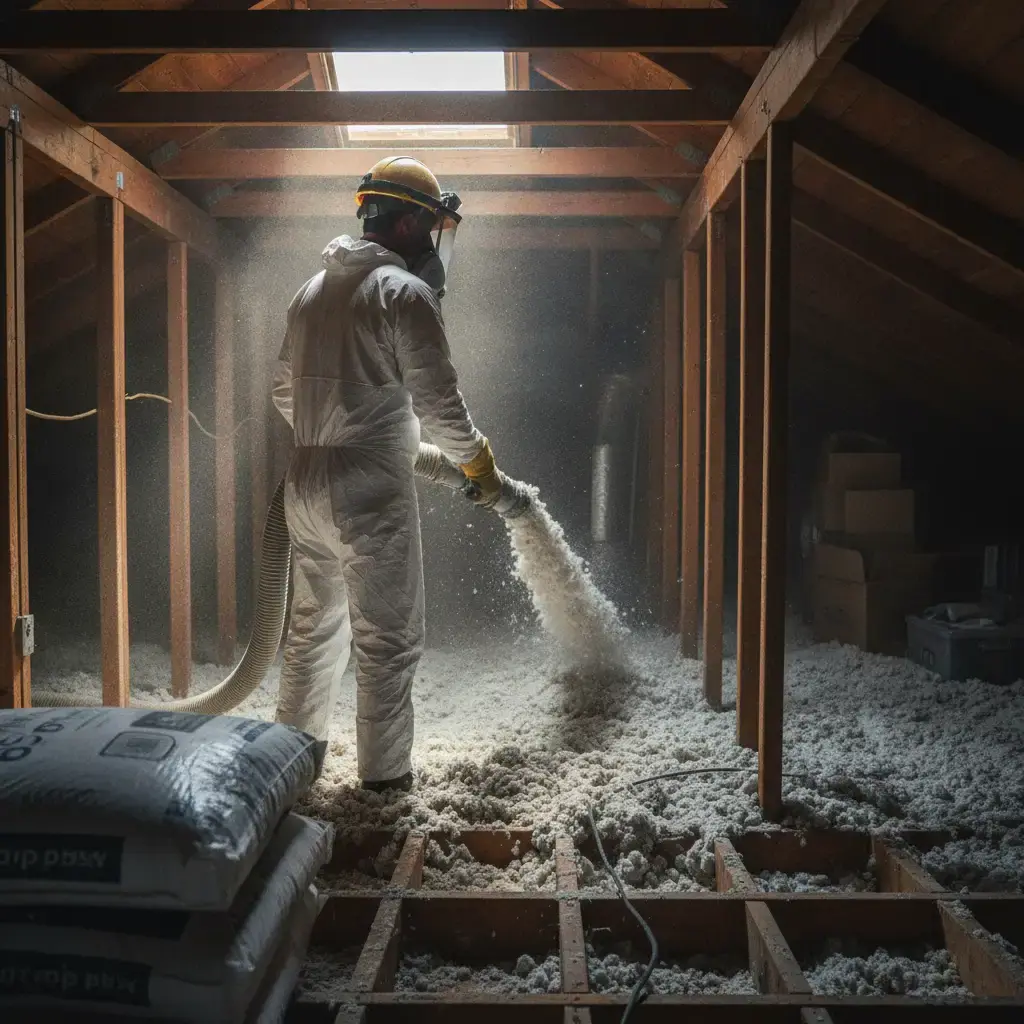
We install your selected insulation product — whether blown cellulose, blown fiberglass, spray foam, or batt insulation — to the specified depth and R-value. For most Norwalk homes targeting R-38, blown-in insulation is installed to approximately 10–12 inches
- 05
Quality Control Verification (Same Day, 30 to 60 Minutes)
After installation, our lead technician conducts a final walkthrough of the attic to verify even coverage, correct depth at multiple measurement points, and proper clearance around ventilation baffles and recessed light housings as required by California build
- 06
Site Cleanup and Documentation (Same Day, 30 Minutes)
We remove all equipment, materials, and debris from your property and provide you with a written completion summary documenting installed R-values, materials used, and square footage covered — documentation that is valuable for utility rebate applications and
Ceiling Insulation Methods and Approaches
Blown-In Fiberglass Insulation
Blown-in fiberglass consists of fine glass fibers pneumatically installed to fill irregular cavities, around obstructions, and to precise depths in open attic floors. It is non-combustible, moisture-resistant, and does not settle significantly over time. This is our most commonly recommended option for Norwalk’s vented attic homes, particularly those with existing partial insulation where adding blown-in material on top of existing batts brings the assembly to code-minimum R-38. Learn more about our blow-in insulation services
Learn moreBlown-In Cellulose Insulation
Cellulose is made from recycled paper treated with borate fire retardants and provides excellent thermal performance and superior sound attenuation compared to fiberglass. It is particularly effective for Norwalk homeowners concerned about noise infiltration from neighboring properties or street traffic. Cellulose performs best in dry attic environments; we assess moisture conditions carefully before recommending this option. Explore our attic insulation solutions
Spray Foam Insulation
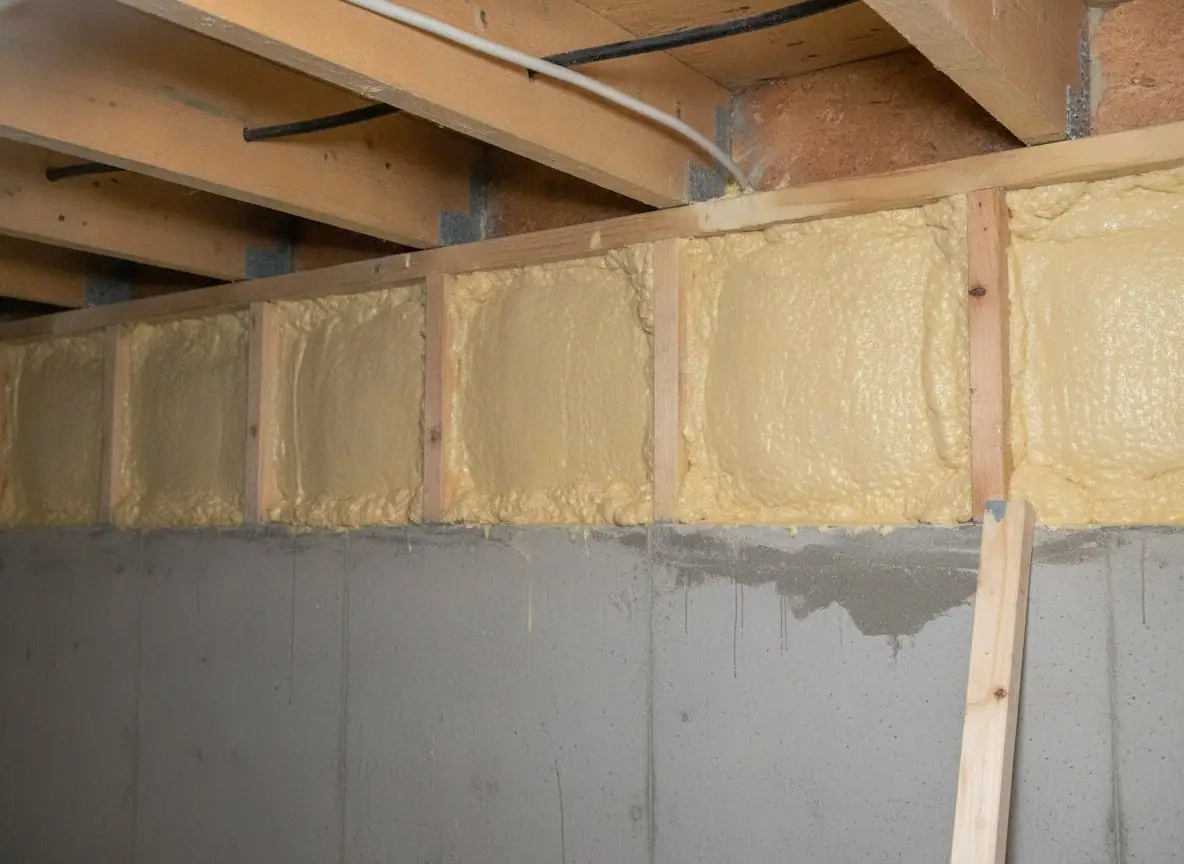
Open-cell and closed-cell spray polyurethane foam are applied to roof deck undersides in unvented attic configurations or to seal critical air leakage points before blown-in insulation. Closed-cell spray foam achieves R-6.5 per inch and provides a moisture barrier, making it ideal for Norwalk homes with roof ventilation challenges. Discover our spray foam insulation options
Learn moreFiberglass Batt Insulation
Pre-cut fiberglass batts are installed between ceiling joists in new construction or accessible attic spaces with regular joist spacing. Best suited for straightforward new-build or gut-renovation scenarios where joist cavities are clear and accessible. View our full insulation installation services
Ceiling Insulation Cost in Norwalk, CA
Understanding ceiling insulation costs helps Norwalk homeowners budget accurately and evaluate proposals with confidence. Pricing varies based on material selection, current attic conditions, square footage, and any required preparatory work.
Typical Cost Ranges
- Blown-in fiberglass insulation (R-38 in open attic): $1.50 – $2.50 per square foot installed. For a typical 1,200 square foot Norwalk home attic, expect $1,800 – $3,000.
- Blown-in cellulose insulation (R-38): $1.75 – $2.75 per square foot. Same 1,200 square foot attic: $2,100 – $3,300.
- Spray foam insulation (closed-cell, per inch): $1.50 – $3.00 per board foot. Spot application for air sealing typically adds $300 – $800 to a project.
- Insulation removal (if required before replacement): $1.00 – $2.00 per square foot, or $1,200 – $2,400 for a standard Norwalk attic. Learn about our insulation removal services
Read moreShow less
Factors That Affect Your Norwalk Project Cost
- Attic accessibility: Norwalk’s older ranch-style homes often have low-pitch roofs with limited attic clearance, increasing labor time.
- Pest contamination: Rodent-damaged insulation requiring decontamination adds cost but is essential for indoor air quality.
- Air sealing scope: Homes with many recessed lights or HVAC penetrations require more extensive pre-insulation air sealing work.
- Current insulation depth: Topping off existing adequate insulation is less expensive than full removal and reinstallation.
Rebates and Incentives
Southern California Edison and SoCalGas both offer rebates for qualifying insulation upgrades under their Energy Efficiency Programs. Norwalk homeowners may also qualify for federal tax credits under the Inflation Reduction Act (up to 30% of insulation project costs, capped at $1,200 annually). We provide documentation to support all rebate and tax credit applications.
Neighborhoods We Serve in Norwalk
Excelsior / Pioneer Boulevard Corridor
Homes in this central Norwalk corridor were predominantly built between 1948 and 1962 and feature the post-war California ranch layout with low-pitched gable roofs and shallow attic spaces. These properties frequently have original fiberglass batt insulation or no insulation at all, and attic clearance of 18–24 inches demands specialized low-profile blowing equipment.
Studebaker Road and Surrounding Blocks
This eastern Norwalk residential area includes a mix of mid-1950s and 1960s tract homes alongside some 1970s infill construction. Homes from the 1970s may have early-generation blown-in insulation that has settled significantly below its original R-value rating and benefits from topping-off to reach current Title 24 standards.
Norwalk Square Area
Neighborhoods around the Norwalk Square shopping district feature slightly newer construction from the late 1970s and 1980s. While these homes may have been built with some insulation, 40 years of thermal cycling and potential moisture exposure have degraded performance. We commonly perform R-value assessments and supplemental blown-in installations in this area.
We also serve all surrounding communities including Downey, Bellflower, Cerritos, La Mirada, and Whittier.
Ceiling Insulation Maintenance Tips for Norwalk Homeowners
- Annual attic visual inspection: Each fall before Norwalk’s mild rainy season, look into your attic with a flashlight to check for signs of moisture, pest activity, or visible insulation gaps near the eaves.
- Monitor your utility bills: A sudden unexplained increase in your SCE cooling costs during June–September is often the first indicator that ceiling insulation has been compromised.
- Keep attic ventilation clear: Norwalk’s Santa Ana wind events in autumn can deposit debris in soffit vents; clear blockages annually to maintain the balanced ventilation that protects insulation from moisture buildup.
- Seal attic access hatches: Install weatherstripping and a rigid foam cover on your attic access hatch to prevent conditioned air from escaping into the unconditioned attic space.
- Inspect after any roof work: Roofing contractors sometimes disturb or compress existing insulation; always schedule a post-roofing insulation check.
- Address pest entry points promptly: Seal any gaps at eaves, roof penetrations, or fascia boards to prevent rodents from nesting in and damaging insulation.
- Professional re-inspection every 10 years: Even well-installed insulation benefits from periodic professional evaluation to confirm R-values are maintained and no hidden moisture issues have developed.
Why Choose Bright Sky Attic Insulation in Norwalk
Bright Sky Attic Insulation is a locally focused insulation contractor serving Norwalk and the broader Southeast Los Angeles County and San Gabriel Valley region. Our team has direct, hands-on experience with the specific construction characteristics of Norwalk’s housing stock — from the tight attic clearances of 1950s ranch homes near Pioneer Boulevard to the mixed-era properties along Rosecrans Avenue and beyond.
We do not take a one-size-fits-all approach. Every Norwalk property receives a customized evaluation, and we never recommend more work than your home actually needs. Our pricing is transparent with no hidden fees, and we provide written documentation of all installed R-values and materials for your records.
Read moreShow less
Our full range of services — including insulation removal, spray foam insulation, crawl space encapsulation, and crawl space insulation — means we can address your entire home’s thermal envelope in a single relationship with a trusted local contractor.
Call us at (562) 573-5138 to speak with a Norwalk insulation specialist today.
FAQ
Frequently Asked Questions About Ceiling Insulation in Norwalk, CA
How much does ceiling insulation cost in Norwalk, CA?
Ceiling insulation in Norwalk typically ranges from $1,500 to $4,000 for a standard single-family home attic of 1,000–1,500 square feet, depending on material choice, current attic conditions, and whether insulation removal is required. Blown-in fiberglass and cellulose are the most cost-effective options for most Norwalk homes. Contact us for a free, no-obligation estimate specific to your property.
What R-value do I need for ceiling insulation in Norwalk?
Norwalk falls within California Climate Zone 10. The California Energy Commission and the Department of Energy recommend a minimum of R-38 for existing home ceiling insulation in this zone, with R-49 to R-60 providing even better performance returns given Norwalk’s intense summer heat. Most homes built before 1978 in Norwalk have ceiling insulation well below this threshold.
How long does ceiling insulation installation take in Norwalk?
A straightforward blown-in insulation installation in a typical Norwalk attic can be completed in 2–4 hours. If insulation removal, air sealing, or pest decontamination is required first, the total project may span 1–2 days. We schedule work to minimize disruption and provide clear timelines before any work begins.
Do I need to remove old insulation before adding new ceiling insulation?
Not always. If existing insulation is dry, pest-free, and structurally intact, we can often add new blown-in material on top to bring the assembly to the target R-value. However, if insulation is contaminated by rodents, saturated with moisture, or contains vermiculite (which may contain asbestos — found in some pre-1980 Norwalk homes), full removal is necessary before reinstallation. Learn about our insulation replacement services
Can ceiling insulation help with noise reduction in Norwalk?
Yes. Norwalk properties near the Metro Green Line, Rosecrans Avenue, or the 605 Freeway frequently experience elevated exterior noise levels. Dense-pack cellulose and open-cell spray foam provide the best sound attenuation properties among common ceiling insulation materials, reducing noise transmission from the attic and roof plane into living spaces below.
Are there rebates available for ceiling insulation in Norwalk?
Norwalk homeowners served by Southern California Edison may qualify for insulation rebates under SCE’s Energy Efficiency Program. SoCalGas customers may also access rebates through the Energy Savings Assistance Program or standard rebate offerings. Additionally, the federal Inflation Reduction Act provides a tax credit of up to 30% of insulation project costs (capped at $1,200 per year) for qualifying improvements. We help document your project for all applicable programs.
How do I know if my Norwalk home’s ceiling insulation has failed?
Common indicators include rooms that are consistently hot in summer despite air conditioning running, noticeable increases in utility bills, visible compressed or thin insulation in the attic, and moisture stains on ceiling drywall. Homes built before 1978 in Norwalk should be inspected regardless of visible symptoms, as original insulation has almost certainly degraded significantly below current performance standards.
Does Bright Sky Attic Insulation serve areas near Norwalk?
Yes. In addition to Norwalk, we serve Downey, Bellflower, Cerritos, La Mirada, Whittier, Pico Rivera, Lakewood, Paramount, Santa Fe Springs, Artesia, Montebello, Commerce, East Whittier, South Whittier, West Whittier-Los Nietos, Buena Park, and La Habra. Contact us to confirm service availability for your specific address.
Get Your Free Ceiling Insulation Estimate in Norwalk Today
Don’t let another Norwalk summer pass with an underperforming ceiling that drives up your energy bills and undermines your indoor comfort. Bright Sky Attic Insulation is ready to evaluate your home, recommend the right solution, and deliver professional installation backed by our team’s deep knowledge of Norwalk’s unique housing conditions and climate demands.
Call us now at (562) 573-5138 to schedule your free on-site assessment. We serve Norwalk and all surrounding communities throughout Southeast Los Angeles County and the San Gabriel Valley. Let Bright Sky Attic Insulation help you create a cooler, quieter, and more energy-efficient home — starting with your ceiling.
Get in touch
Find insulation help near you
Request a free estimate online or give us a call — our team will follow up quickly.
- Call us(562) 573-5138
- Visit14020 Pioneer Blvd K, Norwalk, CA 90650
- HoursMon-Sun 07:00-19:00