

Closed Cell Spray Foam Insulation in Norwalk, CA
Energy-Saving Closed Cell Spray Foam Insulation for Norwalk, CA Homes — Licensed & Insured
Get expert closed cell spray foam insulation in Norwalk, CA. Bright Sky Attic Insulation serves all Norwalk neighborhoods. Call (562) 573-5138 for a free quote.
Closed cell spray foam insulation is one of the most advanced and effective insulation solutions available for homeowners and commercial property owners in Norwalk, CA. Unlike traditional insulation materials, closed cell spray foam expands upon application to form a rigid, dense barrier that simultaneously insulates, air-seals, and adds structural reinforcement to walls, rooflines, crawl spaces, and attics.
Norwalk’s unique combination of warm Southern California summers, mild but occasionally cool winters, and the region’s older housing stock—much of it built between the 1950s and 1970s—makes closed cell spray foam an especially valuable upgrade. The local climate drives year-round HVAC demand, and aging building envelopes allow significant conditioned air to escape. At Bright Sky Attic Insulation, our team is deeply familiar with Norwalk’s construction styles, local building codes, and the specific performance demands of properties throughout the San Gabriel Valley and Southeast Los Angeles County corridor. Call us today at (562) 573-5138 to schedule your free assessment.
Understanding Closed Cell Spray Foam Insulation
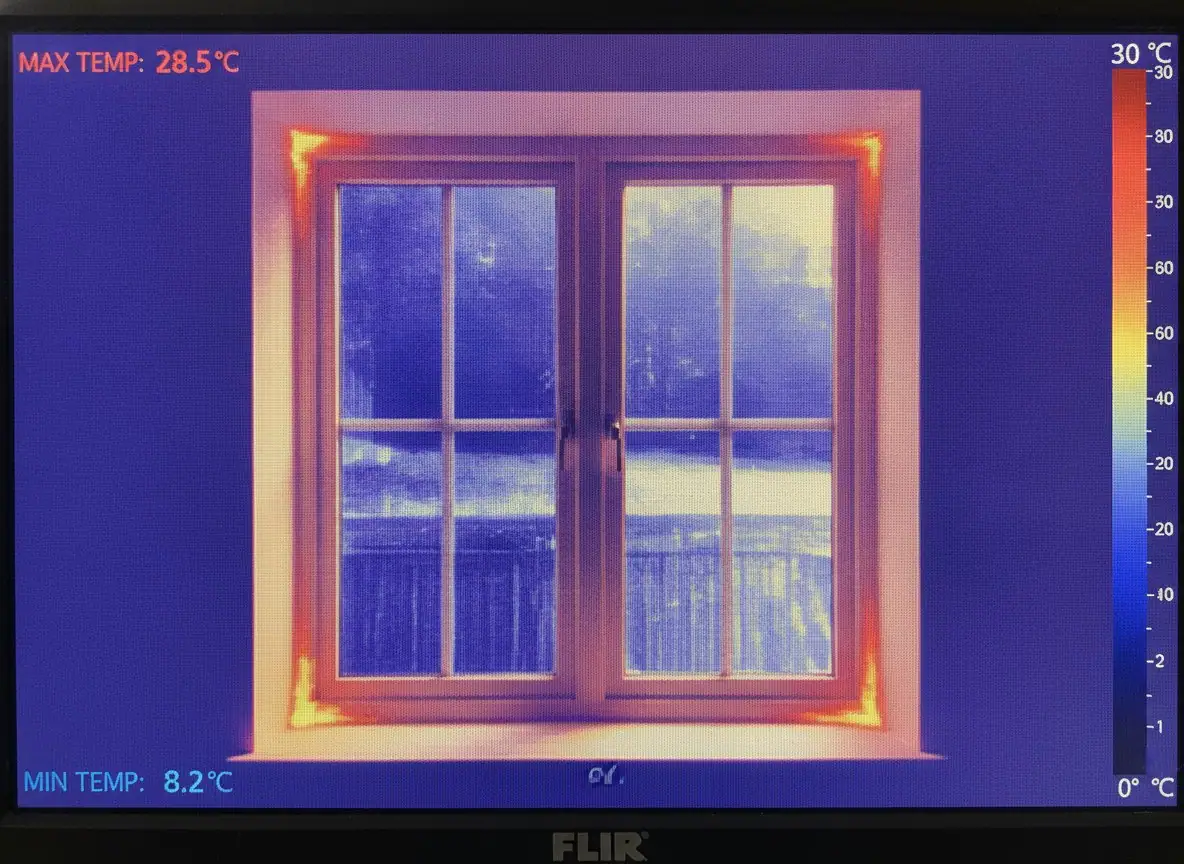
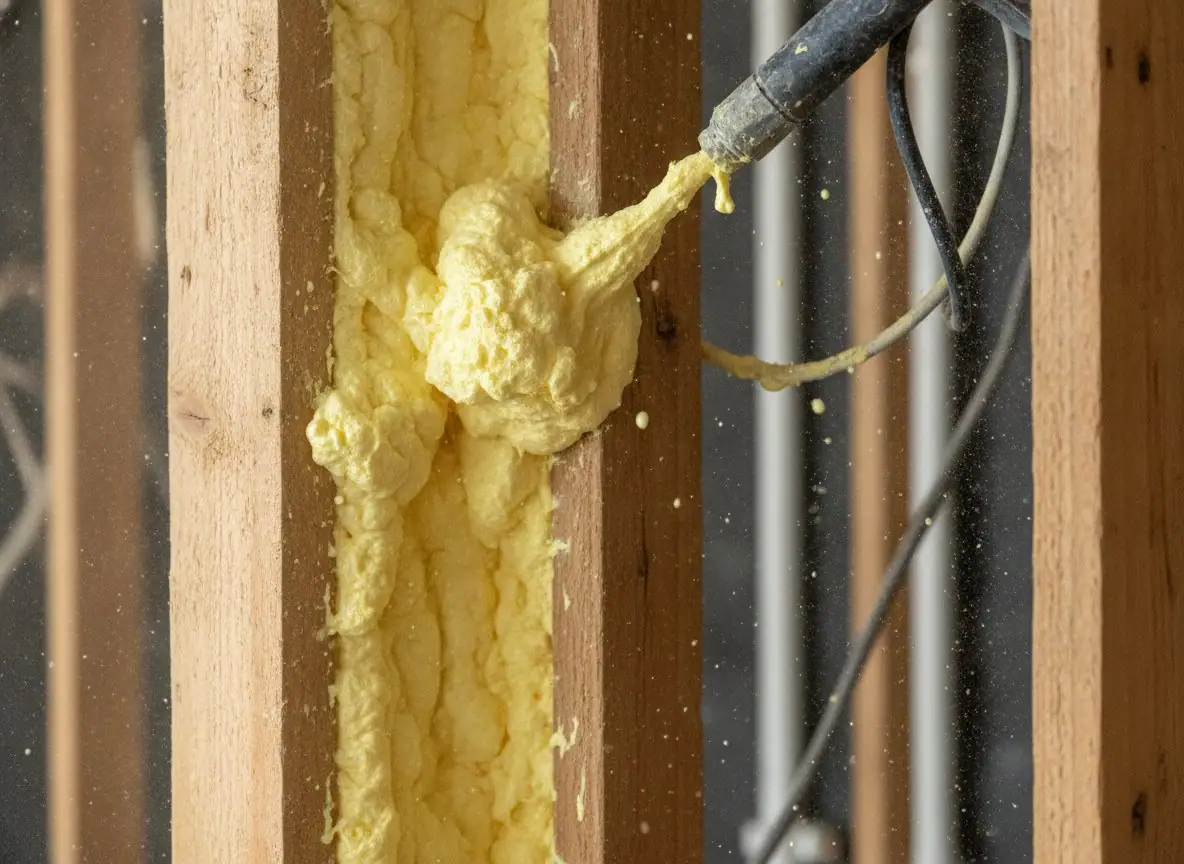
Closed cell spray foam insulation (ccSPF) is a two-component polyurethane foam system. When the two liquid components—an isocyanate and a polyol resin—are mixed at the spray tip, they react chemically, expand rapidly to roughly 30–40 times their liquid volume, and then cure into a hard, closed-cell matrix. The term “closed cell” refers to the microscopic cell structure: each tiny foam cell is enclosed and filled with a low-conductivity blowing agent rather than open to surrounding air. This produces an R-value of approximately R-6 to R-7 per inch, which is nearly double that of open cell spray foam and more than triple that of standard fiberglass batts.
The material was developed commercially in the 1970s and gained widespread adoption in residential construction through the 1990s and 2000s as energy codes tightened across the country. California’s Title 24 Building Energy Efficiency Standards, first introduced in 1978 and updated repeatedly since—most recently with the 2022 code cycle—have consistently pushed for higher effective R-values and tighter building envelopes, making closed cell spray foam increasingly relevant for California properties. In Los Angeles County, where Norwalk is located, enforcement of Title 24 has been particularly rigorous for both new construction and significant renovations since the mid-2010s.
Read moreShow less
Norwalk’s residential building stock is predominantly composed of single-family ranch-style homes constructed between 1950 and 1975, along with a growing number of apartment complexes and mixed-use buildings developed in later decades. Many of these older structures were originally built with minimal insulation—sometimes only R-11 fiberglass batts in walls, or no attic insulation at all—leaving them poorly equipped for modern energy demands. Closed cell spray foam is particularly well suited to retrofit applications in these buildings because it conforms to irregular framing cavities, bonds to wood, concrete, and metal substrates common in Norwalk construction, and delivers a higher R-value per inch than any other insulation type, which matters when wall cavity depth is limited.
Beyond thermal performance, closed cell spray foam also acts as a Class II vapor retarder (at thicknesses of 2 inches or more), helping manage moisture migration in Norwalk’s periodically humid marine-influenced air. Its rigid structure can also increase racking strength in wall assemblies, a meaningful benefit in a seismically active region like Southern California.
Why Closed Cell Spray Foam Insulation Is Needed in Norwalk, CA
Climate Demands and Energy Costs
Norwalk sits in the southeastern portion of the Los Angeles Basin at an elevation of roughly 60 feet above sea level. The city experiences a semi-arid Mediterranean climate with average July highs near 90°F and occasional heat events that push temperatures above 100°F—most notably the record-breaking September 2022 heat wave that saw inland Southeast L.A. County temperatures reach 108°F for multiple consecutive days. During these events, homes with inadequate attic insulation experience rapid heat gain through the roof deck, forcing air conditioning systems to work continuously and driving monthly electricity bills well above $300–$500 for average-sized homes. Closed cell spray foam applied to the underside of roof decking (creating an unvented attic assembly) or to attic floor joists can reduce attic temperatures by 30–40°F compared to uninsulated spaces, directly cutting cooling loads.
Older Housing Stock and Air Leakage
The neighborhoods of South Norwalk, Norwalk Village, and the corridors along Firestone Boulevard and Imperial Highway are dominated by homes built in the postwar housing boom of the 1950s and 1960s. These structures frequently feature pier-and-post foundations with open crawl spaces—a design that allows ground moisture, pests, and unconditioned air to infiltrate the living space from below. Air infiltration rates in these older Norwalk homes commonly measure between 8 and 15 air changes per hour (ACH) under blower door testing, compared to the 3 ACH or fewer targeted by California’s current Title 24 standards. Closed cell spray foam, applied to crawl space walls and rim joists, directly addresses this infiltration pathway.
Seismic Considerations
Norwalk lies within a few miles of the Norwalk Fault, a secondary fault system within the broader Puente Hills fault zone. The 1987 Whittier Narrows earthquake (magnitude 5.9, epicenter approximately 5 miles north of central Norwalk) caused significant structural damage to older unreinforced masonry and wood-frame buildings throughout the area. Because closed cell spray foam increases wall panel shear strength by up to 300% in some assemblies (per FEMA P-807 retrofit guidance), it provides a secondary structural benefit that is uniquely valuable for Norwalk homeowners concerned about seismic resilience.
Moisture and Humidity Cycles
Norwalk’s proximity to the Los Angeles River flood control channel and its position in the basin mean relative humidity levels regularly fluctuate between 55% and 80% during June Gloom season (May through July), then drop sharply during the dry Santa Ana wind events of fall and winter. These humidity swings cause traditional fiberglass insulation to lose effective R-value when moisture condenses in the batt material. Closed cell spray foam’s vapor-retarding properties prevent this moisture cycling, maintaining consistent thermal performance year-round.
Free, no-obligation estimates
Talk to Bright Sky Attic Insulation
Tell us what you need and we’ll take it from there.
Signs You Need Closed Cell Spray Foam Insulation in Norwalk
Energy and Comfort Symptoms
- Monthly electricity bills exceeding $250–$400 during Norwalk summers despite moderate thermostat settings
- Rooms on the south- or west-facing side of the home that feel significantly hotter than the rest of the house during afternoon hours
- HVAC system running almost continuously on days when temperatures reach the mid-80s or higher
- Uneven temperatures between the first and second floors of two-story homes
Structural and Moisture Indicators
- Visible condensation on interior walls or window frames during humid June Gloom periods
- Musty odors rising from the crawl space beneath the home—common in pier-and-post homes in South Norwalk
- Water stains on attic sheathing or ceiling drywall suggesting moisture infiltration
- Drafts detectable near electrical outlets, baseboards, or recessed ceiling lights
Urgency Indicators
- Existing fiberglass batts that are visibly discolored, compressed, or showing signs of mold growth
- A home more than 30 years old that has never had a professional insulation assessment
- Recent pest activity (rodents or insects) in the attic or crawl space that has compromised existing insulation material
Our process
Our Closed Cell Spray Foam Insulation Process in Norwalk
- 01
Free On-Site Assessment (1–2 Hours)
A Bright Sky Attic Insulation technician visits your Norwalk property to evaluate existing insulation conditions, measure attic square footage, inspect crawl space clearance and moisture levels, and identify any areas of notable air leakage. We document existi
- 02
Insulation Removal (If Required, Half to Full Day)
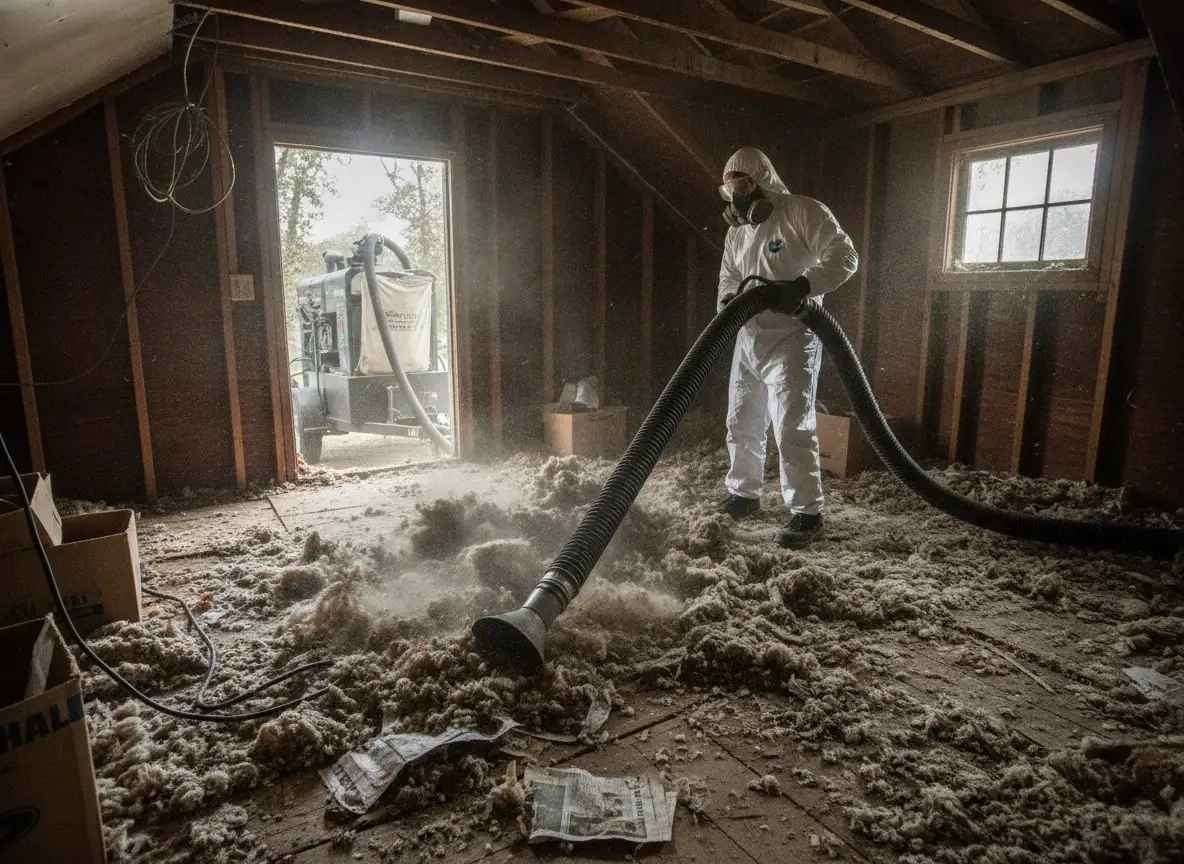
If your existing fiberglass batts or blown-in insulation is contaminated, compressed below functional R-value, or pest-damaged, we perform a complete insulation removal before applying spray foam. All debris is bagged and disposed of in compliance with Los Ang
- 03
Surface Preparation and Masking (1–3 Hours)
All surfaces adjacent to the application zone—HVAC equipment, ductwork, electrical boxes, and stored items—are masked or covered. In Norwalk’s older homes, we pay particular attention to knob-and-tube wiring remnants, which require isolation before foam applic
- 04
Spray Foam Application (4–8 Hours Depending on Scope)
Our certified technicians apply closed cell spray foam in lifts of approximately 1–2 inches per pass, allowing each lift to cure before adding additional passes. For a standard Norwalk attic floor application, we typically achieve a minimum finished thickness
- 05
Quality Inspection and Thickness Verification (1 Hour)
After curing, our technician uses calibrated depth probes to verify foam thickness at multiple points across the treated area and documents final R-values achieved. Any thin spots are re-coated before we leave.
- 06
Cleanup and Final Walkthrough (30–60 Minutes)
All masking materials are removed, the work area is cleaned, and we walk you through the completed installation, explaining expected energy savings and any maintenance considerations specific to your Norwalk property.
Closed Cell Spray Foam Methods and Approaches
Unvented Attic Assembly (Hot Roof Application)
Closed cell foam is sprayed directly to the underside of the roof deck and rafters, bringing the attic into the conditioned envelope of the home. This approach is ideal for Norwalk homes where HVAC ducts run through the attic—a very common configuration in the 1960s-era tract homes along Excelsior Drive and Rosecrans Avenue corridors. By eliminating the unconditioned attic space, duct losses drop dramatically.
Attic Floor Application
Foam is applied between and over attic floor joists, creating a thermal and air barrier at the ceiling plane while leaving the attic itself vented. This is a cost-effective option for homes where HVAC equipment is located in the living space and the attic contains no ductwork. Learn more about our attic insulation services.
Crawl Space Wall and Rim Joist Encapsulation
Closed cell foam is applied to crawl space perimeter walls and rim joists, creating a semi-conditioned crawl space that resists moisture and ground air infiltration. This method is especially effective for the many pier-and-post homes in South Norwalk that experience elevated humidity from the surrounding soil. Explore our crawl space encapsulation options.
Wall Cavity Injection and Retrofit
For existing finished walls with little or no insulation—common in Norwalk homes built before 1970—small holes are drilled in the exterior cladding or interior drywall and closed cell foam is injected under controlled pressure to fill cavities without full wall tear-out.
Combination Assemblies
Some Norwalk properties benefit most from a hybrid approach: closed cell foam for air sealing and vapor control at the roof deck or crawl space, combined with blow-in insulation over the attic floor for added R-value at lower cost. Our assessors determine the optimal combination based on your home’s specific configuration.
Closed Cell Spray Foam Insulation Cost in Norwalk, CA
Understanding the cost of closed cell spray foam insulation in Norwalk helps homeowners budget accurately and compare proposals. Pricing in the Southeast Los Angeles County market reflects both material costs and local labor rates.
Typical Price Ranges
- Attic floor application: $1.50–$3.00 per board foot (one square foot at one inch thickness), with most Norwalk attics requiring 3–5 inches of coverage. A 1,200 sq ft attic floor application at 3 inches typically costs $5,400–$10,800 installed.
- Roof deck (hot roof) application: $3.00–$5.00 per board foot installed due to the increased material volume needed for Title 24 compliance (minimum 5 inches in Climate Zone 9). A 1,200 sq ft attic at 5 inches ranges from $18,000–$36,000 for the largest homes, though most Norwalk homes average $8,000–$15,000 for this scope.
- Crawl space walls and rim joists: $3,000–$7,000 for a typical Norwalk single-family home with a 500–800 sq ft crawl space perimeter.
- Wall cavity injection (per wall, exterior): $500–$1,500 per exterior wall section depending on length and access complexity.
Read moreShow less
Factors Affecting Norwalk Pricing
- Accessibility of the attic or crawl space (low-clearance crawl spaces common in older Norwalk homes add labor time)
- Need for prior insulation removal, which adds $1,000–$3,000 depending on volume
- Current market pricing for polyurethane foam components, which has fluctuated 15–25% since 2021
- Los Angeles County permit requirements for certain retrofit scopes
California utility rebate programs through SCE (Southern California Edison), which serves most of Norwalk, may offset $0.10–$0.25 per square foot of qualifying insulation work. Ask our team about current incentive availability when you call (562) 573-5138.
Neighborhoods in Norwalk We Serve
South Norwalk
South Norwalk’s dense concentration of postwar pier-and-post homes built between 1950 and 1965 presents classic crawl space insulation challenges. These homes frequently have open, unencapsulated crawl spaces that allow ground moisture and unconditioned air to infiltrate living areas. Closed cell spray foam crawl space encapsulation is the most requested service in this neighborhood.
Norwalk Village
The Norwalk Village area, centered around the Norwalk Town Square corridor, includes a mix of 1960s ranch homes and 1980s–1990s construction. Homes in this area often have dated fiberglass batt insulation that has compressed over decades of foot traffic and pest intrusion. Attic spray foam upgrades deliver the most immediate energy savings for these properties.
North Norwalk (Near Rosecrans Avenue)
North Norwalk’s proximity to the I-605 freeway corridor means some properties experience elevated exterior noise infiltration alongside thermal challenges. Closed cell spray foam’s density provides meaningful sound attenuation in addition to thermal performance—an added benefit for residents near the freeway sound barrier zone.
We also serve properties throughout the Carmenita, Sproul, and Studebaker Road neighborhoods. View our full service area.
Maintenance Tips for Closed Cell Spray Foam Insulation in Norwalk
- Annual visual inspection: Each fall before Santa Ana wind season, visually inspect accessible foam surfaces in your attic or crawl space for any cracking, separation at edges, or signs of pest tunneling through the foam surface.
- Pest monitoring: Norwalk’s warm climate supports year-round rodent and insect activity. Inspect crawl space foam annually for rodent gnaw marks or ant galleries; seal any penetrations promptly with compatible spray foam sealant.
- Protect from UV exposure: Closed cell foam degrades when exposed to prolonged ultraviolet light. Any foam visible in unsheathed areas (such as open garage walls) should be covered with drywall or a UV-protective coating.
- Monitor humidity levels: During June Gloom, use a simple hygrometer to confirm crawl space humidity stays below 60% RH. Values above this may indicate a drainage issue that needs addressing despite the foam’s vapor barrier properties.
- Do not puncture without sealing: If any trades (plumbers, electricians) work in foam-insulated spaces, ensure all penetrations through the foam layer are resealed immediately with compatible closed cell foam or caulk to maintain the air barrier.
- HVAC filter checks: With a tighter building envelope, ensure HVAC filters are changed every 60–90 days to maintain indoor air quality, as reduced natural infiltration means the mechanical ventilation system handles more of the filtration load.
- Post-earthquake inspection: After any seismic event of magnitude 4.0 or greater felt at the property, visually inspect foam-sealed rim joists and wall assemblies for separation from the substrate.
Why Choose Bright Sky Attic Insulation in Norwalk
Bright Sky Attic Insulation specializes in the specific insulation needs of Southeast Los Angeles County properties, with deep familiarity with Norwalk’s older housing stock, local building codes, and the energy performance standards established under California Title 24 Climate Zone 9 requirements. Our technicians are trained in both residential and light commercial closed cell spray foam applications, and we work with property owners to identify the most cost-effective path to meaningful energy savings.
We offer the full spectrum of insulation services Norwalk homeowners need: from initial insulation removal of degraded existing materials, through spray foam insulation installation, to crawl space insulation and full crawl space encapsulation. Our team handles every phase of the project under one roof, eliminating coordination gaps between contractors.
Read moreShow less
We serve Norwalk and the surrounding communities including Downey, Bellflower, Cerritos, La Mirada, Paramount, Santa Fe Springs, Lakewood, Whittier, and more. Call us at (562) 573-5138 to speak with a local insulation specialist who knows your neighborhood.
FAQ
Frequently Asked Questions: Closed Cell Spray Foam Insulation in Norwalk, CA
How much does closed cell spray foam insulation cost in Norwalk?
In Norwalk and the broader Southeast L.A. County market, closed cell spray foam typically costs $1.50–$3.00 per board foot for attic floor applications and $3.00–$5.00 per board foot for roof deck applications. Most residential attic projects in Norwalk range from $5,000 to $15,000 depending on size and scope. Crawl space projects typically run $3,000–$7,000. Contact us at (562) 573-5138 for a free site-specific estimate.
Is closed cell spray foam better than open cell for Norwalk homes?
For most Norwalk applications—especially crawl spaces, roof deck underside applications, and rim joists—closed cell foam is preferable because it functions as a vapor retarder (important given Norwalk’s humidity swings during June Gloom), provides a higher R-value per inch (critical in limited wall and rafter cavity depths), and adds structural rigidity. Open cell foam may be appropriate in certain interior wall applications where vapor management is less critical and budget is a primary constraint.
How long does a typical closed cell spray foam installation take in Norwalk?
For a standard 1,200–1,500 sq ft single-story Norwalk home, the installation day (following any prior insulation removal) typically runs 6–10 hours. The foam reaches functional cure within 24 hours, though off-gassing precautions require the home to be vacated during application and for 24 hours afterward. Full cure and maximum R-value stabilization occurs within 72 hours.
Will closed cell spray foam help with the noise from the 605 freeway near North Norwalk?
Yes. Closed cell spray foam’s density (approximately 2 lbs per cubic foot) provides meaningful sound transmission reduction compared to fiberglass or open cell foam. While it is not a dedicated acoustic solution, homeowners near the I-605 corridor in North Norwalk consistently report a noticeable reduction in traffic noise intrusion after closed cell foam is applied to attic floors, rim joists, and exterior wall cavities.
Does Norwalk require a permit for spray foam insulation installation?
Los Angeles County building permit requirements apply to many insulation retrofit scopes in Norwalk, particularly those that alter the thermal envelope of the building (such as converting from a vented to an unvented attic assembly). Bright Sky Attic Insulation will advise you on permit requirements specific to your project during the assessment phase and can assist with documentation for permit applications where required.
Can I get a rebate from Southern California Edison for spray foam insulation in Norwalk?
SCE, which serves most of Norwalk, periodically offers rebates for qualifying insulation improvements under their Energy Efficiency Programs. Rebate availability, amounts, and qualifying R-value thresholds change periodically. Our team stays current on available incentives and will provide you with information on any programs active at the time of your project.
How does closed cell spray foam perform during Santa Ana wind events common in the Norwalk area?
Santa Ana wind events, which bring low-humidity, high-temperature air to the Norwalk area in fall and winter, create significant infiltration pressure on building envelopes. Traditional insulation does not address air movement; it only slows conductive heat transfer. Closed cell spray foam simultaneously insulates and air-seals, so the pressurized dry air common during Santa Ana conditions cannot infiltrate through the treated areas of the building envelope, maintaining comfort and indoor humidity stability.
Do you also handle insulation removal before installing spray foam?
Yes. Bright Sky Attic Insulation provides complete insulation removal and replacement services. If your existing insulation is contaminated, pest-damaged, or simply too degraded to leave in place, we will remove it, clean the substrate, and apply closed cell spray foam as part of a single coordinated project.
Get Your Free Closed Cell Spray Foam Quote in Norwalk Today
If your Norwalk home is struggling with high summer energy bills, uneven temperatures, crawl space moisture, or aging insulation that has never been updated, closed cell spray foam insulation may be the single most impactful upgrade you can make to your property. Bright Sky Attic Insulation serves Norwalk and the surrounding Southeast Los Angeles County communities with professional, thorough insulation services designed specifically for the local climate and building stock.
Call us today at (562) 573-5138 to schedule your free, no-obligation on-site assessment. Our team will evaluate your current insulation, explain your options, and provide a clear, itemized estimate with no surprises. Serving Norwalk, Downey, Bellflower, Cerritos, La Mirada, Paramount, Whittier, Lakewood, Santa Fe Springs, and all surrounding communities.
Get in touch
Find insulation help near you
Request a free estimate online or give us a call — our team will follow up quickly.
- Call us(562) 573-5138
- Visit14020 Pioneer Blvd K, Norwalk, CA 90650
- HoursMon-Sun 07:00-19:00