
Batt Insulation in Norwalk, CA
Energy-Saving Batt Insulation for Norwalk, CA Homes — Licensed & Insured
Need batt insulation in Norwalk, CA? Bright Sky Attic Insulation offers expert installation, removal & replacement. Call (562) 573-5138 for a free estimate today.
Batt insulation is one of the most widely used insulation methods in Southern California homes — and for good reason. Pre-cut fiberglass or mineral wool batts fit snugly between wall studs, floor joists, and attic rafters, creating a reliable thermal and acoustic barrier that keeps your living spaces comfortable year-round. At Bright Sky Attic Insulation, we specialize in professional batt insulation installation tailored specifically to the unique climate demands of Norwalk, CA.
Norwalk sits in the southeastern Los Angeles Basin, where summer temperatures regularly climb into the upper 80s and 90s°F, and where older housing stock — much of it built during the post-war construction boom of the 1950s and 1960s — was often installed with minimal or no insulation by today’s standards. Our team understands the local building styles, the moisture dynamics of the area, and the energy efficiency challenges that Norwalk homeowners face every day. Whether you’re upgrading an aging attic, insulating a new addition, or replacing degraded material, Bright Sky Attic Insulation brings the expertise to get it done right.
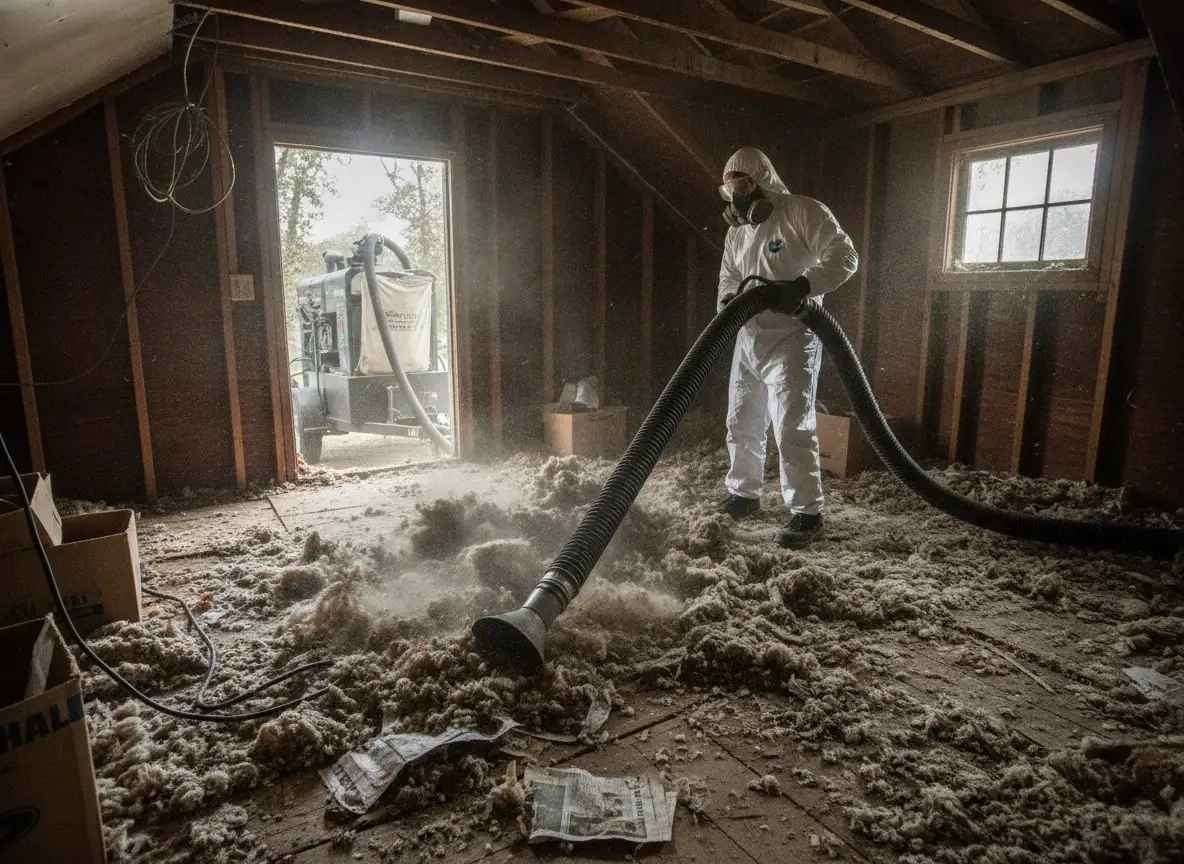
Understanding Batt Insulation
Batt insulation — sometimes called blanket insulation — consists of flexible, pre-sized panels of fibrous material designed to fit between the standard framing members of residential and commercial buildings. The two most common materials are fiberglass and mineral wool (also called rock wool or slag wool), each offering distinct thermal and fire-resistance properties.
Fiberglass batts are made from extremely fine glass fibers and have been in widespread use since the 1930s. They are lightweight, non-combustible, and resistant to moisture absorption when properly installed with a vapor barrier. Mineral wool batts, derived from volcanic rock or industrial slag, offer superior fire resistance and slightly better sound dampening — making them a popular choice in multi-family dwellings and shared-wall construction, both of which are common throughout Norwalk’s denser residential neighborhoods.
Read moreShow less
The effectiveness of batt insulation is measured by its R-value — a rating of thermal resistance. In climate Zone 9, which encompasses Norwalk and most of the Los Angeles Basin, the U.S. Department of Energy recommends attic insulation of R-30 to R-60 for existing homes and R-38 to R-60 for new construction. Wall cavities typically target R-13 to R-21 depending on stud depth and framing type.
Norwalk was developed rapidly during the 1950s and 1960s as part of the massive suburban expansion of Los Angeles County. Tens of thousands of tract homes were constructed in short time frames, often with 2×4 framing and minimal insulation — sometimes as little as R-7 or R-11 in attic spaces. By today’s standards, these homes are significantly under-insulated. Batt insulation is frequently the go-to upgrade solution for these properties because it is cost-effective, widely available, and compatible with the standard 16-inch and 24-inch on-center stud spacing common to mid-century construction.
Beyond energy savings, batt insulation also contributes to soundproofing — a meaningful benefit in a city like Norwalk, which borders major transportation corridors including the 5, 605, and 91 freeways, all of which generate significant ambient noise.
Bright Sky Attic Insulation also offers spray foam insulation, blow-in insulation, and attic insulation services for properties where batt insulation may not be the optimal solution.
Why Batt Insulation Is Needed in Norwalk, CA
The Southern California Heat Corridor
While Norwalk benefits from its proximity to the Pacific Ocean, it sits far enough inland that it regularly experiences the “heat island” effect common to densely developed suburban areas. During peak summer months — particularly July and August — Norwalk temperatures frequently reach 92°F to 97°F, and during Santa Ana wind events, indoor temperatures in poorly insulated homes can spike rapidly. The October 2017 Santa Ana wind event pushed temperatures in the southeast LA Basin above 100°F for multiple consecutive days, creating dangerous heat conditions in homes with degraded or insufficient insulation. Batt insulation with proper R-values significantly slows heat transfer through roof decking and exterior walls, reducing the workload on HVAC systems and keeping indoor temperatures manageable without excessive air conditioning costs.
Aging Housing Stock in Norwalk
According to U.S. Census data, a significant portion of Norwalk’s approximately 27,000 housing units were built before 1970. Neighborhoods such as Norwalk Manor, Studebaker Road corridors, and the Clarkdale Avenue and Excelsior Drive residential tracts represent dense clusters of post-war single-family homes that were constructed with minimal attic insulation — typically unfaced R-7 batts or loose-blown rock wool that has compressed and degraded over six decades. Compressed batt insulation loses a significant portion of its R-value; an R-11 batt compressed to half its designed thickness may perform at only R-6 or lower.
Moisture and Condensation Dynamics
While Norwalk is not a high-humidity climate, coastal marine layer events — particularly during May and June, locally known as “June Gloom” — introduce moisture into attic spaces. Without a proper vapor retarder installed alongside batt insulation, this moisture can lead to mold growth and fiberglass batt degradation. The clay-heavy soils common to the Norwalk Plain (part of the greater Los Angeles Basin alluvial fan) also contribute to crawl space moisture intrusion in older slab-on-grade and raised-foundation homes alike.
Energy Cost Pressures
Southern California Edison serves the majority of Norwalk residents. Residential electricity rates in Los Angeles County have climbed steadily, with tiered rates reaching $0.35–$0.45 per kWh during peak demand periods. A home with inadequate attic insulation can lose 25–35% of its conditioned air through the roof plane alone. Upgrading to properly specified batt insulation can reduce annual cooling and heating costs by an estimated $300–$700 for a typical 1,400–1,800 sq. ft. Norwalk home.
Freeway Noise Mitigation
Norwalk sits at the intersection of the I-5 (Santa Ana Freeway), SR-605 (San Gabriel River Freeway), and the SR-91 (Artesia Freeway). Neighborhoods within a half-mile of these corridors — including those near Firestone Boulevard and Rosecrans Avenue — experience consistent ambient noise levels of 65–75 dB. Mineral wool batt insulation in exterior walls and between floor assemblies can reduce transmitted noise by 45–52 STC (Sound Transmission Class), meaningfully improving interior quiet.
Free, no-obligation estimates
Talk to Bright Sky Attic Insulation
Tell us what you need and we’ll take it from there.
Signs You Need Batt Insulation in Norwalk
Energy and Comfort Indicators
- Monthly electricity bills that consistently exceed the Southern California Edison average for your home size, particularly during July–September
- Rooms that feel noticeably hotter or cooler than adjacent spaces, even with HVAC running
- Your attic temperature exceeds 130°F–140°F on warm summer afternoons (a strong sign that your roof plane insulation is insufficient)
- HVAC system runs almost continuously during summer months without achieving set temperature
Physical and Visual Symptoms
- Visible batt insulation in attic or crawl space that appears flattened, yellowed, or compressed below its intended thickness
- Gaps or voids between batt sections where settling has occurred
- Water stains or dark discoloration on existing batts indicating moisture infiltration
- Pest activity (rodents, insects) has disturbed or nested within existing insulation material
Age and Construction Indicators
- Home was built before 1980 and insulation has never been upgraded
- You recently completed a room addition or conversion that exposed uninsulated wall or ceiling cavities
- Attic inspection reveals bare joists with no insulation coverage
Urgency Signals
- Musty odors in attic or crawl space suggesting mold growth within degraded batts
- Ice dams or unusual condensation patterns (rare in Norwalk but possible during cold snaps)
Our process
Our Batt Insulation Process in Norwalk
At Bright Sky Attic Insulation, we follow a structured, transparent installation process designed for the specific construction styles and climate conditions found throughout Norwalk and the surrounding southeast LA communities.
- 01
Free On-Site Assessment (60–90 Minutes)
Our technician visits your Norwalk home to inspect existing insulation, measure attic and wall cavity dimensions, assess current R-values, and identify any moisture, pest, or air-sealing issues. We document all findings and discuss our recommendations with you
- 02
Air Sealing Preparation (1–2 Hours)
Before any batt is installed, we seal penetrations, gaps around recessed lighting, HVAC duct penetrations, and plumbing chases with appropriate caulk or spray foam. This step is critical in Norwalk’s older homes where decades of settling have created unsealed
- 03
Removal of Degraded Material (If Required)
If existing insulation is compressed, moisture-damaged, pest-contaminated, or contains outdated materials, we perform complete insulation removal prior to new installation. This typically takes 2–4 hours for a standard Norwalk attic of 1,200–1,600 sq. ft.
- 04
Vapor Barrier Installation (Where Applicable)
In crawl spaces and certain wall applications — particularly relevant in Norwalk homes on raised foundations — we install an appropriate vapor retarder prior to batt placement. This addresses the moisture dynamics specific to the Norwalk Plain’s clay soil subs
- 05
Batt Installation (3–6 Hours)
Our team installs the correctly specified R-value batts — typically R-38 or R-49 in attics, R-13 or R-15 in 2×4 walls, and R-19 or R-21 in 2×6 wall framing. Batts are cut precisely to fit around obstructions, installed without compression, and fitted snugly ag
- 06
Final Inspection and Documentation
After installation, we conduct a final walkthrough to verify full coverage, proper fit, and compliance with California Title 24 energy standards. We provide documentation of installed R-values for your records — useful for utility rebate applications through S
Batt Insulation Methods and Approaches
Unfaced Fiberglass Batts
Standard unfaced fiberglass batts are used when adding insulation over existing material in attics. In Norwalk’s many post-war homes, this is a common approach for attic upgrades — new unfaced batts are laid perpendicular over existing compressed insulation, bringing total R-value up to current Title 24 standards without requiring full removal. Best suited for open attic floors with adequate headroom.
Faced Fiberglass Batts
Kraft-faced or foil-faced batts include an integrated vapor retarder on one side. These are the preferred choice for exterior wall cavity installation in Norwalk homes, where the facing is placed toward the conditioned interior space. Particularly effective in the wall assemblies of older Norwalk tract homes where no separate vapor barrier was originally installed.
Mineral Wool (Rock Wool) Batts
Mineral wool batts offer R-15 performance in a 2×4 wall cavity compared to fiberglass R-13 — a meaningful difference in exterior walls facing Norwalk’s sun-exposed southern and western elevations. Mineral wool is also inherently fire-resistant to temperatures above 1,400°F and provides superior sound attenuation, making it ideal for homes near Norwalk’s major freeway corridors. We recommend mineral wool for any home within 1,500 feet of the 5, 605, or 91 freeway interchanges.
High-Density Batts
High-density fiberglass batts achieve R-21 in a standard 2×6 wall cavity. These are specified for newer additions and remodels in Norwalk where 2×6 framing was used, and for homeowners seeking maximum performance from their wall assembly without transitioning to spray foam.
Combination Approach
For maximum performance, Bright Sky Attic Insulation frequently combines batt insulation with complementary solutions. Batt insulation in wall cavities pairs well with blow-in insulation for attic floors, or with spray foam insulation at the attic hatch perimeter and rim joists. This hybrid method is particularly effective in Norwalk’s older ranchers and split-levels.
Batt Insulation Cost in Norwalk, CA
Understanding batt insulation costs helps Norwalk homeowners budget appropriately and evaluate proposals accurately. Costs vary based on several factors specific to your property and the scope of work required.
Typical Price Ranges
- Attic batt insulation (installation only, no removal): $1.20–$2.00 per square foot installed, or approximately $1,500–$3,200 for a typical 1,400–1,800 sq. ft. Norwalk home
- Attic insulation with removal of existing degraded material: $2.50–$3.75 per square foot, or $3,200–$6,000 for the same size home
- Exterior wall cavity insulation (open wall or new construction): $1.50–$2.50 per square foot of wall area
- Crawl space batt insulation between floor joists: $2.00–$3.50 per square foot depending on access difficulty
Read moreShow less
Key Cost Factors
- R-value specified: R-49 attic batts cost more than R-30, reflecting greater material thickness
- Attic accessibility: Low-pitch roofs common to Norwalk’s ranch-style homes (many built at 3:12 to 4:12 pitch) can increase labor time
- Existing insulation condition: Pest-contaminated or moldy insulation requires PPE and disposal fees
- Material choice: Mineral wool batts typically cost 15–25% more than comparable fiberglass batts
- Air sealing scope: Extensive air sealing in older homes adds $300–$800 to project cost but dramatically improves results
Local Rebates and Incentives
Southern California Edison offers rebates for qualifying insulation upgrades under their Home Energy Improvement Program. Norwalk homeowners may also qualify for federal tax credits of up to 30% of insulation costs under the Inflation Reduction Act’s energy efficiency provisions. Contact Bright Sky Attic Insulation at (562) 573-5138 to discuss rebate eligibility for your project.
Norwalk Neighborhoods We Serve
Norwalk Manor and Central Norwalk
These neighborhoods contain dense concentrations of post-war tract homes built between 1952 and 1968, predominantly 3-bedroom, 1-bath ranchers with 1,100–1,400 sq. ft. floor plans. Many retain their original fiberglass batts — now 55+ years old and performing at a fraction of their rated R-value. Batt replacement to R-38 or R-49 is a high-priority upgrade for these properties.
Studebaker Road Corridor
The residential streets flanking Studebaker Road include a mix of 1960s single-family homes and 1970s–1980s multi-family units. Multi-family properties here particularly benefit from mineral wool batt installation for its combined thermal and acoustic performance between shared wall assemblies.
East Norwalk (Near Norwalk-Santa Fe Springs Border)
Homes in the eastern reaches of Norwalk, near Pioneer Boulevard and the Santa Fe Springs boundary, tend to be slightly newer (1970s–1980s) but often still fall short of modern R-value standards. Crawl space batt insulation is frequently needed in the raised-foundation homes found in this area, where ground moisture from the area’s higher water table can be a factor.
Batt Insulation Maintenance Tips for Norwalk Homeowners
Proper maintenance extends the life of your batt insulation investment and keeps your Norwalk home performing efficiently year after year.
- Inspect annually before summer: Check your attic each spring before Norwalk’s heat season begins. Look for compression, gaps, water staining, or pest activity.
- Seal attic penetrations promptly: Any new electrical, plumbing, or HVAC work that creates ceiling penetrations should be sealed before the next season’s temperature extremes.
- Control attic ventilation: Ensure soffit vents and ridge vents remain unblocked. Poor attic ventilation accelerates batt degradation and traps heat in your roof assembly.
- Address roof leaks immediately: Even a small roof leak can saturate fiberglass batts, dramatically reducing R-value and creating mold conditions. Norwalk’s November–March rainy season makes pre-season roof inspection essential.
- Don’t store items on attic insulation: Compressing batts under stored items reduces R-value. Use raised attic decking if storage is needed.
- Monitor crawl space moisture: If your home has a crawl space, check for standing water or condensation on vapor barriers after winter rains.
- Schedule professional re-inspection every 10 years: Insulation performance degrades slowly; a decade-interval professional check ensures your home maintains energy efficiency.
Why Choose Bright Sky Attic Insulation in Norwalk
When you choose Bright Sky Attic Insulation, you’re working with a team that knows Norwalk — its housing stock, its climate patterns, its freeway corridors, and the specific energy efficiency challenges that local homeowners face every day. We don’t apply generic solutions; we assess each property individually and specify the right batt type, R-value, and installation approach for your specific home and situation.
We serve the entire southeast Los Angeles area, including Downey, Cerritos, Bellflower, Lakewood, Whittier, and La Mirada. Our team is equally experienced with crawl space encapsulation, insulation removal, and insulation replacement services throughout the region.
Our process is transparent from first call to final walkthrough. We document your existing conditions, explain our recommendations in plain language, and provide clean, professional installations that comply with California Title 24 and current energy codes. Call (562) 573-5138 to schedule your free Norwalk home assessment today.
FAQ
Frequently Asked Questions: Batt Insulation in Norwalk, CA
How much does batt insulation cost in Norwalk?
For a typical Norwalk home of 1,400–1,800 sq. ft., attic batt insulation installation ranges from $1,500–$3,200 without removal, or $3,200–$6,000 when existing degraded insulation must be removed first. Wall cavity batt insulation in open walls typically runs $1.50–$2.50 per square foot. Factors like R-value, material type (fiberglass vs. mineral wool), and attic accessibility all influence final pricing. Contact us at (562) 573-5138 for a free, no-obligation estimate specific to your property.
How long does batt insulation installation take in a typical Norwalk home?
For a standard attic-only project, installation typically takes one full day — roughly 5–8 hours for a 1,400–1,600 sq. ft. attic including air sealing preparation. If insulation removal is required first, add half a day. Whole-house projects including wall cavities may take 1–2 days total depending on scope.
Do I need to remove my old insulation before installing new batt insulation?
Not always. If existing insulation is structurally intact, dry, and pest-free, new unfaced batts can often be layered over it to achieve the target R-value. However, if existing material is compressed, water-damaged, moldy, or pest-contaminated — which is common in Norwalk homes built before 1970 — complete removal is strongly recommended before new installation. Our assessment will determine which approach is appropriate for your home.
What R-value do I need for my Norwalk home?
Norwalk is in DOE Climate Zone 9. For existing homes, the recommended attic insulation range is R-30 to R-60; we typically recommend R-38 as a practical minimum and R-49 for optimal performance given Norwalk’s summer heat. Exterior walls should reach R-13 to R-15 in 2×4 framing, and R-19 to R-21 in 2×6 framing. California Title 24 requirements may specify higher values for renovation projects — we ensure all work is code-compliant.
Is batt insulation effective for noise reduction near the freeways?
Yes — particularly mineral wool batts. Homes near the I-5, SR-605, or SR-91 corridors can benefit significantly from mineral wool batt installation in exterior walls and upper floor assemblies. Mineral wool batts provide Sound Transmission Class (STC) ratings of 45–52 when properly installed, meaningfully reducing freeway noise intrusion. Fiberglass batts also help but perform somewhat lower on acoustic metrics.
Can batt insulation help me qualify for utility rebates in Norwalk?
Yes. Southern California Edison offers rebates through their Home Energy Improvement Program for qualifying insulation upgrades. Federal tax credits of up to 30% of insulation installation costs are also available under the Inflation Reduction Act for primary residences. We can provide the documentation you need to apply for available incentives.
How do I know if my Norwalk home’s existing insulation needs replacement?
Key indicators include: insulation that appears flattened or compressed, visible discoloration from moisture or pests, gaps or voids between batt sections, or a home built before 1980 that has never had insulation upgraded. Our free on-site assessment includes a full inspection and R-value estimate for your existing insulation so you can make an informed decision.
Do you serve areas near Norwalk as well?
Yes. In addition to Norwalk, Bright Sky Attic Insulation serves Downey, Cerritos, Bellflower, Lakewood, Paramount, Artesia, La Mirada, Whittier, Pico Rivera, Commerce, Montebello, South Whittier, Santa Fe Springs, East Whittier, West Whittier-Los Nietos, Buena Park, and La Habra. Call (562) 573-5138 to confirm service availability at your address.
Get a Free Batt Insulation Estimate in Norwalk Today
Don’t let another scorching Norwalk summer — or another high Southern California Edison bill — remind you that your home’s insulation is underperforming. Bright Sky Attic Insulation is ready to assess your property, explain your options in plain language, and deliver a professional batt insulation installation that meets California’s Title 24 energy standards and your personal comfort goals.
Whether you’re in Norwalk Manor, near the Studebaker Road corridor, or anywhere else in the Norwalk area, our team is ready to help. We also provide insulation removal, crawl space insulation, and attic insulation services throughout the region.
Call us now at (562) 573-5138 to schedule your free, no-obligation on-site assessment. Comfortable, energy-efficient living starts with the right insulation — and it starts today.
Get in touch
Find insulation help near you
Request a free estimate online or give us a call — our team will follow up quickly.
- Call us(562) 573-5138
- Visit14020 Pioneer Blvd K, Norwalk, CA 90650
- HoursMon-Sun 07:00-19:00