Air Sealing in Norwalk, CA
Professional Air Sealing in Norwalk, CA — Licensed, Insured & Locally Owned
Need expert air sealing in Norwalk, CA? Bright Sky Attic Insulation reduces energy loss & indoor pollutants. Call (562) 573-5138 for a free estimate today.
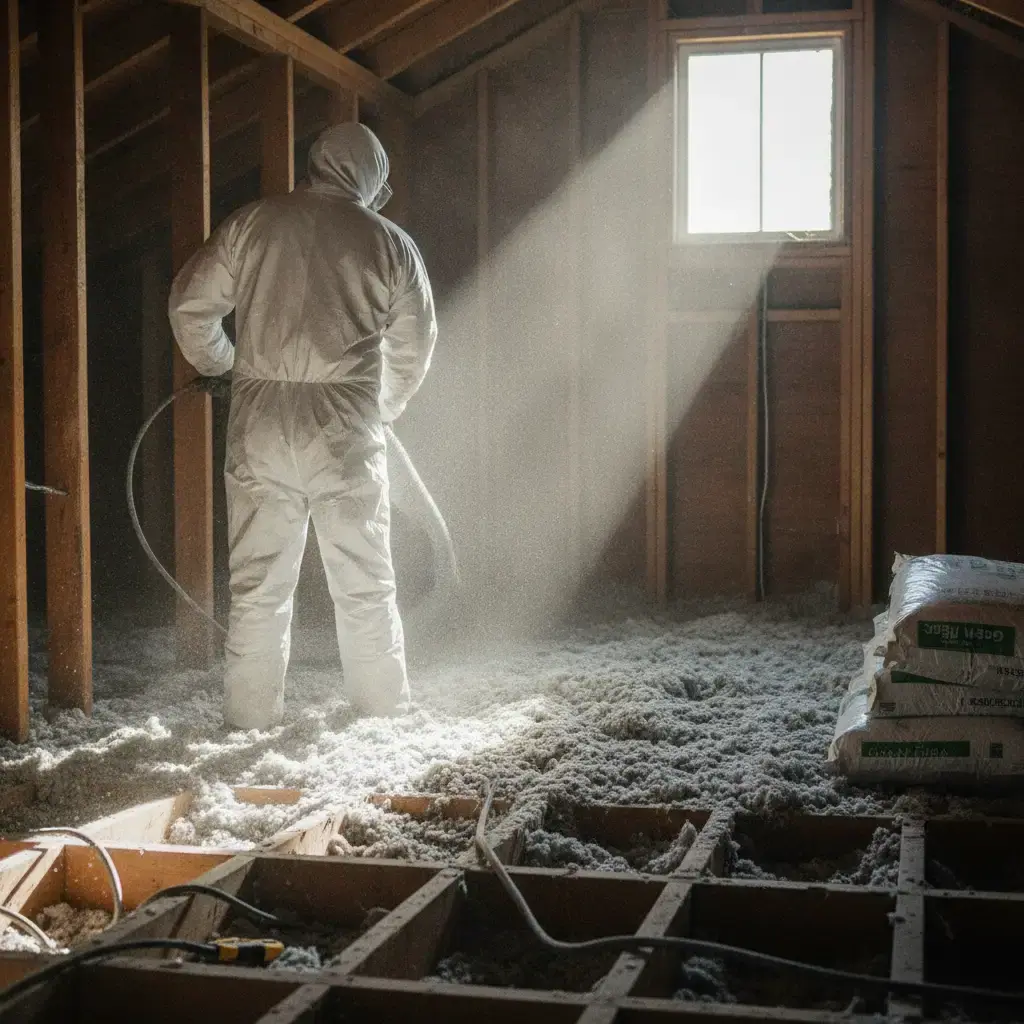
Air sealing is the process of identifying and closing gaps, cracks, and openings in a home’s building envelope — the barrier that separates conditioned living space from unconditioned areas like attics, crawl spaces, and the outdoors. When this envelope is compromised, heated or cooled air escapes, outdoor pollutants enter, and energy bills climb unnecessarily.
In Norwalk, CA, the combination of aging housing stock, the region’s distinct Mediterranean climate, and soil conditions unique to the San Gabriel Valley make air sealing especially important. Hot, dry summers push indoor cooling costs sky-high when conditioned air leaks through attic floors and wall cavities. At Bright Sky Attic Insulation, our team brings hands-on experience with Norwalk’s specific construction styles — from mid-century ranch homes built in the 1950s and 1960s to newer tract developments near the 605 Freeway corridor. We deliver precise, lasting air sealing solutions that reduce energy waste and improve indoor comfort year-round.
Understanding Air Sealing: What It Is and Why It Matters
Air sealing is one of the most cost-effective energy improvements a homeowner can make, yet it remains one of the least understood. Unlike insulation — which slows the transfer of heat through materials — air sealing physically blocks the movement of air through unintended pathways. These two measures work together: insulation without air sealing is like wearing a sweater full of holes, while air sealing without insulation is like plugging those holes but having no sweater at all.
The concept of building tightness became a formal part of residential construction standards in the United States following the 1973 oil embargo, when energy efficiency moved to the forefront of building science research. Over the following decades, the U.S. Department of Energy (DOE) and the Environmental Protection Agency (EPA) developed guidelines recognizing that the average American home loses between 25% and 40% of its heating and cooling energy through air leakage alone.
Read moreShow less
Common air leakage points in a typical Norwalk home include:
- Attic hatch openings and pull-down stair units
- Recessed lighting fixtures that penetrate the attic floor
- Plumbing and electrical penetrations through top plates
- Gaps around HVAC ducts where they pass through floors and ceilings
- Fireplace dampers and chimney chases
- Exterior wall outlets and switch plates
- Crawl space rim joists and foundation sill plates
In Southern California communities like Norwalk, the prevalence of slab-on-grade foundations in homes built between 1945 and 1975 means that much of the air leakage concern shifts upward — into the attic plane — rather than below the floor. However, homes in older sections of Norwalk near Alondra Park and Studebaker Road that were built with raised foundations also face significant crawl space air infiltration challenges. Understanding the construction era and foundation type of your specific home is the critical first step our team takes before any air sealing work begins.
Beyond energy savings, proper air sealing reduces the infiltration of outdoor allergens, dust from nearby industrial corridors, and vehicle exhaust from the 605 and 5 Freeways — a tangible indoor air quality benefit for Norwalk residents.
Why Air Sealing Is Needed in Norwalk, CA
The Norwalk Climate Challenge
Norwalk experiences a classic inland-modified Mediterranean climate. Summer temperatures regularly reach 90°F to 98°F between June and September, while attic temperatures in unventilated or poorly sealed attics along streets like Rosecrans Avenue and Imperial Highway can soar to 140°F to 160°F. According to NOAA climate data for the Los Angeles Basin, Norwalk averages approximately 284 sunny days per year — far above the national average of 205 days. That solar load drives relentless convective air movement through any gap or crack in a home’s envelope. When attic air at 150°F finds a pathway through recessed lights or an unsealed attic hatch, it pressurizes and pushes directly into living spaces, defeating even a well-functioning HVAC system.
The Santa Ana Wind Effect
Each year, typically between October and February, Norwalk is impacted by Santa Ana wind events. During these episodes — most recently with significant events in October 2023 and January 2025 — wind speeds in the area can exceed 40 mph at ground level. These pressure differentials drive outdoor air aggressively through building envelope gaps. Homeowners in the Mayfair, Hermosillo, and Norwalk Square neighborhoods have reported dramatic spikes in heating and cooling bills during Santa Ana periods, along with increased indoor dust and particulate levels. Air sealing directly addresses the vulnerability these wind events expose.
Aging Housing Stock and Original Construction Deficiencies
The majority of Norwalk’s residential neighborhoods were developed during the post-World War II suburban expansion of the late 1940s through the 1970s. Homes in the Pioneer Boulevard corridor, the Studebaker Road neighborhoods, and the Reyes Adobe historic district were constructed under building codes that had no airtightness requirements whatsoever. Top plates were left unsealed. Recessed “can” lights were installed without airtight housings. Plumbing chases were left open from foundation to attic. Decades of settling — compounded by Norwalk’s position atop alluvial soil deposits from the San Gabriel River watershed — have widened these gaps further. Soil settlement in this part of Los Angeles County can shift foundations by 1 to 3 inches over a 40-year period, opening new pathways for air infiltration at sill plates and rim joists.
Industrial and Traffic Pollution Concerns
Norwalk sits adjacent to the 605 and 5 Freeway interchange, one of the highest-traffic interchanges in Los Angeles County. The nearby Santa Fe Springs industrial corridor adds further particulate load to outdoor air. Studies by the California Air Resources Board have documented elevated PM2.5 concentrations within a half-mile of these freeway corridors — a zone that includes many Norwalk residential streets. Air sealing reduces the passive infiltration of these outdoor pollutants into homes, making it a public health measure as much as an energy efficiency measure for Norwalk families.
Free, no-obligation estimates
Talk to Bright Sky Attic Insulation
Tell us what you need and we’ll take it from there.
Signs You Need Air Sealing in Your Norwalk Home
Energy and Comfort Indicators
- Monthly electricity bills above $200 during summer months despite consistent thermostat settings
- Rooms that never reach the set temperature — particularly upstairs bedrooms or rooms adjacent to the attic
- HVAC system that runs continuously for 20+ minutes per cycle during summer heat waves
- Noticeable temperature difference (more than 3–5°F) between rooms on the same floor
Physical and Sensory Signs
- Drafts near electrical outlets, light switches, or recessed lights on exterior walls or ceilings
- Cold or warm air streaming from the attic access hatch when it is opened
- Visible daylight through gaps around pipes or wires where they enter walls or ceilings
- Musty or exhaust-like odors entering the home during Santa Ana wind events
Indoor Air Quality and Moisture Symptoms
- Excessive dust accumulation within days of cleaning, particularly on horizontal surfaces near vents
- Worsening allergy or asthma symptoms indoors during high-pollen or high-smog days
- Condensation on interior window surfaces during cooler months, indicating humidity imbalance
Urgency Indicator
If your home was built before 1980 and has never had a professional energy audit or air sealing treatment, you should treat this as a high-priority item. Norwalk homes of this era routinely test at 8–12 air changes per hour (ACH) under blower door testing — two to four times the current efficiency standard of 3 ACH or less.
Air Sealing Methods and Approaches We Use in Norwalk
Two-Part Spray Polyurethane Foam (SPF)
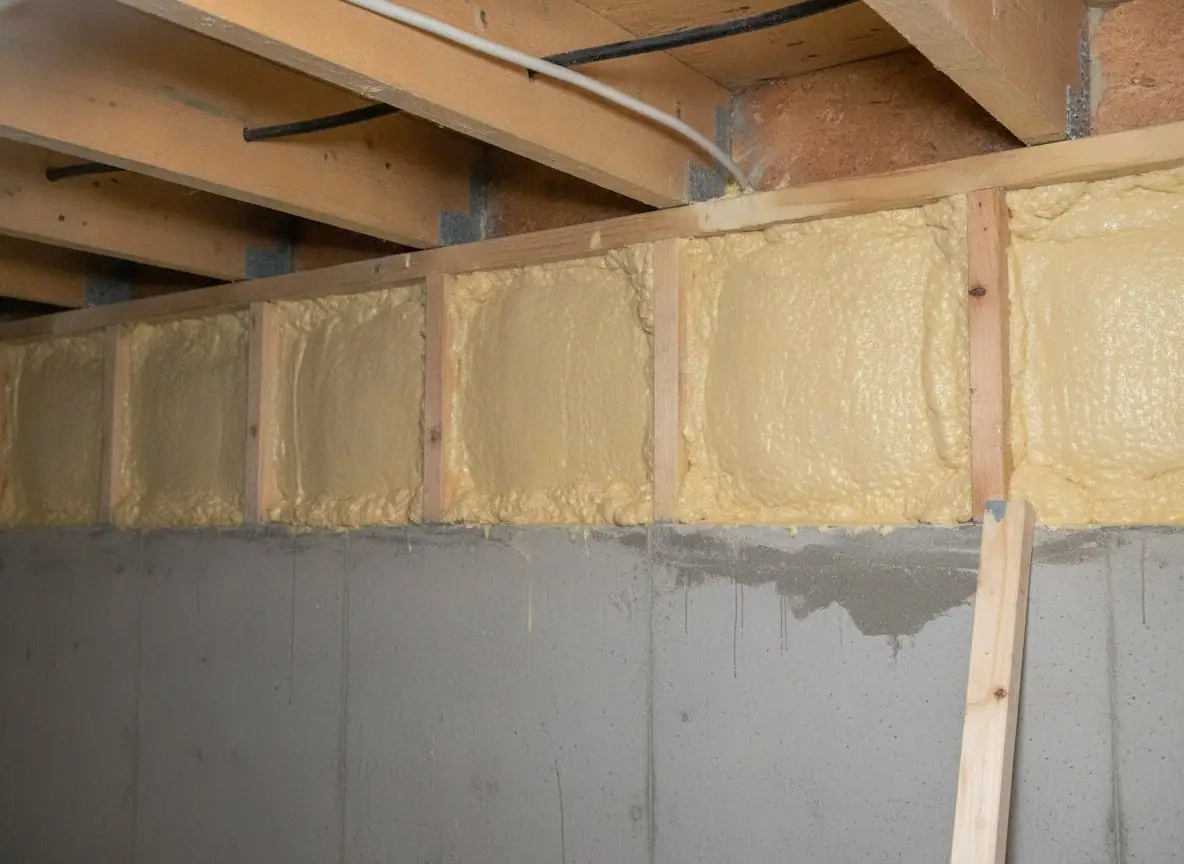
Spray foam is the gold standard for sealing large, irregular gaps — particularly top plate openings, plumbing chases wider than 1 inch, and attic hatch perimeters. It expands to fill voids completely and bonds to wood, drywall, and concrete. We use low-expansion formulas near windows and door frames to prevent warping. Spray foam insulation also delivers an R-value bonus wherever it is applied. This is the most common method used in Norwalk’s pre-1980 homes.
Rigid Foam Board with Foam Adhesive
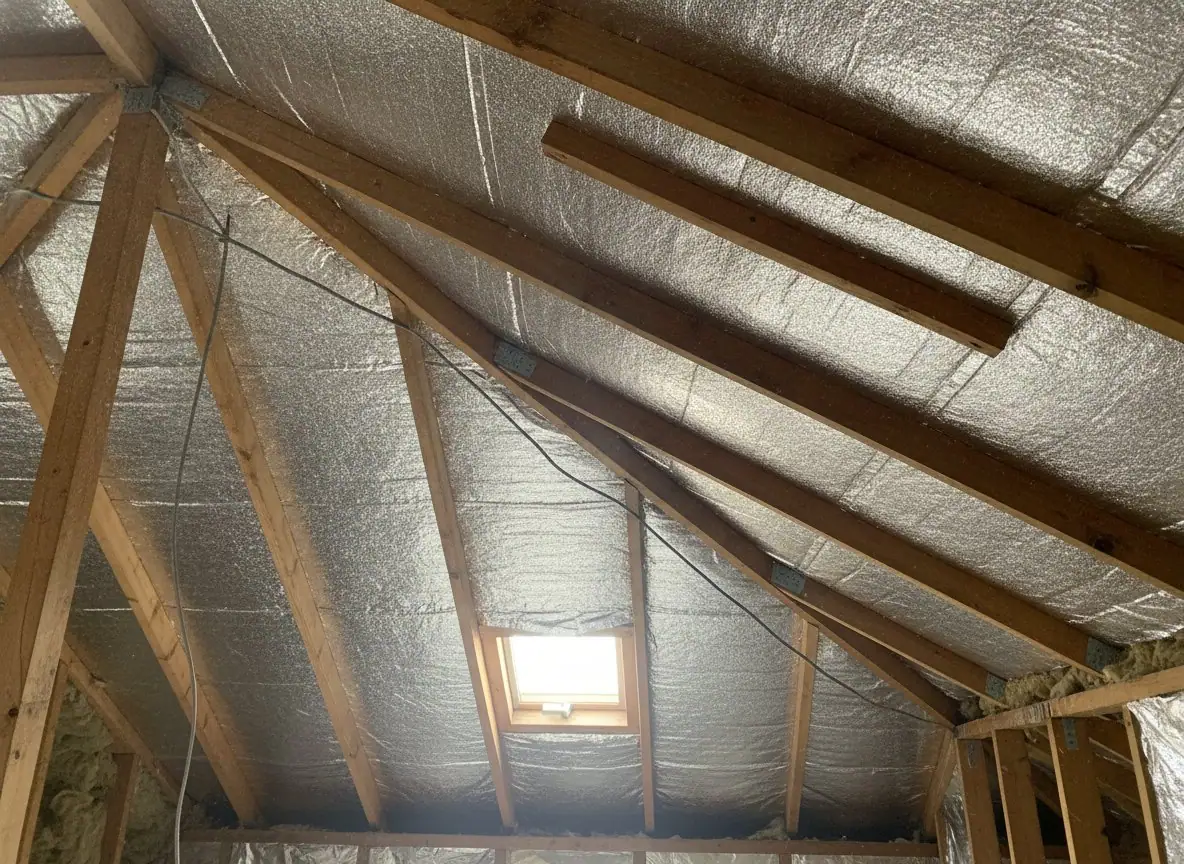
For large, flat openings such as dropped soffit tops, open stud cavities, and attic access hatches, we cut rigid polyisocyanurate or expanded polystyrene (EPS) board to size and seal the perimeter with spray foam or acoustic caulk. This method provides both air sealing and insulation value in a single step.
Acoustical Sealant and Caulk
For narrow cracks (under 1/4 inch) along framing members, around electrical boxes, and at ceiling/wall joints, we apply paintable or non-paintable acoustical sealant. This flexible material accommodates the minor seasonal movement common in Norwalk’s thermally active climate and maintains its seal for 20+ years.
Weatherstripping and Gaskets
Attic access doors, pull-down stair units, and fireplace dampers receive compression weatherstripping or foam gaskets rated for the temperature extremes found in Norwalk attics. We install insulated attic stair covers where applicable.
Intumescent Fire-Rated Foam
For penetrations near fire-rated assemblies — such as between an attached garage and living space — California building code requires intumescent materials that expand and block smoke and flame pathways. We use code-compliant fire-rated foam in all applicable Norwalk applications to meet Title 24 requirements.
Air Sealing Cost in Norwalk, CA
Understanding air sealing costs in Norwalk requires looking at both the scope of work and the factors that influence pricing in the greater Los Angeles area.
Typical Price Ranges
- Basic attic air sealing (1,000–1,500 sq ft home): $350 – $700
- Comprehensive whole-home air sealing including crawl space: $700 – $1,500
- Air sealing combined with insulation removal and replacement: $1,800 – $4,500+
- Blower door diagnostic test only: $150 – $300 (credited toward sealing work when booked together)
Factors That Affect Your Air Sealing Cost in Norwalk
- Home size and age: Larger homes and pre-1970 construction typically have more penetrations requiring sealing.
- Attic accessibility: Low-pitched roofs common in Norwalk’s 1950s ranch homes can limit technician movement and extend labor time.
- Existing insulation: Homes with deep blown insulation may require partial clearing to access top plates, adding labor cost.
- Number of recessed lights: Each recessed fixture in the attic floor adds $15–$30 to the sealing cost.
- Crawl space conditions: Moisture, debris, or limited clearance increases time and cost for below-floor sealing.
Read moreShow less
Return on Investment
The DOE estimates that whole-home air sealing and insulation upgrades can reduce heating and cooling costs by 15% to 30%. For a Norwalk homeowner paying $200–$300 per month in summer cooling costs, that translates to $360–$1,080 in annual savings — meaning most air sealing projects pay for themselves within 1 to 3 years. California utility rebates through SoCalGas and Southern California Edison may also offset a portion of costs; ask our team about current available programs.
Norwalk Neighborhoods We Serve
Mayfair Area (Near Bloomfield Avenue and Alondra Boulevard)
This densely developed neighborhood features tract homes built primarily between 1950 and 1965. Most are slab-on-grade with low-slope gable roofs and original single-pane windows. Top plate and recessed light sealing are the primary needs here.
Norwalk Square and Pioneer Boulevard Corridor
Homes in this commercial-adjacent zone range from 1960s ranch-style single-family homes to 1980s-era condominiums. The proximity to Pioneer Boulevard’s heavy vehicle traffic increases the importance of air sealing for indoor air quality alongside energy savings.
Hermosillo Neighborhood (Near Firestone Boulevard)
One of Norwalk’s older residential pockets, Hermosillo features homes from the late 1940s and early 1950s, some with raised wood-frame foundations. These properties are strong candidates for combined air sealing and crawl space insulation work given their foundation type.
Southeast Norwalk (Near the Cerritos Border)
This area includes both older homes and 1980s–1990s construction near Gridley Road. Newer homes here may have better original sealing but often still benefit from attic hatch upgrades and duct penetration sealing as materials age and settle.
Air Sealing Maintenance Tips for Norwalk Homeowners
Air sealing is a long-lasting improvement, but periodic maintenance keeps your home’s envelope performing at its best in Norwalk’s demanding climate.
- Inspect your attic hatch annually: Check that the weatherstripping around your attic access remains intact and compressed. Replace foam tape if it has compressed to less than half its original thickness.
- Check exterior penetrations after Santa Ana events: High winds can dislodge flexible caulk around exterior pipes and wires. Walk the perimeter of your home after major wind events and touch up any cracked or separated caulk.
- Keep attic ventilation clear: Proper attic ventilation prevents the pressure buildup that stresses air sealing materials. Make sure soffit vents along your eaves are never blocked by insulation or debris.
- Monitor indoor humidity levels: Use a hygrometer to keep indoor relative humidity between 30% and 50%. Excessive indoor humidity can cause wood framing to swell and crack previously sealed joints.
- Schedule a professional re-inspection every 5–7 years: Building settlement in Norwalk’s alluvial soil can open new gaps over time. A periodic blower door check identifies any new leakage before it significantly impacts energy costs.
- Replace HVAC filters every 60–90 days: Clean filters reduce the pressure differential that drives air through small gaps in your building envelope, extending the effectiveness of your air sealing work.
- Seal new penetrations immediately: Whenever a plumber, electrician, or cable technician creates a new penetration through your ceiling or walls, ensure it is sealed before closing walls or adding insulation.
Why Choose Bright Sky Attic Insulation for Air Sealing in Norwalk
Bright Sky Attic Insulation is a locally focused team serving Norwalk and the surrounding communities of the southeastern San Gabriel Valley and Gateway Cities corridor. We are not a national franchise dispatching unfamiliar technicians — we are specialists who understand the specific construction history, climate demands, and code requirements of homes right here in Norwalk, CA.
Our technicians are trained in building science fundamentals and California Title 24 energy code requirements, ensuring that all air sealing work we perform meets or exceeds current state standards. We carry full liability insurance and conduct thorough background checks on all field staff.
We believe in transparent, measurement-based results. Every air sealing project we complete is backed by pre- and post-blower door testing so you can see the actual improvement in your home’s airtightness — not just take our word for it. We also offer integrated solutions that combine air sealing with attic insulation, spray foam insulation, blow-in insulation, and crawl space encapsulation for homeowners who want a comprehensive energy upgrade in a single project.
Call us at (562) 573-5138 to speak with a Norwalk air sealing specialist today.
FAQ
Frequently Asked Questions About Air Sealing in Norwalk, CA
How much does air sealing cost in Norwalk, CA?
Most Norwalk homeowners pay between $350 and $1,500 for professional air sealing, depending on home size, age, and the number of penetrations requiring treatment. A 1,200 sq ft slab-on-grade ranch home from the 1960s typically falls in the $400–$700 range for attic-focused sealing. Homes requiring crawl space work or duct sealing will be on the higher end. We provide free, no-obligation estimates for all Norwalk properties.
How long does air sealing take to complete in a Norwalk home?
A standard attic air sealing project on a typical Norwalk single-family home takes 4 to 8 hours, including diagnostic testing, sealing work, and post-verification. Whole-home projects that include crawl space and living space sealing can take a full day. We schedule attic work in early morning hours during summer months to avoid the extreme midday heat common in Norwalk between June and September.
Will air sealing make my home too airtight and cause indoor air quality problems?
This is a common concern, but the reality is that even after professional air sealing, most existing Norwalk homes remain well above the minimum ventilation threshold. If your home tests very tight after sealing, we will discuss mechanical ventilation options such as an energy recovery ventilator (ERV) to maintain fresh air exchange without sacrificing energy efficiency. We never seal a home without considering its final ventilation balance.
What is the difference between air sealing and insulation?
Insulation slows heat transfer through materials via conduction; air sealing physically stops air movement through gaps and cracks. Both are necessary for a high-performing home envelope. Air sealing alone without adequate insulation still allows radiant heat transfer through poorly insulated surfaces. We recommend addressing both together for maximum benefit — see our attic insulation and blow-in insulation services for more information.
Does air sealing help with the dust and smog from the 605 Freeway near my Norwalk home?
Yes. Homes near the 605 and 5 Freeway corridors in Norwalk experience elevated passive infiltration of vehicle exhaust particulates and road dust. Air sealing reduces this passive infiltration significantly by eliminating the uncontrolled pathways through which outdoor air enters. Combined with a quality HVAC filter (MERV 11 or higher), air sealing can meaningfully improve indoor air quality for families living near these high-traffic corridors.
Can air sealing help with my high summer electricity bills in Norwalk?
Absolutely. With Norwalk’s summer temperatures regularly exceeding 95°F and attic temperatures reaching 140–160°F, any gap between the attic and living space drives enormous heat gain into your home. Air sealing the attic floor plane is one of the most effective ways to reduce your air conditioner’s workload. Many Norwalk homeowners report 20%–35% reductions in cooling season electricity costs following comprehensive air sealing and insulation upgrades.
Do I need a permit for air sealing work in Norwalk?
In most cases, air sealing work performed inside an existing home does not require a building permit in the City of Norwalk. However, if the project involves changes to the HVAC system, ductwork modifications, or significant structural alterations, permit requirements may apply. Our team is familiar with Norwalk’s permit guidelines and will advise you accordingly before any work begins.
Does Bright Sky Attic Insulation serve areas near Norwalk?
Yes. In addition to Norwalk, we serve Downey, Bellflower, Cerritos, La Mirada, Lakewood, Pico Rivera, Artesia, Commerce, Montebello, Paramount, Santa Fe Springs, Whittier, South Whittier, West Whittier-Los Nietos, East Whittier, Buena Park, and La Habra. Contact us to confirm service availability in your specific zip code.
Get Professional Air Sealing in Norwalk, CA Today
Stop paying for conditioned air that escapes through gaps in your home’s envelope. Whether you live near Alondra Park, along the Pioneer Boulevard corridor, or anywhere in between, Bright Sky Attic Insulation has the local expertise and proven techniques to make your Norwalk home tighter, more comfortable, and less expensive to cool and heat.
Our team is ready to schedule your free diagnostic assessment and provide a transparent, no-obligation estimate tailored to your home’s specific needs. We serve Norwalk and all surrounding Gateway Cities communities.
Call us now at (562) 573-5138 or reach out online to book your appointment. Ask about combining air sealing with our attic insulation or crawl space encapsulation services for maximum savings.
Get in touch
Find insulation help near you
Request a free estimate online or give us a call — our team will follow up quickly.
- Call us(562) 573-5138
- Visit14020 Pioneer Blvd K, Norwalk, CA 90650
- HoursMon-Sun 07:00-19:00